
How to Assess Supplement Health Benefits
Over half of U.S. adults take supplements without fully understanding their contents or benefits. With over 200,000 products on the market and loose FDA regulations, many supplements make bold claims without scientific backing. Missteps can lead to wasted money, harmful contaminants, or dangerous interactions.
Here’s a quick guide to help you evaluate supplements effectively:
- Identify your needs: Assess your diet, lifestyle, and health conditions to determine if you truly need a supplement.
- Read labels carefully: Check ingredients, serving sizes, and certifications like USP or NSF. Avoid vague claims and proprietary blends.
- Verify scientific evidence: Look for peer-reviewed studies supporting the product's claims. Use tools like PubMed or apps like SlipsHQ to simplify research.
- Ensure quality and safety: Opt for third-party tested products and avoid high-risk categories like weight loss or bodybuilding supplements.
- Use technology: Apps like SlipsHQ can scan barcodes, check certifications, flag risks, and compare prices.
- Balance cost and practicality: Calculate price per serving and choose products that fit your budget and daily routine.
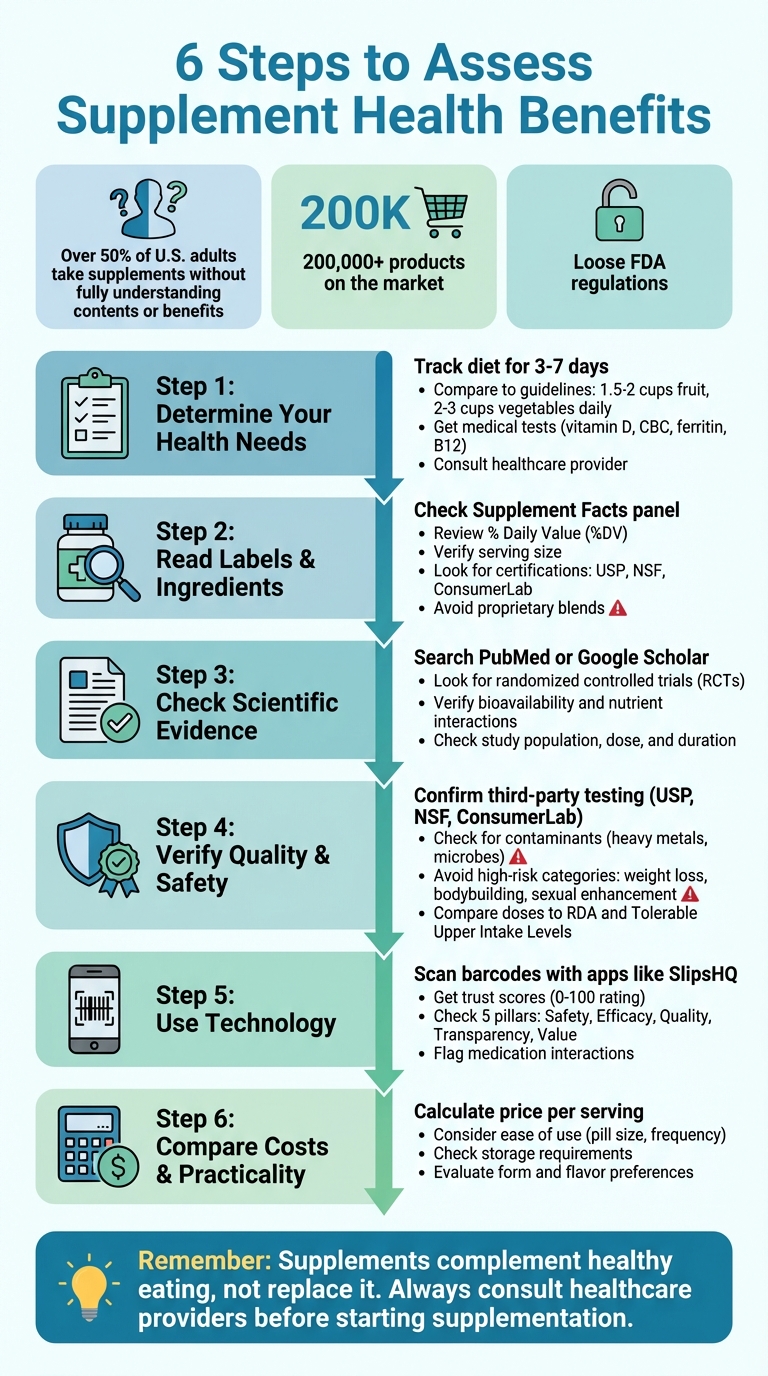
6-Step Guide to Evaluating Supplement Safety and Effectiveness
Step 1: Determine Your Health Needs
Before buying any supplement, take a moment to reflect: What health goal am I trying to address? Do I have a diagnosed deficiency or a condition that affects how my body absorbs nutrients? Could changes to my diet or lifestyle solve the issue instead? These questions can help you figure out whether you truly need a supplement - like iron for diagnosed anemia - or if you’re being swayed by marketing claims, which experts often warn against.
For most people, eating a balanced diet can cover their nutrient needs. Supplements are designed to complement healthy eating, not replace it. That’s why the first step is to identify if there’s a nutrient gap that food alone can’t fill.
Review Your Diet and Lifestyle
Start by tracking everything you eat and drink for 3–7 days, including at least one weekend day. Use a food journal or a nutrition app to record your intake. Then, compare your diet to general healthy eating guidelines: aim for 1.5–2 cups of fruit and 2–3 cups of vegetables daily (including dark green and orange options), 2–3 servings of dairy or fortified alternatives for calcium and vitamin D, regular servings of whole grains, beans, nuts, and seeds for magnesium and B vitamins, and two servings of fish per week for omega‑3 fatty acids.
Look for noticeable gaps. For instance, if fish rarely appears on your plate, you might be missing omega‑3s. Skipping dairy without proper substitutes could mean you’re not getting enough calcium and vitamin D. A diet heavy in processed foods may lack magnesium, potassium, and several B vitamins. Beyond diet, think about lifestyle factors that could increase your nutrient needs. Limited sun exposure - whether due to indoor work, sunscreen use, or a darker skin tone - can put you at risk for low vitamin D. Vegan or vegetarian diets may lead to shortages of vitamin B12, iron, zinc, and iodine. Heavy menstrual bleeding or frequent blood donations can deplete iron levels, while pregnancy or breastfeeding increases the need for nutrients like folic acid, iron, and iodine. Additionally, older adults and those with certain gastrointestinal conditions or surgeries (like celiac disease, inflammatory bowel disease, or gastric bypass) may have trouble absorbing nutrients properly.
Pay attention to signs that could indicate a deficiency. Persistent fatigue, shortness of breath, and pale skin might signal iron deficiency anemia or low vitamin B12. Frequent infections or slow wound healing could point to low levels of vitamin C, zinc, or protein. Muscle cramps, tingling, or irregular heartbeats may suggest issues with electrolytes like magnesium, calcium, or potassium. Brittle hair, nails, or hair loss could be linked to low iron, zinc, or protein. Bone pain, frequent fractures, or noticeable height loss might indicate insufficient vitamin D and calcium. If you notice these symptoms, don’t self-diagnose - consult a healthcare provider and consider lab tests before starting high-dose supplements.
If tracking your diet reveals potential gaps, a professional evaluation can confirm what you’re missing.
Get Medical Tests and Professional Advice
Healthcare providers can order blood tests to check for nutrient deficiencies. Common tests include serum 25‑hydroxyvitamin D to assess vitamin D levels, a complete blood count (CBC) and ferritin to detect iron deficiency or anemia, vitamin B12 tests (sometimes paired with methylmalonic acid or homocysteine levels), folate measurements, and, when needed, tests for magnesium, zinc, or copper. A doctor or registered dietitian can interpret these results alongside your symptoms, medications, and overall health. It’s important to remember that normal lab ranges don’t always mean supplementation is necessary.
To prepare for your appointment, bring a list of your current supplements and medications (with doses and frequency), a brief food diary, any recent lab results, and a clear description of your health concerns (for example, “I feel tired all the time and wonder if my nutrient levels are the cause”). During the visit, ask questions like:
- Do I have any deficiencies that require supplements?
- What dose, form, and duration should I take?
- Could this supplement interact with my medications or health conditions?
- How will we monitor its effectiveness and potential side effects?
Healthcare professionals can guide you toward evidence-based supplement use - like taking folic acid during early pregnancy - and help you avoid supplements that offer little benefit or could pose risks at high doses.
Step 2: Read Supplement Labels and Ingredients
Once you've pinpointed your nutrient gaps, the next step is to carefully examine supplement labels. These labels provide crucial information that helps you distinguish between high-quality products and those that lean more on flashy marketing than substance.
What to Look for on Labels
Every supplement label includes a Supplement Facts panel, which outlines the active ingredients, the amount per serving, and the % Daily Value (%DV). The %DV shows how much of the FDA's daily recommended intake is provided by each serving. For instance, a vitamin D supplement might list 2,000 IU (50 mcg) at 250% DV. While it's not always harmful to exceed 100% DV, consistently taking high doses without medical advice can lead to problems - examples include excess selenium causing hair loss or high doses of vitamin E being linked to increased early mortality rates.
Pay attention to the serving size listed on the label - whether it's "2 capsules" or "1 scoop." If you take less than the recommended serving, you're only getting a portion of the listed nutrients. Also, review the ingredient list, which is arranged by weight. Active ingredients appear first, followed by fillers or binders like magnesium stearate. The form of each nutrient matters too - some forms are absorbed better than others. For example, methylcobalamin is generally more bioavailable than cyanocobalamin for vitamin B12.
Avoid products that use proprietary blends, which group multiple ingredients under one total weight (e.g., "Proprietary Blend 500 mg: Herb A, Herb B") without specifying individual amounts. This lack of transparency makes it impossible to know if you're getting effective doses or just trace amounts.
Look for certifications from organizations like USP (United States Pharmacopeia), NSF International, or ConsumerLab. These independent groups test supplements for purity, potency, and contaminants like heavy metals. Checking their websites can confirm if a product is genuinely certified. Keep in mind, though, that these seals only verify the accuracy of the label - they don't guarantee the supplement will deliver the health benefits you're seeking.
Finally, be wary of exaggerated claims on the label.
Spot Misleading Claims
Supplement manufacturers often use trendy buzzwords to grab your attention. Phrases like "boosts immunity", "supports gut health," or "superfood blend" are common examples. These are structure/function statements that the FDA permits as long as they don't claim to diagnose, treat, cure, or prevent diseases. However, these claims don't require proof, so approach them with skepticism.
Vague language is another red flag. If a product boasts a "superfood blend" but doesn’t list the amounts of each ingredient, there's no way to confirm if the doses are effective. Similarly, claims like "clinically proven" mean little unless specific, peer-reviewed studies are cited - and even then, those studies might be funded by the product's manufacturer.
Be sure to check for allergen warnings and additional ingredients. Steer clear of products with artificial dyes, excessive fillers, or unrecognizable additives. Transparent brands clearly disclose every ingredient in their formula. Lastly, take a moment to calculate the price per serving. A seemingly cheap product may require multiple servings daily, making it more expensive than a supplement with a single daily dose in the long run.
Step 3: Check the Scientific Evidence
Once you've deciphered the supplement label, the next step is to dig into the science behind those health claims. Phrases like "supports heart health" or "boosts immunity" might sound impressive, but they often fall under structure/function claims. These claims aren't required to have clinical proof and don't necessarily mean the product can prevent or treat diseases.
Find Peer-Reviewed Studies
To figure out if a supplement's claims hold water, look for solid scientific research. The best evidence comes from randomized controlled trials (RCTs) and systematic reviews or meta-analyses published in peer-reviewed journals. RCTs are considered the gold standard because they randomly assign participants to either receive the supplement or a placebo, helping eliminate bias from other factors like lifestyle choices. On the other hand, observational studies can only suggest possible links and aren't as reliable.
You can search for studies on platforms like PubMed or Google Scholar. For a more targeted approach, combine the ingredient name with your health concern and the phrase "randomized controlled trial" (e.g., "magnesium insomnia randomized controlled trial"). Pay attention to studies conducted on people who are similar to you in age, health, and location. Experts from Stanford emphasize that most supplement claims lack solid scientific backing, and only a few - like vitamin B12 for confirmed deficiencies - have clear, proven benefits.
If manually searching feels like a chore, tools like SlipsHQ can simplify the process. These tools highlight trial data and provide science-based trust scores, sparing you from wading through endless research papers.
When reviewing studies, check the details: the dose, form, duration, and the population tested. For example, if a study looked at 2,000 IU of vitamin D in older adults with osteoporosis over a year, but you're a healthy 30-year-old planning to take 400 IU for a few weeks, the findings might not apply to you. Also, be cautious of red flags, like studies funded entirely by the product's manufacturer, small sample sizes, or results that don't align with the product's claims. These can indicate weak or biased evidence.
This process not only helps confirm whether a supplement is effective but also ensures you're informed about proper dosing and safety.
Learn About Bioavailability and Nutrient Interactions
The effectiveness of a supplement isn't just about the nutrient itself - it also depends on how well your body can absorb and use it, a concept known as bioavailability. For example, fat-soluble vitamins like A, D, E, and K need dietary fat to be absorbed properly. Pairing these vitamins with a handful of nuts or a meal containing healthy fats can make a big difference. Similarly, the form of a nutrient matters; some forms of magnesium or iron are easier to absorb and less likely to cause digestive issues.
Nutrients also interact with each other in ways that can affect absorption. For instance, copper and zinc compete for absorption, so taking high doses of zinc might lead to a copper deficiency. Likewise, vitamin D's role in bone health doesn't work in isolation - it requires sufficient calcium and regular weight-bearing exercise to be effective. Without these cofactors, a vitamin D supplement alone may not deliver the expected results.
Tools like SlipsHQ can flag potential safety concerns and nutrient interactions, helping you make more informed choices. By looking at both the quality of the evidence and how well your body can use the nutrients, you can choose supplements that are both effective and safe.
Step 4: Verify Quality, Safety, and Certifications
It's crucial to ensure that a supplement's label accurately reflects its contents. In the U.S., dietary supplements aren't FDA-approved for safety or effectiveness, which means quality can vary significantly. This is where third-party testing becomes a game-changer.
Check for Third-Party Testing
Third-party certifications are one of the best ways to confirm that a supplement contains what it claims and is free from harmful contaminants. Look for seals from USP (United States Pharmacopeia), NSF International, or ConsumerLab on the product label. These organizations test for essential factors like identity, potency, purity, and adherence to Good Manufacturing Practices (GMP). For example, USP Verified ensures the listed ingredients and amounts are accurate, while NSF Certified for Sport checks for banned substances, which is especially important for athletes.
Keep in mind that these certifications verify label accuracy and purity but don't confirm clinical effectiveness. If you don't see a certification seal on the product, you can visit the websites for USP, NSF, or ConsumerLab to verify the supplement's status. Be cautious - some manufacturers use misleading logos, so always double-check authenticity online.
To make this process easier, SlipsHQ offers a simple solution. By scanning a supplement's barcode, the app instantly shows whether the product has undergone third-party testing and provides a science-based rating (0–100) that evaluates its safety, quality, and transparency. SlipsHQ uses a 35-point system that considers certifications, testing practices, and ingredient standards, all without sponsorships or paid placements. With a 4.9 app rating, it’s a quick way to assess quality without navigating multiple certification websites.
Once you've confirmed quality, it's time to consider potential risks, even for certified products.
Review Potential Risks and Side Effects
While third-party testing is a strong indicator of quality, it doesn't eliminate all safety concerns. Certified supplements can still pose risks due to harmful additives, contaminants, or excessive dosages. Common dangers include heavy metals (like lead or arsenic), microbes, pesticides, and undeclared drugs. Certain categories - like weight loss, bodybuilding, sexual enhancement, and "brain-boosting" supplements - are particularly high-risk. According to Northwestern Medicine, these categories are consistently flagged for adulteration with pharmaceutical drugs. Avoid these products unless guided by a healthcare provider.
Dosage matters, too. Taking more than 100% of the Recommended Dietary Allowance (RDA) can lead to serious health issues. For instance, high doses of vitamin A can cause liver damage and birth defects, while excessive vitamin E has been linked to increased mortality rates. Many "hair vitamin" products exceed the RDA for selenium, and both too much and too little selenium can contribute to hair loss.
This is another area where SlipsHQ can help. The app flags high-risk ingredients, stimulant-heavy formulas, and potential conflicts between supplements and medications. By scanning a product, you can quickly identify risky ingredients and track your supplement regimen to avoid dangerous overlaps or interactions. SlipsHQ offers a 3-day free trial, with ongoing access for $4.99 per week or a $20 lifetime purchase on iOS.
To stay safe, always compare supplement doses with the RDA and Tolerable Upper Intake Levels (ULs) for your age and sex. You can use NIH fact sheets as a reference, and it’s wise to consult a healthcare provider - especially if you’re pregnant, breastfeeding, taking prescription medications, or managing conditions like liver, kidney, or heart issues.
Step 5: Use Technology to Simplify Evaluation
Manually digging through labels, certifications, research, and dosages can eat up hours of your time. Thankfully, digital tools can cut through the clutter, consolidating all that information and delivering clear, evidence-based assessments in seconds. Instead of hopping between websites to check USP or NSF certifications or decipher vague claims like "supports heart health", apps now translate complex data into easy-to-understand safety ratings and warnings.
How SlipsHQ Works
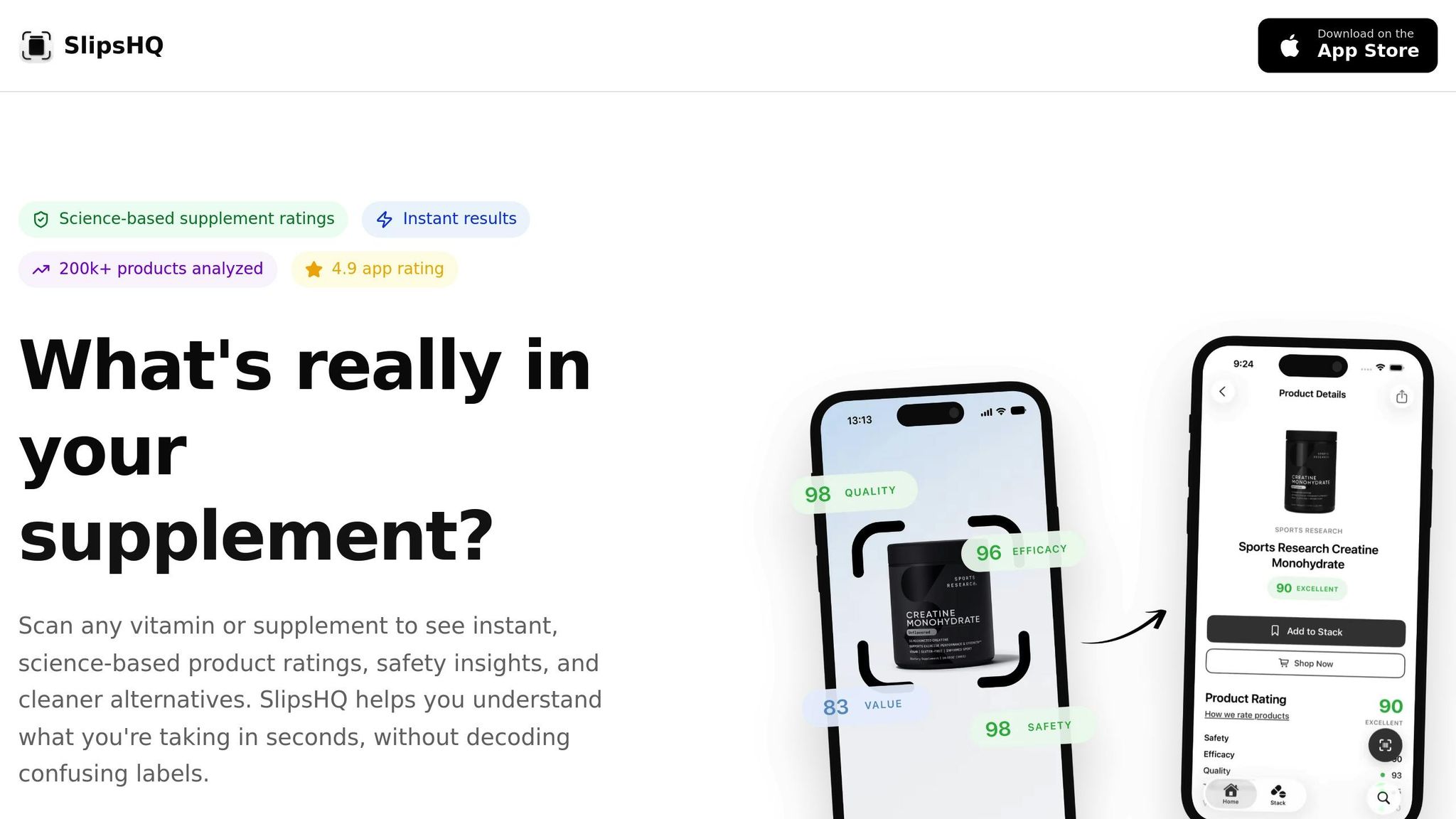
Technology takes the guesswork out of supplement evaluation, and SlipsHQ is a prime example. This app uses barcode scanning to instantly pull up a complete profile for any supplement. Whether you're at a store like CVS or Target or sitting at home, you can simply scan the bottle, and the app will generate a science-backed trust score (ranging from 0 to 100). This score is based on a thorough 35-point evaluation system, which reinforces the safety and quality checks discussed earlier.
The trust score evaluates supplements across five key pillars:
- Safety: Alerts you to contaminants or potentially harmful dosages.
- Efficacy: Assesses whether the ingredients align with clinical research.
- Quality: Verifies third-party testing and certifications.
- Transparency: Flags unclear labeling or hidden proprietary blends.
- Value: Compares price per serving across various retailers.
SlipsHQ doesn’t stop there. It also highlights ingredient doses that fall outside recommended ranges or flags supplements in categories prone to adulteration. With its extensive database and high user ratings, SlipsHQ helps you make informed decisions faster.
The app goes a step further by offering personalized supplement recommendations tailored to your health goals. Plus, it provides alerts for potential medication interactions. For example, if you scan a fish oil supplement while taking a prescription blood thinner, the app will warn you about potential bleeding risks and suggest consulting your doctor. You can even save products to a "Discuss with my doctor" list and export shareable reports. This transforms what could have been an impulsive purchase into a well-informed, clinician-backed decision.
Free vs. Premium Features
SlipsHQ offers both free and premium features, giving you the flexibility to choose what suits your needs. The app includes a 3-day free trial with full access to all features, followed by two paid options: $4.99 per week or a one-time lifetime purchase of $20. Here’s a breakdown of what each tier includes:
| Feature | Free Trial (3 Days) | Premium ($4.99/week or $20 lifetime) |
|---|---|---|
| Barcode scanning | Unlimited scans with basic overview | Unlimited scans with full history and detailed analysis |
| Trust score | Basic 0–100 score display | Comprehensive breakdown across all five pillars |
| Ingredient analysis | Key ingredients and major warnings | In-depth analysis, including absorption and interactions |
| Third-party certifications | Displays major seals (USP, NSF, ConsumerLab) | Expanded details, including audit notes |
| Personalized stacks | Limited, generic suggestions | Fully customized stacks based on your profile, goals, and medications |
| Price comparison | Basic price range display | Detailed price comparisons across multiple retailers |
| Clinician reports | Simple summary view | Downloadable and shareable PDF reports |
| Ads | May include ads | Completely ad-free experience |
The free trial gives you a taste of all premium features, making it easy to decide if the advanced tools are worth it. For regular supplement users or those looking for deeper safety insights and ongoing price comparisons, the premium tier offers tools that far outpace what manual research can achieve in terms of speed and precision.
Step 6: Compare Costs and Practical Factors
Once you've checked the science, certifications, and labels, it's time to look at how the supplement fits your budget and daily routine. A bottle that seems cheap might not be a good deal if the pills are hard to swallow or the dose doesn't meet your needs. On the other hand, an expensive option won't help if you forget to take it regularly. This step is about balancing cost and practicality to make sure the supplement works for you.
Calculate Price Per Serving
The sticker price isn't always the best way to judge value. To get a clearer picture, calculate the cost per serving by dividing the total price by the number of servings. For example, a $15 bottle with 60 servings costs $0.25 per serving, while a $25 bottle with 120 servings costs about $0.21 per serving.
You should also consider the cost per target nutrient. Let’s say you need 1,000 mg of calcium daily. One brand might provide 250 mg per serving at $0.25 each, meaning your daily dose costs $1.00. Another brand might offer 500 mg per serving at $0.30, totaling just $0.60 for the same daily amount. The type of ingredient matters too. For instance, magnesium glycinate may cost $0.25 per serving but offers better absorption compared to magnesium oxide at $0.10 per serving. Similarly, a probiotic with 50 billion CFUs at $1.00 per serving might deliver more benefits than one with 10 billion CFUs at $0.50 per serving.
Tools like SlipsHQ’s price comparison feature can simplify this process. By scanning barcodes, it shows real-time prices across retailers, calculates the cost per serving, and highlights whether the premium ingredient forms justify the price. On average, this can help users avoid overpaying by 15–30%.
Consider Ease of Use and Personal Preferences
Cost isn’t everything - how easy the supplement is to use matters just as much. A perfectly formulated product won’t help if you struggle to take it consistently. Factors like pill size, taste, and dosing frequency can make or break your adherence. For instance, large fish oil capsules might be difficult to swallow, while liquid forms can be easily mixed into food. If a supplement requires three doses a day, think about whether that fits your schedule. Sometimes, a once-daily capsule is worth paying a bit more for the convenience.
The form and flavor of a supplement are also important. Gummies and flavored powders are often easier and more enjoyable to take, but they tend to cost more per serving and may include added sugars. On the other hand, unflavored powders can blend into smoothies without affecting taste, while chalky or bitter options might discourage regular use. Poor convenience can lead to skipping doses, so choose a product that fits seamlessly into your lifestyle.
Don’t forget storage requirements. For example, if a probiotic needs refrigeration but you travel frequently, a shelf-stable version might be a smarter pick. Ultimately, the right supplement is one you can afford and use consistently without hassle.
Conclusion
Start by focusing on your actual health needs rather than being swayed by marketing claims. This means reviewing your diet, assessing your lifestyle, considering lab tests, and seeking expert guidance. When evaluating supplements, read labels carefully to identify misleading claims, understand ingredient lists, serving sizes, and any warnings. Look for peer-reviewed scientific evidence supporting key ingredients, paying attention to their bioavailability and how they interact with other nutrients. To ensure quality, check for third-party certifications like USP or NSF, and always discuss potential risks with your healthcare provider.
Self-assessment is especially important because high-dose supplements can pose serious risks. Stick to doses close to the Recommended Dietary Allowance unless your doctor advises otherwise. Be cautious with categories like weight loss or bodybuilding supplements, as these are often linked to undisclosed or harmful ingredients.
Technology can make this process easier. For example, with SlipsHQ, you can scan a supplement’s barcode and instantly access science-based trust scores. The app provides detailed insights into ingredient purity, safety warnings, and price comparisons, all through a 35-point evaluation system that simplifies your research.
Using these tools and insights ensures that supplements enhance your overall wellness plan rather than hinder it. Keep in mind that supplements are just one piece of the puzzle. A balanced diet, regular exercise, quality sleep, and stress management are all essential components of a healthy lifestyle. Regularly reassess your supplement choices to ensure they align with your health goals.
To get started, try scanning your supplements with SlipsHQ and consult your doctor for personalized advice. Taking the time to carefully evaluate each product helps you avoid ineffective formulas and safeguards your health.
FAQs
How can I figure out if I need to take a supplement?
To figure out if a supplement is a good fit for you, take a close look at your diet and lifestyle to spot any nutritional gaps. It's also a smart idea to consult a healthcare professional, like a doctor or a registered dietitian, who can offer personalized advice tailored to your health needs.
If you're looking for more insights, tools like SlipsHQ can be incredibly helpful. They evaluate supplement quality, safety, and effectiveness using science-backed data, giving you the confidence to make well-informed choices for your health.
What should I check on supplement labels to ensure they’re safe and effective?
When you're checking out supplement labels, pay close attention to ingredient transparency, dosage accuracy, and third-party certifications that confirm both quality and safety. Look for labels that clearly list active ingredients, their exact amounts, and any allergens or additives. Be cautious of vague terms like "proprietary blend", which often hide the specific ingredient details.
To dig deeper into a supplement’s quality and effectiveness, you might find tools like SlipsHQ helpful. It offers science-backed insights, safety information, and tailored recommendations, making it easier to navigate the crowded supplement market with confidence.
How can I use technology to evaluate supplements more effectively?
Technology has made evaluating supplements easier by providing fast, science-backed insights. Take SlipsHQ, for instance - it lets you scan barcodes to quickly view safety information, ingredient breakdowns, and trust scores rooted in scientific research.
With tools like this, you can check a supplement's quality, compare prices from different retailers, and even create a tailored routine - all in one convenient platform. It’s a streamlined way to make smarter, more informed choices about your health without the stress.