
How To Balance Risks in Supplement Stacks
Combining supplements can boost health and performance, but it also comes with risks. Overlapping ingredients, excessive doses, and unsafe interactions can lead to serious issues like toxicity or adverse effects. Here’s a quick guide to safely manage your supplement stack:
- Start with a full list: Document every supplement you take, including doses, timing, and sources. Don’t forget fortified foods or beverages.
- Set clear goals: Focus on 1–3 health priorities. Avoid trying to address too many at once.
- Check labels for overlaps: Look for repeated ingredients (e.g., vitamin D, zinc) and calculate total daily intake. Be cautious with proprietary blends and stimulants.
- Evaluate risks vs. benefits: Assess each supplement’s purpose, evidence, and potential side effects. Use a simple scoring system (1–3 for benefit and risk) to decide what to keep or stop.
- Simplify your stack: Eliminate duplicates, high-risk items, or products with weak evidence. Stick to a few well-researched options.
- Monitor and adjust: Track your progress, watch for side effects, and reassess every 3–6 months. Use tools like SlipsHQ to flag risks and find safer alternatives.
Key takeaway: Aim for a streamlined, effective stack that supports your goals without unnecessary risks. Always consult a healthcare provider before making changes.
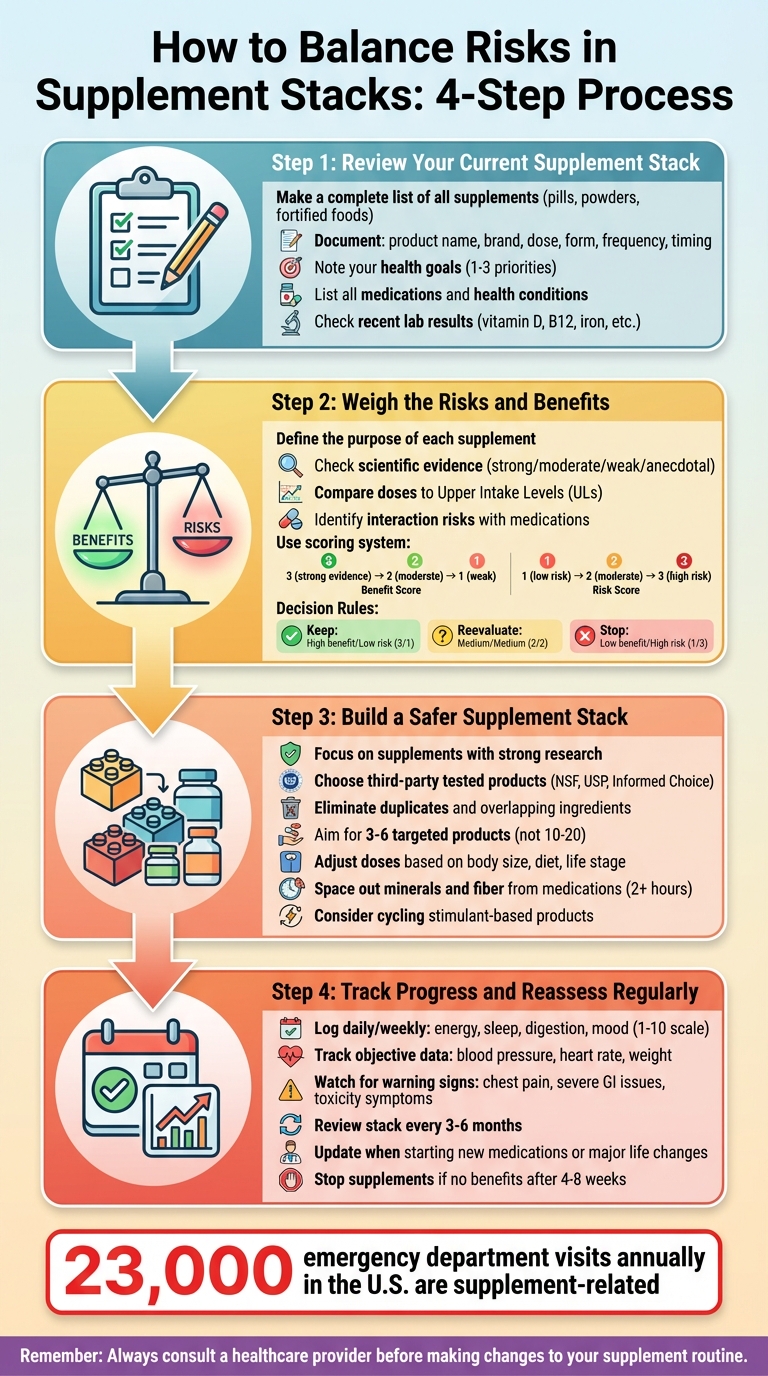
4-Step Process to Build a Safer Supplement Stack
Step 1: Review Your Current Supplement Stack
Make a Complete List of Your Supplements
Start by jotting down every supplement you use - and don’t just stop at the usual pills and capsules. Include everything: multivitamins, single-nutrient products, herbal blends, protein powders, pre-workouts, fat burners, nootropics, collagen, gummies, and meal-replacement shakes. Don’t overlook fortified foods and drinks like breakfast cereals, energy drinks, sports drinks, protein bars, or those trendy functional shots aimed at boosting immunity or focus.
For each item, document the full product name, brand, serving size, exact dose (e.g., 2 capsules = 1,000 mg), form (like citrate, oxide, or chelate), frequency (daily, occasionally, or only pre/post-workout), and time of day you take it (morning, with meals, or before bed). Also, note where you purchased it - this can help identify supplements from sources that might not be well-regulated. This detailed log is key for spotting excessive doses, duplicate ingredients, or possible interactions.
Once your list is complete, compare your supplement habits to your health goals to see if your current stack is working for you.
Consider Your Health Situation
Before deciding if your supplement routine makes sense, narrow down one to three main health goals - whether it’s better sleep, easing joint pain, or staying energized. Trying to address too many goals at once often results in bloated stacks with overlapping products. Also, make a note of any diagnosed conditions (like hypertension or diabetes) and health concerns tied to nutrients (e.g., kidney stones from high doses of vitamin C or D). Don’t forget to include a list of all medications you’re taking - prescriptions, over-the-counter drugs, and even things like pain relievers, antihistamines, or blood thinners. Supplements can interfere with medications by altering absorption, increasing bleeding risks, or changing how drugs are metabolized.
Track basic health metrics like weight, blood pressure, and sleep quality for a clearer picture of your progress. If you have recent lab results - such as vitamin D, iron levels, B12, lipids, or kidney and liver function - these can guide your decisions and help you avoid supplementing blindly. Experts recommend confirming deficiencies through testing rather than guessing, as excessive doses of certain vitamins (especially fat-soluble ones and iron) can lead to toxicity over time.
Find Hidden Risks on Supplement Labels
Next, take a close look at your supplement labels to identify potential risks. Lay out all the Supplement Facts panels and check for overlapping ingredients like vitamin D, B6, niacin, iron, zinc, and magnesium, as well as herbal components that show up in multiple products. Add up the total daily intake for each repeated ingredient and compare it to safe upper intake levels provided by health organizations. Consistently high doses of fat-soluble vitamins or iron, for example, can harm the liver or other organs. Be especially cautious if several products exceed 100% of the Daily Value for the same nutrients or if you’re layering “mega-dose” supplements on top of a multivitamin and fortified foods. Also, keep an eye on your total daily caffeine or stimulant intake from pre-workouts, energy drinks, fat burners, and nootropics, as combining stimulants can lead to rapid heart rate, dizziness, and other side effects.
Watch out for proprietary blends that list only a total weight without breaking down individual ingredient amounts. This lack of transparency can be risky, especially if the blend includes stimulants, herbs that affect blood pressure or clotting, or ingredients that might strain the liver.
To make this process easier, you can use tools like SlipsHQ, which scans product barcodes to pull ingredient lists, doses, and safety alerts. The app highlights overlapping ingredients across products (e.g., if your total daily niacin or caffeine intake exceeds safe limits) and provides trust scores based on label transparency, third-party testing, and safety concerns. This can save you hours of manual label-checking and help you identify duplicate ingredients, risky combinations, or better alternatives in a more data-driven way.
Step 2: Weigh the Risks and Benefits
Now that you've reviewed your supplement list and labels, it's time to dig deeper into their benefits, risks, and potential interactions. This step will help you make informed decisions about what to include in your regimen.
Define the Benefits of Each Supplement
Start by identifying the main purpose of each supplement. Is it meant to address a specific issue like iron deficiency, reduce joint pain, improve sleep, or aid muscle recovery after workouts? Stick to clear and measurable goals. Be cautious with products that make vague claims like "detox" or "boost vitality" - these should be considered lower priority. Also, note whether the supplement was recommended by a professional, such as a doctor or coach, or if it was a personal choice.
Next, check the scientific evidence supporting these benefits. Reliable resources, like the NIH Office of Dietary Supplements, can help you categorize supplements based on the strength of the evidence:
- Strong evidence: Backed by multiple human trials with realistic doses.
- Moderate evidence: Supported by at least one solid human trial or consistent observational data.
- Weak evidence: Based on small studies, mixed results, or mostly animal/lab research.
- Anecdotal only: Relies on testimonials or traditional use without modern scientific backing.
Tag each supplement with one of these labels. This will help you prioritize those with strong human research over products with unproven or theoretical benefits. Once you've clarified the benefits, you can move on to evaluating potential risks.
Identify Individual and Interaction Risks
For each supplement, compare your daily intake - including fortified foods - to the Tolerable Upper Intake Levels (ULs) provided by the NIH. Pay special attention to fat-soluble vitamins (A, D, E, and K) and minerals like iron and zinc, as exceeding these limits can lead to serious health issues. For example, too much vitamin A can damage the liver, iron overload can harm organs, and excessive vitamin D (over 4,000 IU/day) has been linked to bone loss and increased risk of falls.
Be mindful of organ-specific risks as well. Some bodybuilding supplements and high-dose herbal extracts (like green tea extract or kava) can strain the liver, while dehydrating fat burners combined with high protein intake might put stress on the kidneys. Additionally, stimulant-heavy pre-workouts can trigger side effects like increased heart rate or anxiety.
Don't forget interaction risks. Supplements can interfere with each other (e.g., calcium, iron, and zinc competing for absorption) or with medications. For instance, some supplements can alter drug absorption, raise bleeding risks, or affect how the liver processes prescriptions. The NIH warns that combining supplements or mixing them with medications can sometimes lead to harmful or even life-threatening effects. If you're taking medications like blood thinners, diabetes drugs, blood pressure medications, or antidepressants, have a clinician or pharmacist review your list for potential interactions.
Use a Simple Scoring System
Once you've evaluated the benefits and risks, use a straightforward scoring system to help you decide what to keep, adjust, or stop. Assign two scores to each supplement - one for benefit and one for risk - using a 1–3 scale:
-
Benefit scores:
• 3 = Strong evidence with clear benefits
• 2 = Moderate evidence or uncertain benefits
• 1 = Weak evidence with unclear benefits -
Risk scores:
• 1 = Low risk (within safe limits, no significant interactions)
• 2 = Moderate risk (close to upper limits, mild side effects, or potential interactions)
• 3 = High risk (past adverse effects, exceeds safe limits, or strong interaction warnings)
Here’s an example of how this might look for a typical supplement stack:
- Standard multivitamin: A multivitamin offering about 100% of the Daily Value for most nutrients might score a 2–3 for benefit (if your diet is inconsistent) and a 1 for risk (generally safe within ULs).
- Omega-3 fish oil: At 1,000 mg of EPA/DHA, it might score a 2–3 for benefit (moderate cardiovascular and anti-inflammatory support) and a 1–2 for risk (possible gastrointestinal upset or bleeding risks at higher doses).
- Vitamin D (5,000 IU daily): Without lab monitoring, it could score a 1–2 for benefit (if no deficiency is confirmed) but a 2–3 for risk, as it may exceed safe levels and lead to bone loss or fall risks.
- Stimulant-heavy pre-workout: A pre-workout containing over 300 mg of caffeine plus other stimulants might score a 2 for benefit (short-term performance boost) but a 3 for risk, due to potential heart rate spikes, anxiety, sleep disruption, and interactions with other caffeine sources.
Once scored, follow these simple rules:
- Keep high-benefit/low-risk supplements (3/1).
- Reevaluate or reduce medium-benefit/medium-risk options (2/2).
- Consider stopping low-benefit/high-risk products (1/3), ideally after consulting a clinician.
To make this process easier, tools like SlipsHQ can scan product barcodes and provide quick, science-based ratings for safety, efficacy, quality, and more. These tools can also flag potential interactions, saving you hours of manual research and helping you refine your supplement stack efficiently.
Step 3: Build a Safer Supplement Stack
Now that you've assessed the risks and benefits of your supplements in Step 2, it's time to refine your routine. The goal here is to create a streamlined, effective stack of well-researched, low-risk products tailored to your needs. This means adjusting doses and timing gradually while keeping safety at the forefront.
Focus on Supplements Backed by Strong Research
Start by prioritizing supplements with solid clinical evidence, proven benefits for your specific goals, and a track record of safety at recommended doses. Common examples include vitamins and minerals that address documented deficiencies - like vitamin D for low blood levels or iron when a deficiency is confirmed. Look for single-ingredient products with clear dosing information rather than proprietary blends, and choose ingredients supported by established guidelines. For instance, creatine monohydrate is widely recognized for athletic performance, and omega-3 fatty acids are often recommended for certain heart health benefits.
To minimize risks, opt for supplements tested by third-party organizations such as NSF, USP, or Informed Choice. These certifications help ensure products are free from contaminants and accurately labeled. Be cautious of supplements making "miracle" claims, mega-doses far exceeding the Recommended Dietary Allowance (RDA), or products marketed for extreme outcomes like rapid fat loss or hormone manipulation. The FDA has flagged some bodybuilding supplements that illegally contain steroids or steroid-like substances, which can lead to serious health issues like liver damage, kidney failure, and strokes. Tools like SlipsHQ can help you quickly evaluate supplements by scanning barcodes for trust scores, ingredient purity, and safety warnings.
Simplify and Make Changes Gradually
Group your supplements by purpose and eliminate redundancies. For example, if you’re taking multiple "immune blends" that all contain vitamin C and zinc, you’re likely duplicating efforts. Removing overlapping products not only cuts costs but also reduces the risk of toxicity.
Start by dropping items with unclear benefits, weak evidence, or "kitchen sink" formulas packed with tiny, unspecified doses of many ingredients. Aiming for a minimal effective stack of 3–6 targeted products is often more effective and manageable than juggling 10–20 items. For instance, someone taking a multivitamin, high-dose vitamin C, zinc lozenges, and an "immune super blend" might decide to stick with just the multivitamin and one targeted product after reviewing doses. This kind of focused approach aligns with the benefit-risk evaluations you made in Step 2.
Experts recommend making changes one step at a time. Start by removing high-risk items or those with undisclosed blends and side effects. Then, eliminate redundant products. Wait 1–2 weeks before introducing or adjusting a new supplement, and keep doses conservative. This method helps you clearly identify any side effects - like GI distress, rashes, or anxiety - and avoids the danger of cumulative effects or toxicity. According to the NIH and studies in the New England Journal of Medicine, supplement-related issues lead to approximately 23,000 emergency department visits annually in the U.S..
Once your stack is simplified, you can fine-tune doses and timing to maximize safety and effectiveness.
Adjust Doses and Timing for Safety
Your supplement doses should align with your body size, diet, and life stage. Larger individuals may tolerate higher doses within typical ranges, but fat-soluble vitamins (A, D, E, K) and minerals like iron have upper limits that should not be exceeded regardless of weight. If your diet already includes nutrient-dense foods - like fatty fish or fortified products - you may need lower supplemental doses of overlapping nutrients (e.g., omega-3s or B12). Special considerations apply for pregnancy, breastfeeding, older adults, and athletes. For example, high-dose vitamin A is unsafe during pregnancy, and iron supplements should be used cautiously in older men unless there’s a confirmed deficiency.
Avoid prolonged use of mega-doses. For instance, taking vitamin D at levels above 4,000 IU daily without medical supervision can lead to bone loss and increased fall risks, as noted by the AMA. Fat-soluble vitamins and minerals like iron should only be taken when necessary, with lab monitoring when possible.
Timing also matters. To reduce interactions and side effects, space out fiber, minerals like iron and calcium, and certain herbs by at least two hours from key prescriptions such as thyroid medications, antibiotics, or blood thinners. Caffeine-containing supplements (like pre-workouts or fat burners) should be taken earlier in the day and not combined to avoid insomnia or cardiovascular stress. For GI-sensitive individuals, splitting doses of ingredients like magnesium or vitamin C into smaller portions taken with meals can help prevent diarrhea or cramping.
In some cases, cycling certain supplements - using them for a set period followed by a break - can reduce risks like tolerance, dependence, or side effects. This is especially relevant for stimulant-based products (e.g., caffeine blends or fat burners) and some nootropics or mood-modulating herbs. However, foundational supplements like vitamin D for deficiency or omega-3s are often taken continuously if needed and monitored for safety. Any cycling plan should factor in your health status, medical history, and medications, and ideally be discussed with a healthcare professional knowledgeable about supplements.
Step 4: Track Progress and Reassess Regularly
Once you've fine-tuned your supplement stack, it's important to keep an eye on how things are going. Your health needs and medications can shift over time, so regular monitoring and reassessments are key to ensuring your regimen remains both safe and effective. By tracking your progress over weeks or months, you can tell the difference between temporary adjustment effects and lasting benefits - or potential issues. For example, mild digestive discomfort in the first few days might be normal, but if symptoms persist or worsen, it could indicate a problem.
Monitor Benefits and Warning Signs
Keeping a daily or weekly log can help you track improvements and spot potential concerns. Record indicators like energy levels, sleep quality, digestion, mood, focus, and exercise performance. Using a simple 1–10 scale for things like energy or sleep, along with brief notes about changes in dosage or symptoms, can help you identify patterns without overreacting to one off day. It’s also helpful to log objective data, like blood pressure, heart rate, weight, or blood sugar, and note dates in the mm/dd/yyyy format.
Be vigilant for warning signs that suggest you may need to pause, adjust, or stop a supplement. Serious symptoms like new or worsening chest pain, rapid heart rate, severe dizziness, fainting, shortness of breath, or intense abdominal pain require immediate medical attention. Other red flags include persistent diarrhea, blood in stool, severe bloating, insomnia, agitation, or new anxiety. If these symptoms don’t improve after reducing the dose, it’s time to take them seriously. For nutrient-heavy regimens, watch for signs of toxicity, such as unexplained fatigue, easy bruising, dark urine, yellowing skin or eyes, or muscle weakness, and consult a healthcare provider if these occur.
Tools like SlipsHQ can simplify tracking. By attaching daily check-ins and ratings directly to your supplements, SlipsHQ helps you monitor product details like safety warnings, ingredient purity, and potential risks. You can even scan barcodes to keep track of what you’re using and for how long, helping you build a safer, more personalized routine.
Review and Update Your Stack Periodically
Set a reminder to review your stack every 3–6 months - or sooner if you start a new medication, receive a diagnosis, or experience side effects. During these reviews, check if your original goals (like improving sleep, reducing joint pain, or lowering cholesterol) are being met. Use your symptom logs and any lab data to evaluate progress. As mentioned in Step 3, confirm that dosages are still appropriate for your current weight, age, and health status, and ensure there’s no overlap that could lead to excessive nutrient intake.
Stay on top of updated safety information, such as FDA warnings, product recalls, or new clinical trial results. Tools like SlipsHQ can help by flagging overlapping ingredients, highlighting new safety concerns, and updating trust scores based on the latest data. Instead of chasing every headline, focus on your core supplements - those you take daily or in higher doses - and rely on trusted sources like NIH fact sheets, major medical organizations, and FDA communications to determine whether new findings are relevant.
Regular reviews will guide you on when to adjust or discontinue certain supplements.
Know When to Reduce or Stop Supplements
Your periodic reviews should also help you decide whether each supplement is still worth taking. A supplement is generally worth keeping if it consistently delivers noticeable benefits - like better sleep, fewer migraines, or more stable blood sugar - over a trial period of 4–8 weeks without causing new side effects. However, if you don’t see significant improvements after a reasonable trial, if the gains are minimal compared to lifestyle changes, if it overlaps with nutrients you already get from food or other supplements, or if it’s expensive for only minor benefits, it might be time to stop.
In some cases, reducing the dose may be a better option, especially if mild side effects like slight digestive upset occur or if lab results show nutrient levels approaching the upper end of normal (e.g., for vitamin D). On the other hand, serious symptoms - such as chest pain, severe shortness of breath, fainting, abdominal pain, or signs of an allergic reaction - mean you should stop the supplement immediately and seek medical advice.
You should also discontinue a supplement when you’ve achieved your health goal, when starting a new medication that could interact with it, or if there’s a safety concern or recall. New prescriptions, particularly for blood thinners, blood pressure medications, diabetes drugs, thyroid treatments, or chemotherapy, should prompt an immediate review of your stack with a healthcare provider. Before surgeries, many hospitals advise stopping certain supplements (like fish oil, vitamin E, garlic, or ginkgo) 1–2 weeks beforehand, so share your full list with your surgeon or anesthesiologist and follow their guidance. Similarly, major life changes - like pregnancy, breastfeeding, or diagnoses affecting the kidneys, liver, or heart - are good reasons to reassess your entire regimen, as what was once safe may no longer be appropriate.
Conclusion
Creating a safer supplement stack boils down to four key steps: Review, Weigh, Build, and Track. This method is especially important because the U.S. supplement market operates with limited pre-market regulation. Combining multiple supplements increases the risk of hidden ingredient overlaps, side effects, and potential drug interactions.
Keeping your stack simple is often the best approach. For example, an office worker might cut down a 10-product routine to just a multivitamin and one caffeine source, reducing both jitteriness and expenses. Similarly, a runner could replace overlapping joint supplements with a single, certified omega-3 product. The rule of thumb? Every supplement you take should provide a clear, evidence-supported benefit that outweighs any possible side effects. If it doesn’t, it’s time to let it go.
Tools like SlipsHQ can help you make smarter choices. By scanning barcodes, you can access ingredient details, safety warnings, and trust scores. With data on over 200,000 supplements, SlipsHQ identifies overlapping stimulants, excessive vitamins, or risky herbal combinations. It also compares prices across U.S. retailers, helping you create a personalized stack based on transparent information - all while complementing, not replacing, advice from your healthcare provider.
Make it a habit to review your supplement stack every 3–6 months, or sooner if you experience new symptoms, receive a diagnosis, or start a new medication. Regular check-ins are crucial for staying on track.
FAQs
How can I check if my supplements might interact with medications?
If you're looking to spot potential issues between your supplements and medications, tools like SlipsHQ can be incredibly helpful. This tool lets you check for safety warnings, pinpoint risky ingredients, and identify possible interactions with your prescriptions.
By simply scanning supplement barcodes, you gain access to reliable, science-based safety information. This empowers you to make smarter choices about your health. And when in doubt, it's always a good idea to consult a healthcare professional before mixing supplements with any medications.
What are the risks of taking high doses of fat-soluble vitamins?
Taking large amounts of fat-soluble vitamins - like A, D, E, and K - can be risky. Unlike water-soluble vitamins, these are stored in your body’s fat tissues and liver instead of being flushed out. Over time, this can lead to toxicity, potentially causing serious problems such as liver damage, bone loss, or an unhealthy buildup of vitamins.
To avoid these complications, stick to the recommended daily limits and talk to a healthcare professional before introducing high-dose supplements into your routine. Being informed about the safety of your supplements is a key step in making smarter choices for your health.
How often should I review my supplement routine for safety and effectiveness?
It's wise to take a closer look at your supplement routine every 3 to 6 months. Why? Because your health, lifestyle, or even the latest research on supplement ingredients can shift over time, and your routine should keep up with those changes.
By reassessing regularly, you can spot potential risks, tweak dosages, or drop supplements that no longer serve a purpose. If you're looking for extra guidance, tools like SlipsHQ can help by evaluating safety warnings, ingredient quality, and how well your supplements align with your personal goals.