
How to Build a Study Supplement Stack

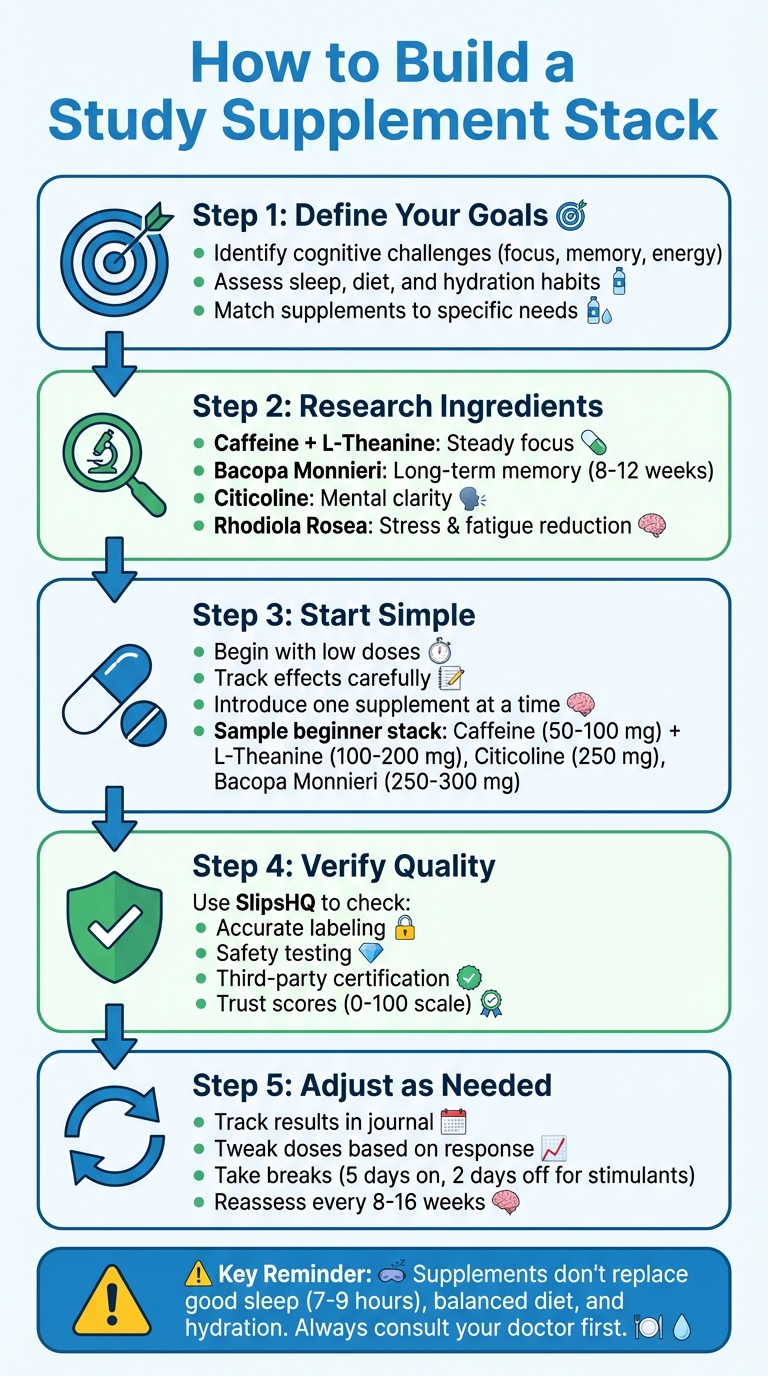
Want to boost your study performance without relying on caffeine alone? Building a study supplement stack tailored to your needs can help improve focus, memory, and energy. Here's the quick guide:
-
Step 1: Define Your Goals
Identify your challenges (e.g., focus during lectures, memory for exams) and assess your health habits like sleep, diet, and hydration. -
Step 2: Research Ingredients
Use proven supplements like:- Caffeine + L-Theanine for steady focus.
- Bacopa Monnieri for long-term memory (takes 8–12 weeks).
- Citicoline for mental clarity.
- Rhodiola Rosea for stress and fatigue.
-
Step 3: Start Simple
Begin with low doses, track effects, and introduce one supplement at a time. Example beginner stack:- Caffeine (50–100 mg) + L-Theanine (100–200 mg).
- Citicoline (250 mg).
- Bacopa Monnieri (250–300 mg).
-
Step 4: Verify Quality
Use tools like SlipsHQ to check for accurate labeling, safety, and third-party testing. -
Step 5: Adjust as Needed
Track your results, tweak doses, and take breaks to avoid tolerance.
Key Reminder: Supplements are not a substitute for good sleep, a balanced diet, and hydration. Always consult your doctor before starting.
This guide focuses on safe, research-based steps to improve your study routine effectively.
5-Step Guide to Building Your Study Supplement Stack
Step 1: Evaluate Your Study Goals and Current Health
Before diving into supplements, take a step back and assess both your academic needs and your overall health.
Define Your Study Goals
Start by identifying your top 2–3 cognitive challenges. Are you zoning out during long lectures? Forgetting material during exams? Or maybe your focus fizzles out after just 14 minutes - matching the average attention span reported by students in a 2025 survey.
Different academic tasks rely on distinct mental processes. For example, sitting through a lecture demands sustained focus, while dense reading pushes your working memory to its limits. Exam preparation hinges on long-term memory retrieval, and creative tasks like writing require a mix of executive function and imaginative thinking. Instead of randomly selecting supplements, match them to the specific cognitive systems you need to support.
| Academic Demand | Cognitive System | Common Problem |
|---|---|---|
| Long lectures | Sustained attention | Hard to stay focused after 20 minutes |
| Dense reading | Working memory | Difficulty retaining information |
| Exam recall | Long-term memory retrieval | Freezing under pressure |
| Writing papers | Executive function, creativity | Struggling to start or finish tasks |
Use this framework to align your supplement choices with your study goals, but don’t skip evaluating your daily habits first.
Review Your Diet, Sleep, and Daily Habits
Supplements can’t work miracles if your lifestyle is out of balance. As Dr. Andrew Huberman, a neuroscientist at Stanford, wisely says:
"No pill can replace excellent behavioral protocols…No amount of supplementation can ever compensate for poor nutrition…Better living through chemistry still requires better living".
Track your energy, focus, and mood on a scale of 1–10 over a few weeks before introducing any supplements. Aim for 7–9 hours of quality sleep per night and make sure at least 75–80% of your meals consist of whole or minimally processed foods. Even small issues like mild dehydration can significantly impact focus. And if you’re sipping coffee at 5 PM but can’t fall asleep later, that’s a clear sign to cut caffeine by 2 PM. Deep sleep is when your brain consolidates memories, so protecting it is critical for learning.
A solid foundation of good habits will amplify any cognitive benefits you aim to achieve.
Talk to a Doctor or Healthcare Provider
Once you’ve evaluated your habits and goals, consult a healthcare professional to refine your approach.
Share a detailed list of all medications, vitamins, and supplements you’re currently taking. Some nutrients can interfere with each other - like calcium blocking iron absorption or zinc competing with copper - so a professional can help you optimize your schedule. Certain combinations, like Vitamin K and blood thinners, can even be dangerous.
Ask for blood tests to check your levels of Vitamin D, B12, and iron. If you have a deficiency, you might need a higher therapeutic dose under medical supervision rather than a standard supplement. Be upfront about your study goals, diet, sleep patterns, and caffeine habits so your doctor can determine whether supplements are necessary - or if lifestyle adjustments should take priority. This step ensures your supplement routine is both safe and effective.
Step 2: Choose Ingredients Backed by Research
When building a supplement stack for studying, it's crucial to focus on ingredients that research shows can address your specific cognitive needs. Based on your goals, look for compounds that support sustained attention, memory enhancement, and stress management.
Caffeine and L-theanine are a classic duo for steady focus. Caffeine increases alertness by blocking adenosine receptors in the brain, which boosts dopamine and acetylcholine activity. However, caffeine alone can sometimes lead to jitters. This is where L-theanine, an amino acid found in tea, comes in. It helps balance out caffeine's overstimulation by regulating neurotransmitter activity. A 2025 meta-analysis of nine randomized controlled trials showed this combination improved reaction times and attention accuracy about two hours after use. The ideal ratio? A 2:1 mix - 200 mg of L-theanine paired with 100 mg of caffeine - to stay focused without crashing.
For memory support, consider Bacopa Monnieri and Citicoline. Bacopa, a staple in Ayurvedic medicine, boosts memory by protecting brain cells from oxidative stress. However, it requires consistent use over 8–12 weeks to show noticeable effects on memory and attention. Citicoline (CDP-Choline), on the other hand, works faster. It supports acetylcholine production, a neurotransmitter critical for learning, and strengthens brain cell membranes. A daily dose of 250–500 mg of Citicoline can enhance both memory and attention, making it a gentle option for regular use without affecting sleep.
To tackle mental fatigue and improve stress resilience, Rhodiola Rosea and Phosphatidylserine are excellent choices. Rhodiola, an adaptogen, helps the body manage stress and reduces mental exhaustion during demanding study sessions. A daily dose of 200–600 mg, taken in the morning, can improve mood and energy levels without interfering with sleep. Phosphatidylserine, a phospholipid, supports brain cell membranes and enhances communication between neurons, helping you think more clearly when under pressure.
A systematic review found that only 9 out of 54 commonly used supplement ingredients have strong clinical backing. By sticking to these well-researched options, you can avoid wasting money on ineffective compounds. These scientifically supported ingredients form the foundation of a reliable study supplement stack, setting you up for the next steps in crafting a personalized approach. With these choices, you're ready to build a simple yet effective beginner stack.
Step 3: Create a Simple Beginner Stack
With your goals in mind and a clear understanding of the ingredients and safety considerations, it’s time to put together your first supplement stack.
Begin with Low Doses
After choosing the ingredients you want to try, start with the lowest effective dose to gauge how your body reacts. Everyone’s brain chemistry is different, so what works for one person might not work the same way for you.
"Start with a low dose to see how a certain supplement affects you before taking higher doses. Always err on the side of too little and then slowly increase your dosages as you see how your mind and body react." - Braintropic Research Team
If you’re working with bulk powders, use a digital milligram scale to measure doses accurately. For capsules, stick to the smallest available dose and resist the temptation to increase it too soon. Never exceed the recommended dose - taking too much can reduce effectiveness or lead to unwanted side effects.
Watch for Side Effects
During the first week of trying any new supplement, pay close attention to how you feel. Some common early side effects include headaches, digestive issues, or difficulty sleeping. For example, headaches caused by supplements that increase acetylcholine demand can often be alleviated by adding a choline source like CDP-Choline (250 mg). If Bacopa Monnieri causes stomach discomfort, try taking it with food or in the evening.
Keep a daily log of your dose, timing, focus levels, and any side effects. If you experience jitters, double-check that your caffeine-to-L-Theanine ratio is balanced to smooth out the stimulation. To avoid sleep disturbances, stop consuming caffeine by 2:00 PM.
Sample Beginner Stack
Here’s a simple, research-supported stack to help you get started. It’s designed to provide immediate focus while supporting long-term brain health, and it’s gentle enough for daily use:
| Ingredient | Dose | Timing | Primary Benefit |
|---|---|---|---|
| Caffeine | 50–100 mg | Morning or as needed | Alertness and attention |
| L-Theanine | 100–200 mg | With caffeine | Calm focus and reduced jitters |
| Citicoline (CDP-Choline) | 250 mg | Morning | Mental energy and clarity |
| Bacopa Monnieri | 250–300 mg | Daily with food | Long-term memory support |
This stack typically costs between $77 and $97 per month when purchased individually. For example, CDP-Choline costs around $28 for 60 capsules, Bacopa Monnieri is about $30 for 60 capsules, and L-Theanine runs around $19 for 90 capsules. You can get your caffeine from coffee or tea, or opt for a low-dose supplement.
Introduce supplements one at a time, waiting a few days between each addition to observe how your body responds. Keep in mind that Bacopa Monnieri requires consistent use for 8–12 weeks to deliver its full memory-enhancing effects, so patience is key. For caffeine, consider a "5 days on, 2 days off" schedule to minimize tolerance buildup.
Once your beginner stack is set, the next step is to verify the quality and safety of your supplements in Step 4.
Step 4: Check Supplement Quality and Safety
Once you've put together your beginner stack, the next step is making sure it’s both safe and effective. This means verifying that the ingredients listed on the label actually match what’s inside. Since the FDA doesn’t regulate supplements as strictly as prescription drugs, manufacturers are responsible for ensuring safety and accurate labeling before their products hit shelves. The FDA typically steps in only when a product is flagged as adulterated or misbranded.
Use SlipsHQ to Verify Supplement Quality
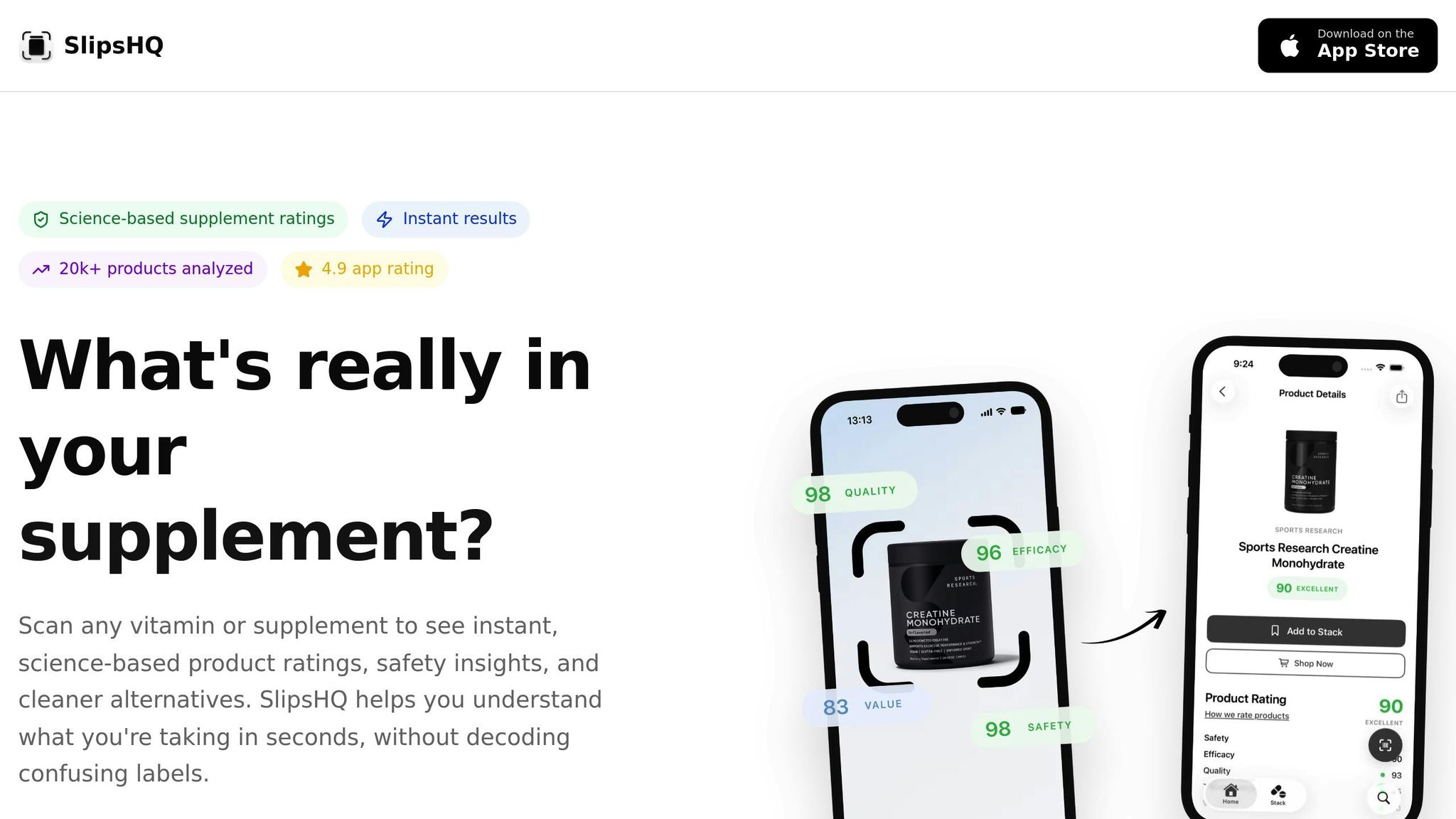
SlipsHQ is a handy tool for checking the quality of supplements before you buy them. By scanning a product’s barcode, you can instantly access a trust score (on a 0–100 scale) based on criteria like safety, efficacy, ingredient quality, transparency, and overall value. This app helps you confirm ingredient purity, check for potential contamination, and review safety warnings, all backed by lab data and third-party testing.
With a database of over 200,000 supplements, SlipsHQ makes it easy to evaluate products whether you’re shopping online or in-store. Look for third-party certifications like the Informed Choice seal, which tests for more than 285 banned substances and contaminants. The app consolidates this information, saving you the hassle of searching through multiple sources. It also allows you to compare prices, ensuring you get a high-quality product without overspending.
Avoid Misleading Labels and Hidden Ingredients
SlipsHQ doesn’t just check for quality - it also helps you spot misleading labels and proprietary blends that may hide ingredient dosages. Be cautious of products with vague claims or unregulated marketing terms. Always review the "Supplement Facts" panel to confirm exact ingredient amounts. These detailed ratings make it easier to identify potential issues before you commit to purchasing a product.
Get Tailored Stack Recommendations
For an even more effective stack, personalization is key. SlipsHQ offers customized supplement suggestions based on your specific goals, whether it’s improving memory, boosting energy, or sharpening focus. The app can also flag potential interactions, such as ingredients that might compete for absorption or interfere with medications you’re taking.
Step 5: Start Your Stack and Make Adjustments
Now that you've confirmed the quality of your supplements, it's time to put your personalized stack into action.
Introduce One Supplement at a Time
When starting your stack, add one supplement at a time, leaving a gap of 1–2 weeks between each addition. This gradual approach helps you pinpoint the specific effects of each supplement. As Optmzd puts it:
"Add supplements one or two at a time, waiting a few weeks between additions. If you add five new supplements and feel better, you do not know which ones are responsible".
Begin with the lowest dose to test your tolerance, then increase gradually if needed. Keep in mind that supplements vary in how long they take to show results. For example, Bacopa Monnieri may need 8–12 weeks of consistent use to reach its full potential, while L-Tyrosine works within 4 to 5 hours. Carefully observe how each supplement affects you before moving to the next one.
Track Your Results and Make Changes
Once you've established your starting doses, tracking your progress becomes essential. Use a journal or tools like SlipsHQ to monitor changes in areas like focus, energy, mood, stress, and sleep. Record your baseline performance so you can easily compare results over time. For many non-stimulant nootropics, it can take 2 to 4 weeks of consistent use before you notice subtle benefits.
Track both objective data (e.g., reaction times or how long you can maintain deep focus) and subjective impressions (e.g., rating your energy levels on a 1–10 scale at different times of the day). Review your logs every few weeks and adjust your stack based on what’s working. If a supplement doesn’t seem to make a noticeable difference after a fair trial period, consider phasing it out.
Take Breaks and Refine Your Approach
To keep your stack effective in the long run, plan for regular breaks. For stimulating supplements like caffeine, a 5-days-on, 2-days-off cycle can help prevent tolerance. Adaptogens like Rhodiola Rosea benefit from breaks as well - try taking one after 4–6 weeks of continuous use to reset your sensitivity.
Every 8 to 16 weeks, reassess your stack. As your study load changes or your body adapts, you might need to tweak your approach. Allow 4–6 weeks for new supplements to fully show their effects before making any final decisions. And remember, the basics - like proper sleep, hydration, and a balanced diet - should always be in place before attributing changes to your supplement routine.
Conclusion
Creating a study supplement stack starts with understanding your personal needs and building a routine that works for you. The steps outlined - from setting clear goals to monitoring your progress - lay the groundwork for a safe and effective supplementation plan. This structured approach emphasizes the value of taking things step by step and relying on solid research.
It's important to remember that supplements aren't one-size-fits-all. Factors like your genetics, diet, sleep habits, and stress levels all play a role in how you respond to different nootropics. That’s why generic stacks often fall short of delivering the best results.
Safety should always come first. Focus on the basics, such as getting 7–9 hours of sleep, exposing yourself to natural light in the morning, and maintaining a well-rounded diet. Tools like SlipsHQ can make the process easier by helping you evaluate product quality, spot potential interactions, and design stacks tailored to your needs - all based on transparent, science-driven insights rather than flashy marketing claims.
FAQs
How do I know which supplements I actually need?
To figure out which supplements are right for you, start by pinpointing your specific health goals - whether that’s boosting focus, enhancing memory, or increasing energy. Once you’ve identified your goals, look into supplements that are backed by solid scientific research for those particular areas. Pay attention to recommended dosages and the best times to take them. Avoid picking supplements at random; instead, create a personalized plan where every supplement serves a clear purpose. Tools like SlipsHQ can be incredibly useful for checking the safety, quality, and effectiveness of products, helping you build a routine that fits your unique needs.
What should I avoid mixing with my study stack?
When building your study stack, steer clear of combining it with supplements or medications that might lead to harmful interactions or reduce its effectiveness. For example, avoid pairing it with sedatives like ashwagandha, blood thinners such as glucosamine, or stimulants - especially when combined with other stimulants or medications like Adderall. Doing so can heighten the risk of side effects or adverse reactions.
How long should I test a supplement before changing it?
To gauge how a supplement works for you, give it at least 3–4 days to notice any initial effects. For a clearer picture, extend the trial to a full week or more. This extra time gives you a better sense of how it affects things like focus, memory, or energy levels.