
Creatine Safety: What Studies Show
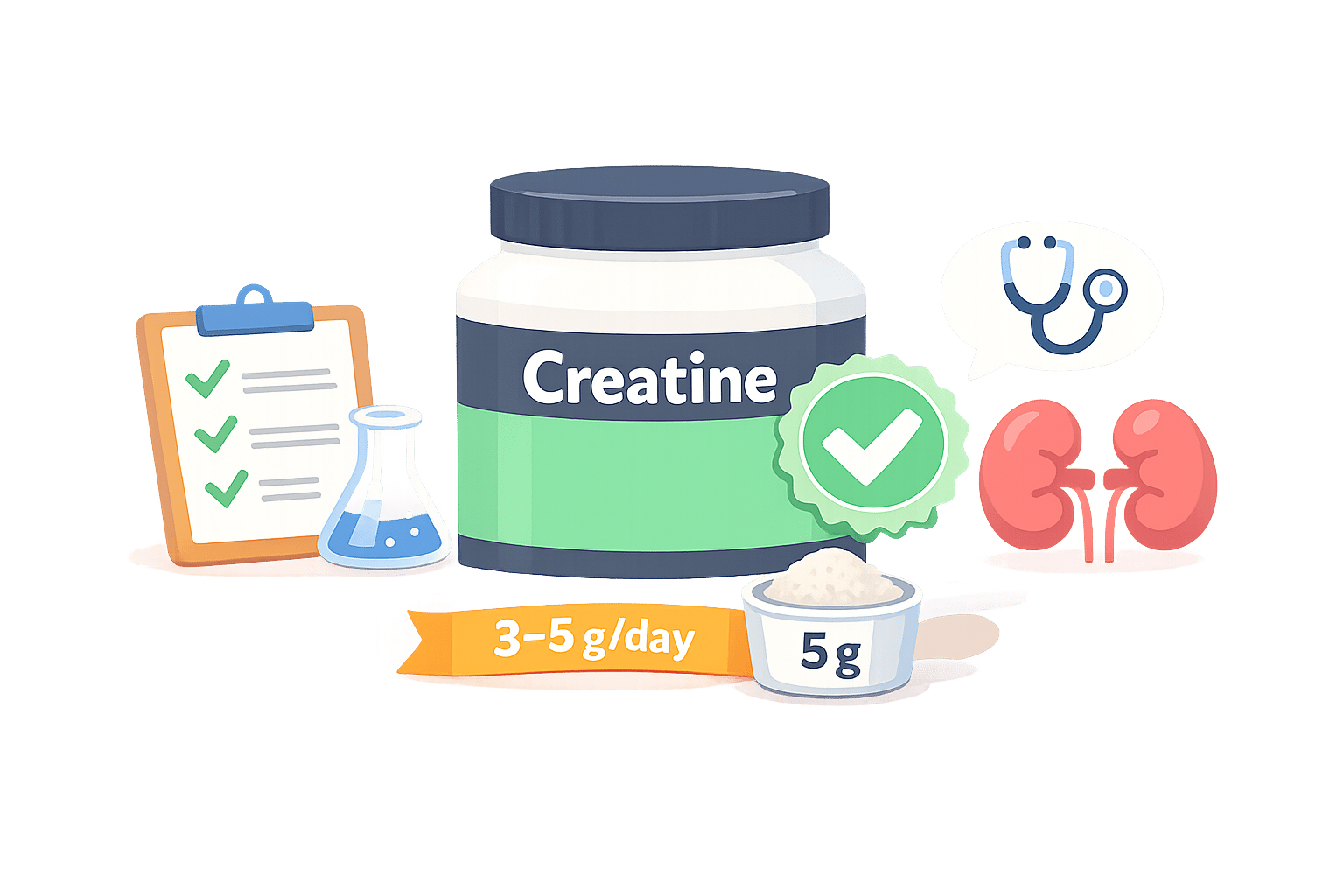
Creatine is one of the most researched dietary supplements and is widely used to improve athletic performance. Despite lingering misconceptions, decades of studies confirm its safety for healthy individuals. Here's what you need to know:
- Extensive Research: Over 680 clinical trials involving more than 12,800 participants have shown creatine to be safe, even with long-term use (up to 30 g/day for 5 years).
- Kidney and Liver Health: Contrary to myths, creatine does not harm kidney or liver function. Slight increases in creatinine levels are normal and unrelated to organ damage.
- No Major Side Effects: Side effects like digestive issues are rare and typically occur at high doses. Weight gain is due to water retention in muscles, not fat.
- Specific Groups: Safe for older adults, adolescents (post-puberty), and even individuals with conditions like type 2 diabetes, under proper guidance.
Creatine is backed by science as one of the safest and most effective supplements available. Stick to 3–5 grams daily, and consult a doctor if you have pre-existing kidney conditions.
What Scientific Studies Show About Creatine Safety
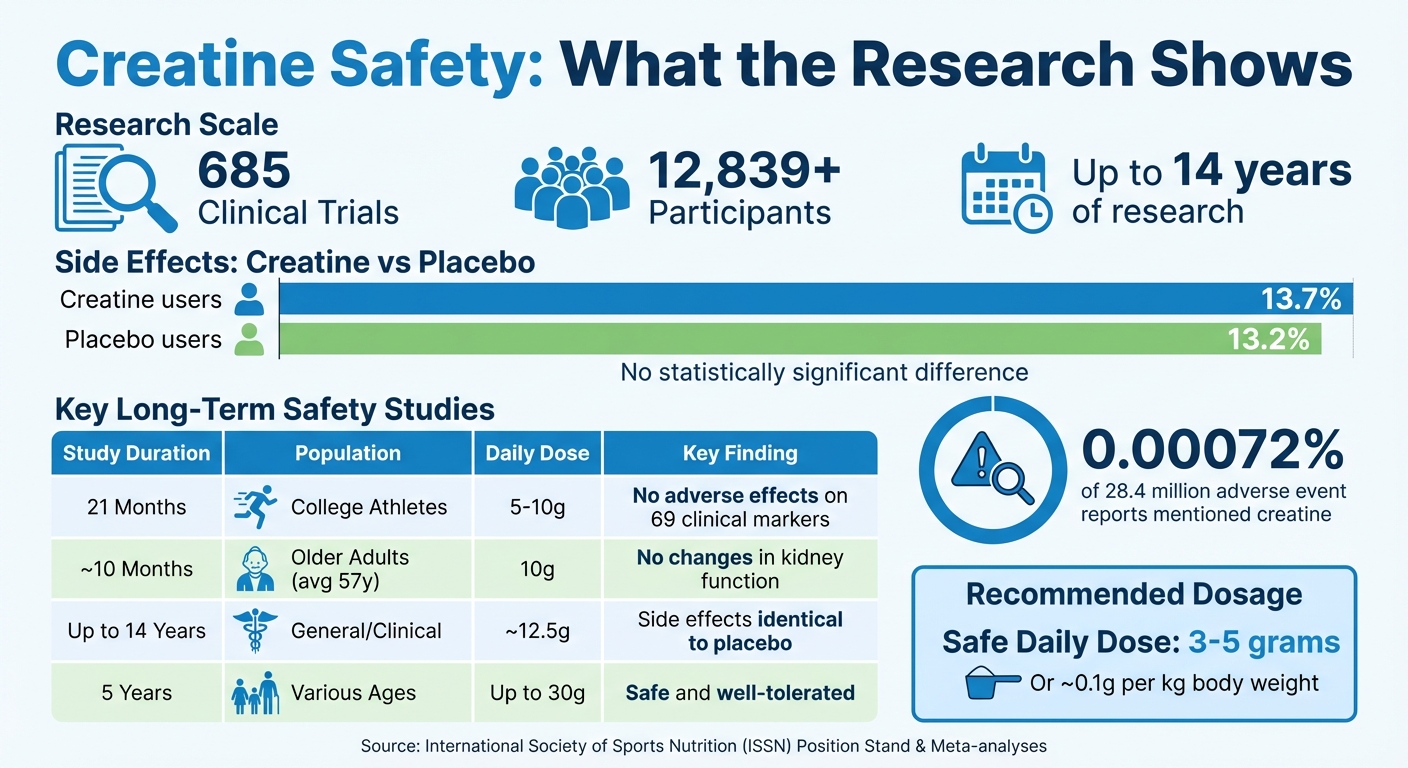
Creatine Safety Research: Clinical Trial Data and Long-Term Study Results
ISSN Position Stand on Creatine Safety

The International Society of Sports Nutrition (ISSN) has thoroughly reviewed decades of research and concluded that creatine monohydrate is both safe and well-tolerated in healthy individuals, even at doses as high as 30 g/day for up to five years.
"These studies show that short and long-term supplementation (up to 30 g/day for 5 years) is safe and well-tolerated in healthy individuals and in a number of patient populations ranging from infants to the elderly." – International Society of Sports Nutrition
This statement carries significant weight, as it comes from one of the most trusted organizations in sports nutrition science. The ISSN's position is based on hundreds of clinical trials, reflecting the collective findings of researchers who have studied creatine extensively. Their endorsement provides a strong foundation for understanding creatine's safety across a variety of contexts.
Long-Term Creatine Use in Healthy Adults
A comprehensive 2025 analysis of 685 clinical trials, involving over 12,000 participants, found that side effects were reported by 13.7% of creatine users, compared to 13.2% of those taking a placebo - a difference that was statistically insignificant.
Further supporting its safety, researchers reviewed 28.4 million adverse event reports submitted to regulatory agencies. Creatine was mentioned in just 0.00072% of these reports.
Long-term studies corroborate these findings. For instance, from 2001 to 2003, Richard B. Kreider conducted a 21-month study involving 98 Division IA college football players. Participants consumed 15.75 g/day for five days, followed by an average of 5 g/day. The study monitored 69 health markers, including liver enzymes, kidney function, and electrolytes, at nine different intervals. No significant differences were observed between the creatine group and the 44 athletes who did not use the supplement.
Another notable double-blind trial, published in 2005, tracked 175 adults with an average age of 57.7 years. Participants took 10 g of creatine daily for approximately 310 days. The results confirmed that kidney function remained stable in middle-aged and older adults.
"Results demonstrate that Cr supplementation does not increase the prevalence or frequency of side effects when compared to participants ingesting PLA. Therefore, claims that Cr supplementation increases the risk of side effects are unfounded." – Richard B. Kreider, Texas A&M University
These findings, combined with evidence from diverse populations, affirm creatine's safety over extended periods.
Creatine Safety in Specific Groups
Research spanning up to 14 years has shown that creatine supplementation does not negatively impact kidney, liver, or muscle enzyme profiles.
Older adults, in particular, benefit from creatine's safety profile. Studies involving individuals over 60 have demonstrated that creatine not only poses no harm but may also help combat age-related muscle loss when paired with resistance training.
For adolescent athletes, studies indicate no adverse effects when creatine use is supervised. The ISSN supports its use in youth athletes who have gone through puberty, engage in rigorous training, and use the supplement under proper guidance.
Even among populations considered at higher risk for kidney issues - such as individuals with type 2 diabetes, postmenopausal women, and children with rheumatic diseases - research has found no evidence of renal impairment due to creatine supplementation. A 2025 meta-analysis of 21 studies confirmed that creatine does not adversely affect the Glomerular Filtration Rate (GFR), a key indicator of kidney health.
| Study Duration | Population | Daily Dosage | Key Safety Finding |
|---|---|---|---|
| 21 Months | College Athletes | 5-10 g | No adverse effects on 69 clinical markers |
| ~10 Months | Older Adults (Avg 57y) | 10 g | No significant changes in kidney function |
| Up to 14 Years | General/Clinical | ~12.5 g (avg) | Side effect frequency identical to placebo |
| 5 Years | Various Ages | Up to 30 g | Safe and well-tolerated across all groups |
Common Myths About Creatine
Research has consistently shown that creatine is safe, yet several myths about its use persist. Let’s clear up some of the most common misconceptions.
Does Creatine Damage Your Kidneys or Liver?
One of the most widespread myths is that creatine harms the kidneys or liver. While creatine does increase serum creatinine levels - a normal byproduct of creatine metabolism - this doesn’t mean it damages these organs. In fact, kidney function, as measured by glomerular filtration rate (GFR), remains unaffected. About 1–2% of the creatine stored in your muscles breaks down into creatinine daily, which is naturally excreted through urine.
"Creatine supplementation is associated with a modest, transient increase in serum creatinine levels, likely due to metabolic turnover rather than renal impairment. No significant changes were observed in GFR, suggesting preserved kidney function." – BMC Nephrology
Long-term studies back up these findings. For instance, in a study involving 175 adults taking 10 grams of creatine daily for nearly a year, no signs of kidney stress - like elevated plasma urea levels or micro-albuminuria - were observed. Similarly, liver function tests have shown no adverse effects from creatine supplementation. If you’re taking creatine and need kidney function tests, let your doctor know so they can use more precise measures, such as GFR or Cystatin C, instead of relying solely on creatinine levels.
Does Creatine Cause Dehydration or Muscle Cramps?
Another common myth suggests that creatine causes dehydration or muscle cramps. This misconception likely stems from early assumptions about creatine’s osmotic properties, which led some to theorize that it might draw water away from other parts of the body. Early warnings from groups like the American College of Sports Medicine were based on anecdotal reports rather than scientific evidence.
In reality, creatine helps increase intracellular water - water stored within muscle cells - which actually supports hydration. A review of 685 clinical trials with 12,839 participants found no significant increase in muscle cramping among creatine users. Muscle cramping occurred in just 0.52% of creatine users compared to 0.07% of placebo users, a difference that wasn’t statistically significant (p = 0.085). Moreover, research on NCAA Division IA football players found that athletes taking creatine experienced fewer cramps (p = 0.021) and fewer heat-related illnesses (p = 0.043). Even in populations prone to muscle cramping, such as hemodialysis patients, creatine supplementation (12 g) reduced cramping symptoms by 60%.
"Experimental and clinical research does not validate the notion that creatine supplementation causes dehydration and muscle cramping." – Antonio et al., Journal of the International Society of Sports Nutrition
Other Creatine Misconceptions
Several other myths continue to misrepresent creatine’s effects.
For example, the initial weight gain of 2–7 pounds often seen with creatine use is due to water retention in muscle cells - not fat gain. Concerns about creatine being unsafe for women or adolescents are also unfounded, as research has shown no evidence to support these claims.
Additionally, some people mistakenly believe that creatine causes cancer or acts like an anabolic steroid. There is no evidence linking creatine to cancer; on the contrary, some studies suggest that higher dietary creatine intake may even lower cancer risk. And unlike steroids, creatine is not a hormone - it’s a natural compound found in foods like red meat and fish.
Finally, while taking more than 10 grams of creatine at once can lead to osmotic diarrhea, sticking to standard doses of 5 grams or less significantly reduces the risk of digestive issues.
Health Benefits Beyond Athletic Performance
Once safety concerns are addressed, it’s worth diving into how creatine benefits overall health, far beyond its role in athletic performance. Research highlights its positive effects on brain health, inflammation, and recovery.
Creatine and Brain Health
Did you know your brain uses about 20% of your body’s total energy, even though it only accounts for 2% of your body weight? Creatine plays a key role in meeting this energy demand by boosting phosphocreatine levels in the brain, which helps sustain ATP - the primary energy currency for neurons.
A 2024 study conducted at University Hospital RWTH Aachen revealed some fascinating insights. In this double-blind trial, 15 participants were kept awake for 21 hours and then given a single high dose of creatine (0.35 g/kg). Within 3 to 7.5 hours, their cognitive processing speed improved, alongside measurable changes in cerebral high-energy phosphates.
"A high single dose of creatine can partially reverse metabolic alterations and fatigue-related cognitive deterioration." – Nature Scientific Reports
Further evidence comes from a meta-analysis of 16 randomized controlled trials, which showed creatine significantly enhances memory (standardized mean difference of 0.31) and processing speed (SMD of -0.51) in adults. Interestingly, older adults over 60 with lower dietary creatine intake (less than 0.95 g/day) performed worse on cognitive tests compared to those with higher intake.
Creatine might also provide neuroprotective benefits. For example, a six-month study involving children and adolescents with traumatic brain injuries found that taking 0.4 g/kg/day of creatine improved communication, locomotion, and cognitive function while reducing post-traumatic amnesia. Ongoing research is exploring its potential therapeutic applications for neurological conditions like Parkinson’s, Huntington’s, and ALS.
Vegetarians and vegans, who generally have lower creatine stores in their brains and muscles (90–110 mmol/kg compared to 120 mmol/kg in omnivores), might experience even greater cognitive benefits from supplementation.
Creatine for Inflammation and Recovery
Creatine’s benefits don’t stop at brain health - it also helps with recovery by reducing inflammation and cellular stress. As an antioxidant, it neutralizes reactive oxygen species (ROS) and protects cells during times of acute stress. Additionally, creatine lowers systemic inflammatory markers.
One study focused on marathon runners found striking results. Participants who consumed 20 g of creatine daily for five days before a 30 km race experienced a 61% reduction in prostaglandin E2 and a 34% drop in TNF-alpha, two key markers of inflammation, compared to those who took a placebo. They also showed 19% lower creatine kinase levels and avoided the typical rise in lactate dehydrogenase, both indicators of muscle damage.
Even more impressive, creatine reduced muscle damage markers by 84% during recovery over a seven-day period, speeding up the restoration of muscle function.
"Creatine monohydrate supplementation... may play a role in preventing and/or reducing the severity of injury, enhancing rehabilitation from injuries, and helping athletes tolerate heavy training loads." – Richard B. Kreider, PhD, ISSN Position Stand
For those who aren’t athletes, creatine still offers recovery benefits. It aids in managing disuse atrophy and improves functional capacity in patients with conditions like fibromyalgia and osteoarthritis. Older adults, in particular, see significant advantages when combining creatine with resistance training, helping them maintain strength and balance as they age.
What the Research Tells Us About Creatine Safety
What You Need to Know About Creatine Safety
Decades of research have consistently shown that creatine is not only effective but also extremely safe. In fact, studies confirm that creatine is among the most thoroughly researched and safest supplements available today. Large clinical trials and analyses of adverse events reveal that its side effects are virtually indistinguishable from those of a placebo.
Long-term studies, some spanning up to 14 years, show no significant impact on key health markers when using creatine. The most common "side effect" reported is weight gain, which results from increased muscle mass and water retention in muscle cells. For most people, this is not a health concern but rather an expected outcome. When taken at the recommended dosage - 3–5 grams per day or approximately 0.1 grams per kilogram of body weight - creatine monohydrate remains the most reliable and well-supported form, accounting for 95% of all related safety and efficacy research.
For individuals with pre-existing kidney conditions, consulting a doctor before starting creatine is essential, as such individuals were typically excluded from general safety trials. Beyond this, research supports creatine's safety across a wide range of populations, including adolescents and older adults. This overwhelming evidence underscores the importance of selecting high-quality supplements from trusted sources.
How SlipsHQ Helps You Evaluate Supplements
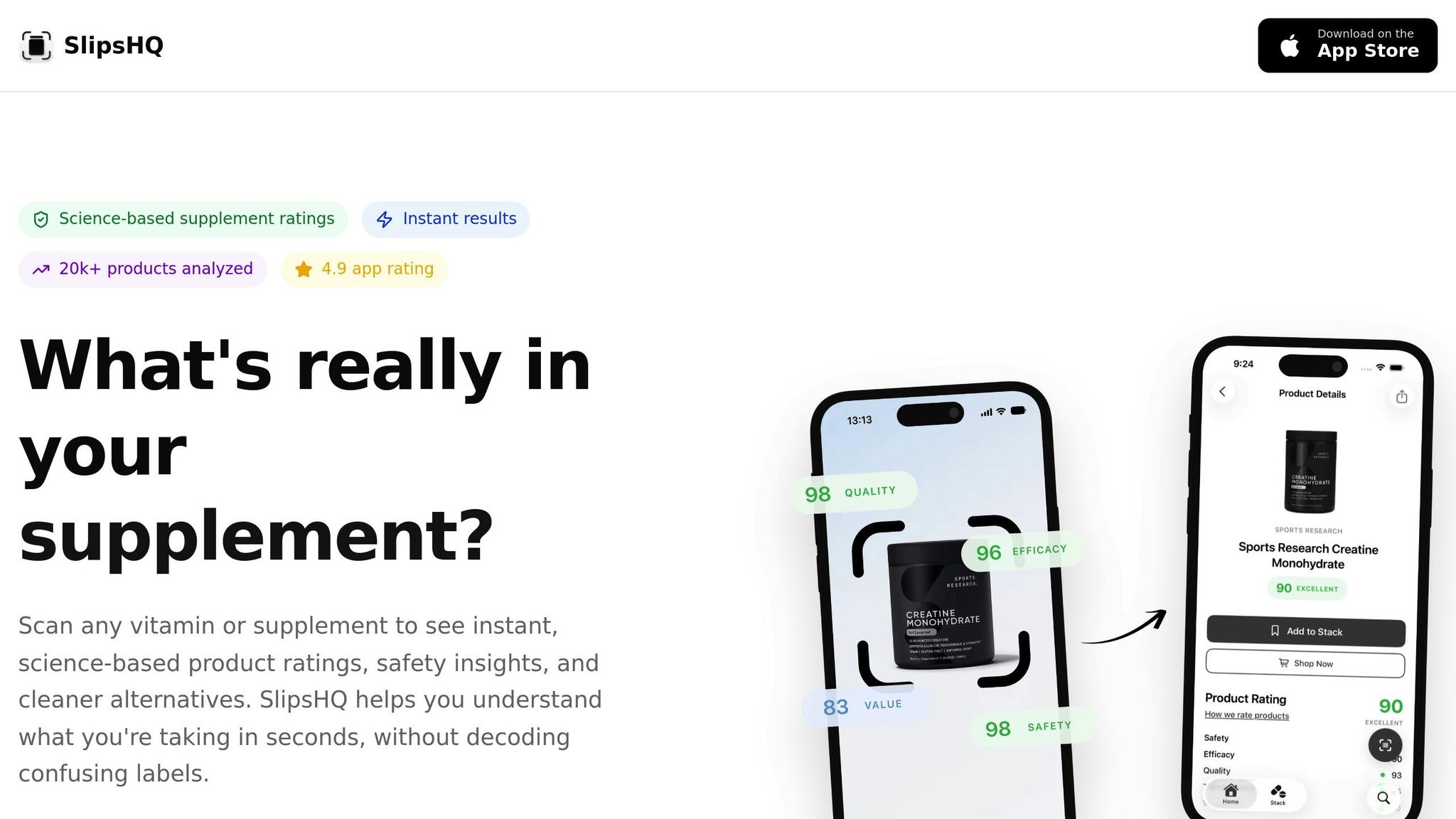
With so many creatine supplements and formulations on the market, finding a trustworthy product can feel overwhelming. That’s where SlipsHQ makes things easier. This app provides instant, science-backed analysis of over 200,000 supplements - just by scanning a barcode. Each product is rated on a 0–100 trust score, evaluating factors like safety, efficacy, quality, transparency, and value. These ratings are grounded in reliable scientific evidence.
Beyond ratings, SlipsHQ offers features like personalized supplement stack recommendations, real-time price comparisons, and detailed safety warnings, including alerts about potential drug interactions. Whether you're deciding between creatine monohydrate options or planning an entire supplement regimen, this app simplifies the process. Premium plans start at $4.99 per week (or $39.99 annually), making it an affordable way to ensure your supplements are safe and effective - without the guesswork.
FAQs
Is creatine safe for people with kidney conditions?
Research indicates that creatine is typically safe when taken at recommended doses, even for people with pre-existing kidney conditions. However, if you have any kidney-related health concerns, it’s essential to talk to your healthcare provider before starting creatine. This ensures it’s suitable for your individual circumstances.
Although studies haven’t shown major risks for healthy individuals or those with mild kidney issues, keeping an eye on your kidney function is a wise move. Stick to the suggested dosage and steer clear of overuse to reduce any potential risks.
Does creatine cause dehydration or muscle cramps?
Creatine can lead to increased water retention in muscles, which might cause a slight weight gain. Although some believe it could result in dehydration or muscle cramps, research largely shows that creatine is safe and well-tolerated for healthy individuals. Studies haven't uncovered strong evidence connecting creatine to these side effects when used appropriately.
If you're thinking about incorporating creatine into your regimen, staying properly hydrated and sticking to recommended dosages can help you avoid potential issues. It's always a good idea to consult a healthcare professional before starting any new supplement.
What are the mental benefits of taking creatine?
Creatine supplementation has been shown to support mental performance by boosting the brain's energy metabolism. Research indicates it may help improve focus, memory, and problem-solving abilities, especially during times of cognitive stress or sleep deprivation.
This is largely due to creatine's ability to sustain energy levels in brain cells, offering a potential way to enhance mental clarity and maintain resilience when facing demanding situations.