
How Much Collagen Per Day is Safe?
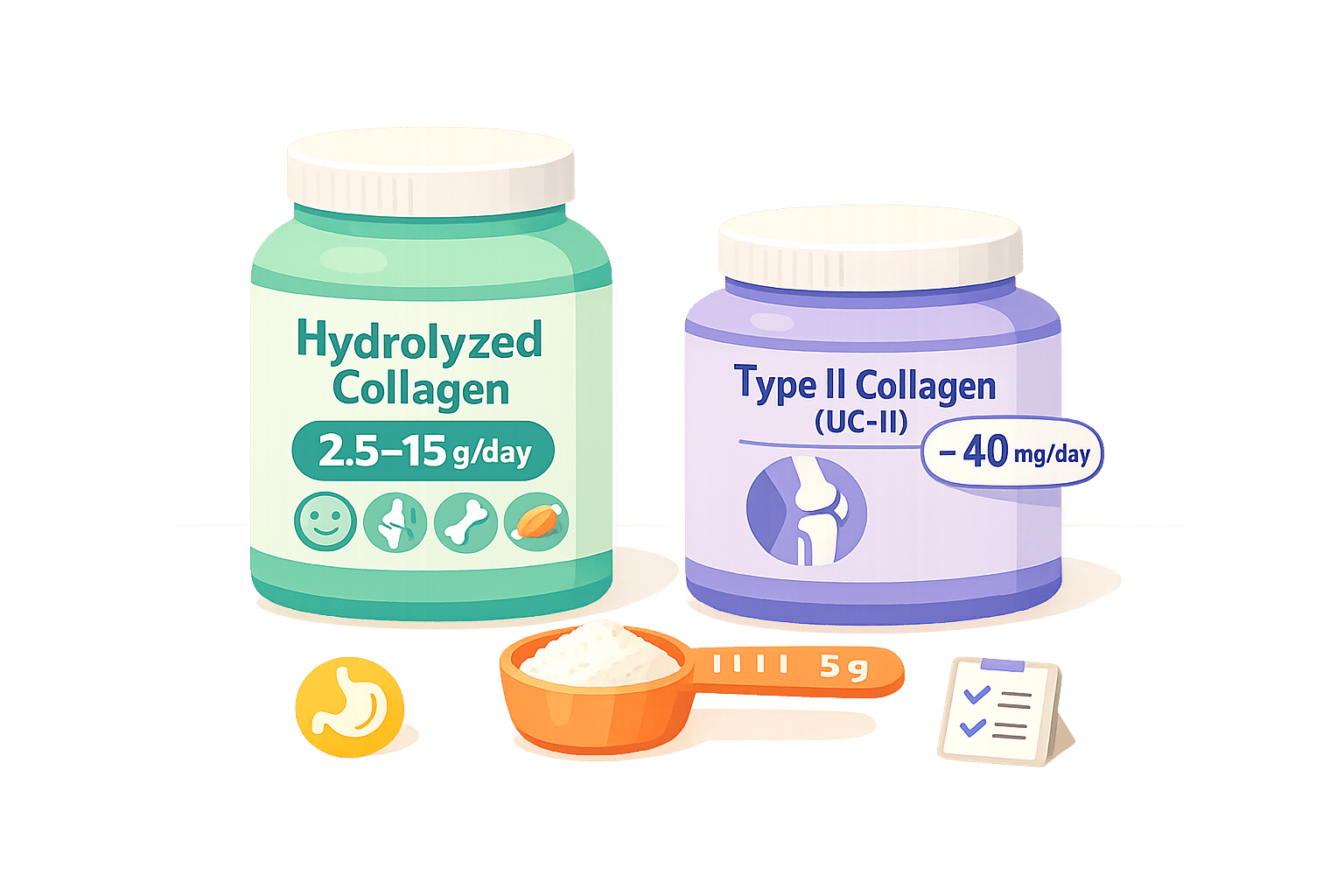
Collagen supplements are generally safe when taken in the right amounts. The recommended daily dose of hydrolyzed collagen ranges from 2.5 to 15 grams, depending on your health goals:
- Skin health: 2.5–10 grams
- Joint pain: 2.5–10 grams
- Bone support: 5 grams
- Muscle growth: 15 grams
- Osteoarthritis: 40 mg of undenatured Type II collagen
Your needs may vary with age, activity level, and health conditions. For older adults or postmenopausal women, higher doses (10–15 grams) may help offset collagen loss. Always check product labels for serving sizes and consult a doctor if you're pregnant, nursing, or on medications.
Collagen is safe for most, but over 15 grams daily might cause bloating or digestive discomfort. Pair collagen with Vitamin C (80 mg) to improve absorption and ensure your supplement is high-quality by verifying its purity and safety.
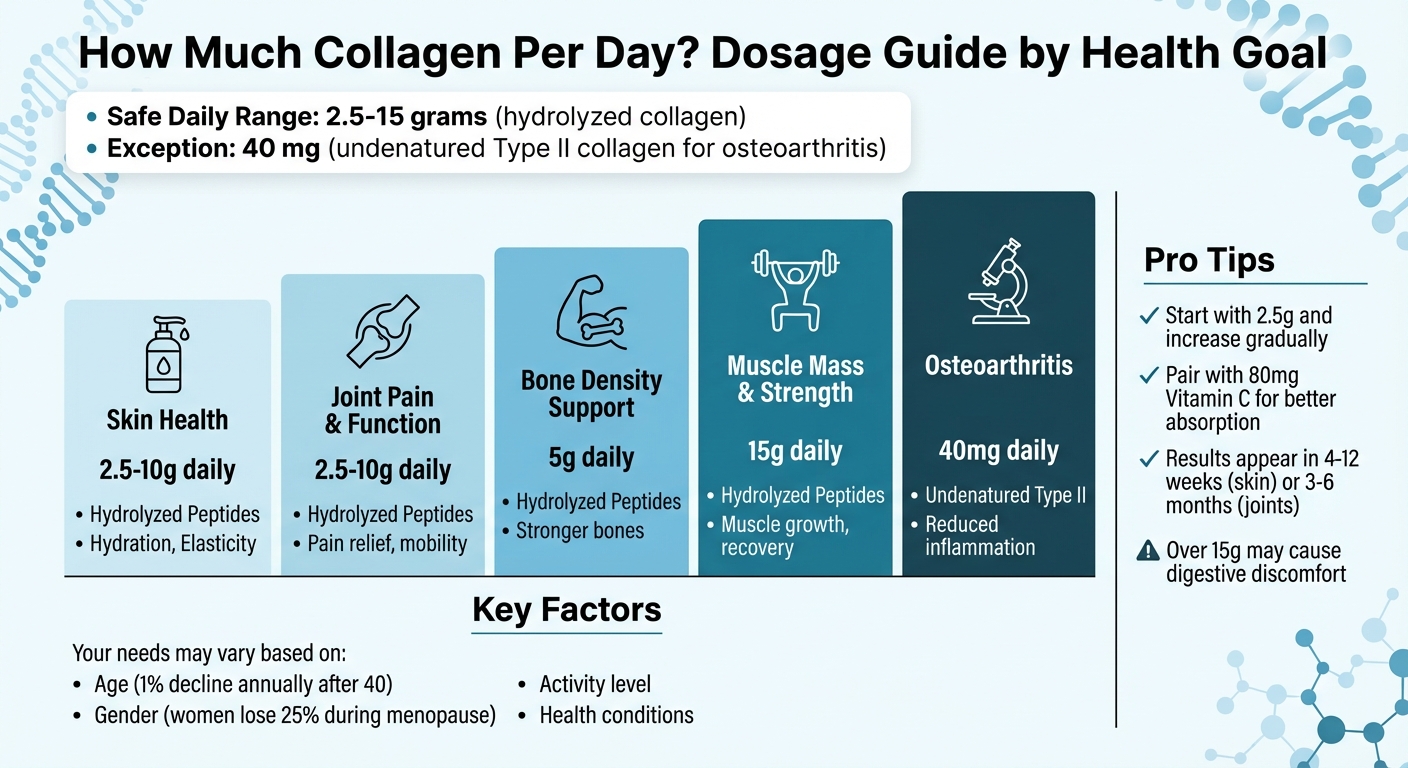
Daily Collagen Dosage Guide by Health Goal
How Much Collagen Should You Take Daily?
Standard Dosage Range
For adults, a daily intake of 2.5 to 15 grams of hydrolyzed collagen is considered safe and effective. Studies show that doses of up to 10 grams per day can be taken for as long as six months without notable side effects. The ideal amount depends on your health goals - what works for improving skin hydration may not suffice for building muscle mass.
Hydrolyzed collagen requires a higher dose (in grams), while undenatured Type II collagen is effective at much smaller amounts - around 40 milligrams. This is because undenatured collagen works through immune signaling, which needs significantly less to achieve results.
"Most collagen supplements recommend a daily dose of 2.5 to 15 grams for powder forms; liquid, capsules, tablets, and gummies may differ."
- Hardik Doshi MD, FACS, Ample
Always check the product label to confirm how much collagen you're getting per serving. For example, powders often provide 10–20 grams per scoop, while capsules or gummies typically contain smaller amounts, meaning you might need multiple servings to hit an effective dose.
Dosage Based on Your Health Goals
Your daily collagen dose will vary depending on your specific health objectives. For skin health, 2.5–5 grams may be enough, while improving muscle mass or strength might require up to 15 grams. Here’s a breakdown:
| Health Goal | Daily Dosage | Supplement Type |
|---|---|---|
| Skin Health (Hydration, Elasticity) | 2.5g – 10g | Hydrolyzed Peptides |
| Joint Pain & Function | 2.5g – 10g | Hydrolyzed Peptides |
| Bone Density Support | 5g | Hydrolyzed Peptides |
| Muscle Mass & Strength | 15g | Hydrolyzed Peptides |
| Osteoarthritis/Joint Inflammation | 40mg | Undenatured Type II |
If you’re new to collagen supplements, start with a smaller dose - around 2.5 grams - and gradually increase it as you gauge your body’s response. Some people might experience mild digestive discomfort, like bloating, when starting collagen. To boost collagen production, pair your supplement with 80 mg of Vitamin C. For muscle recovery or connective tissue repair, research suggests taking collagen about an hour before exercising for the best results.
What Affects Your Collagen Needs?
When determining how much collagen you need, factors like age, gender, and the type of supplement you choose play a big role in tailoring the right dosage for you.
Age and Gender Differences
As we age, our body's ability to produce collagen naturally declines - starting around age 40, production drops by about 1% each year. For older adults, this means higher doses, typically around 10–15 grams daily, are often necessary to make up for the shortfall .
Women face an additional hurdle due to hormonal changes. Collagen loss accelerates by about 25% during and after menopause, driven by a drop in estrogen levels. This impacts not only skin elasticity but also bone health. A study spanning four years found that postmenopausal women who consumed 5 grams of collagen daily saw their bone mineral density increase by 5.79–8.16% in the spine and 1.23–4.21% in the femur. For women in their 40s and 50s, a daily intake of 5–10 grams is often sufficient, but postmenopausal women may need closer to 10–15 grams.
"Generally speaking, older adults may benefit from consuming collagen on the higher end of the recommended range because the body's natural collagen production declines as we age."
- Bonnie Roney, RD
Men also experience collagen-related challenges, particularly as they age. For older men dealing with sarcopenia (muscle loss), about 15 grams daily, combined with resistance training, can help maintain muscle mass and strength. Beyond age, activity level matters too. Athletes or those with physically demanding lifestyles often require 10–15 grams daily to support tissue repair, while a more sedentary person might only need 2.5–5 grams for basic maintenance .
Now let’s explore how the type of collagen supplement you choose can influence absorption and effectiveness.
Supplement Type and How Your Body Absorbs It
The way collagen is processed and absorbed makes a big difference in how much you need. Hydrolyzed collagen peptides, for example, are broken down into smaller amino acid chains that your body can easily absorb. These are typically taken in doses ranging from 2.5 to 15 grams daily, depending on your specific health goals .
On the other hand, undenatured Type II collagen works differently. It interacts with your immune system to reduce joint inflammation and requires much smaller doses - just 40 mg daily. This form, often derived from chicken cartilage and unaltered by heat , is particularly effective for joint issues like osteoarthritis. However, it’s less suited for improving skin or muscle health compared to hydrolyzed collagen.
Choosing the right type of supplement depends on what you’re aiming to address - whether it’s joint pain, skin elasticity, or muscle support.
Is Collagen Safe? What Are the Side Effects?
Collagen supplements are generally considered safe. Clinical studies involving doses ranging from 2.5 to 15 grams per day have reported no major adverse effects. In fact, a review of 19 studies with 1,125 participants highlighted that hydrolyzed collagen not only improved skin hydration and elasticity but also maintained a favorable safety profile.
That said, side effects, while uncommon, can occur. These might include mild digestive issues like bloating, gas, diarrhea, or constipation. In rare cases, some people have experienced skin reactions such as rashes.
If you have allergies to fish, shellfish, or sulfites, it’s important to carefully check product labels before taking collagen supplements. Additionally, collagen may interact with certain medications, including blood thinners like warfarin and beta-blockers such as propranolol. If you’re on prescription medications, it’s a good idea to consult with your doctor first.
Is There a Maximum Safe Dose?
While collagen is safe for most people, sticking to appropriate dosage levels is key. There’s no official upper limit, but studies show that benefits tend to level off at 10–15 grams per day. Consistently taking more than 15 grams may lead to digestive discomfort, such as bloating or diarrhea. The National Library of Medicine suggests a daily intake of up to 10 grams as a general guideline.
Overdoing it with collagen can also create other risks. For instance, relying on collagen as your main protein source could result in an amino acid imbalance. And for individuals with kidney disease, high protein intake might strain kidney function.
"Excessive collagen can lead to gastrointestinal discomfort, including bloating and diarrhea, due to the strain on the digestive system."
- Hardik Doshi MD, FACS, Hair Restoration Surgeon, Ample
Verify Product Safety with SlipsHQ
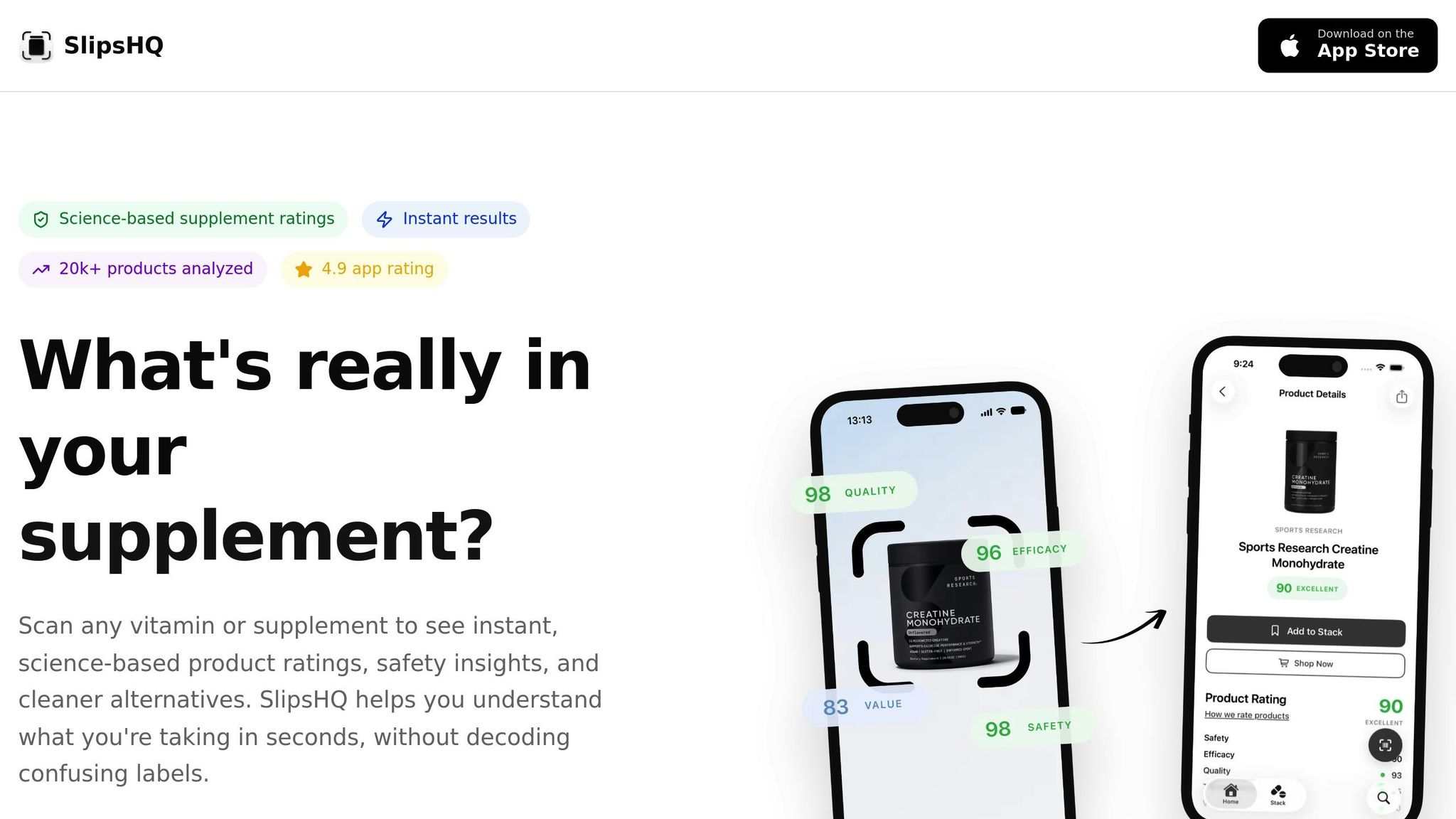
Besides monitoring dosage, ensuring the quality of your collagen supplement is just as important. Since collagen products aren’t regulated by the FDA, some may contain harmful contaminants like heavy metals or toxins. This is where the SlipsHQ app comes in handy. By scanning a product's barcode, you can instantly check for safety warnings, ingredient purity, and dosage recommendations. SlipsHQ provides science-backed trust scores across safety, efficacy, and quality, helping you choose supplements that meet high standards for your health and wellness needs.
Conclusion
Figuring out the right collagen dosage isn’t about sticking to a universal rule - it’s about tailoring your intake to fit your specific health goals. For most healthy adults, taking 2.5 to 15 grams of hydrolyzed collagen daily is considered both safe and effective. For example, if you’re aiming to improve skin hydration, a dose of 2.5 to 10 grams might be enough. On the other hand, muscle recovery could require closer to 15 grams. Keep in mind, natural collagen production decreases by about 1% annually after age 40, which may affect your needs.
Once you’ve identified the right dose, it’s equally important to ensure your supplement is high-quality. Since the FDA doesn’t regulate collagen products, there can be inconsistencies in labeling and purity. Tools like the SlipsHQ app make it easier to verify product safety. By scanning barcodes, you can access science-backed trust scores that evaluate ingredient purity, safety warnings, and even dosage recommendations.
"The 'perfect' dose isn't one-size-fits-all. It's a spectrum, and your place on it is determined by what you want to achieve."
- Silas, Founder, Flavor365
For best results, take collagen daily - timing doesn’t matter much. Skin benefits typically appear within 4 to 12 weeks, while joint support may take 3 to 6 months to show noticeable improvement.
Lastly, if you’re pregnant, nursing, or taking medications like blood thinners, always consult your healthcare provider before starting any supplement. By aligning your dosage with your goals and ensuring product quality, you can build a safe and effective collagen routine.
FAQs
Should I take collagen with food or on an empty stomach?
You can take collagen with or without food - there’s no solid evidence showing that one way is better than the other for absorption. What really matters is taking it consistently every day to get the most out of it.
How do I choose between hydrolyzed collagen and undenatured Type II?
Hydrolyzed collagen, also known as collagen peptides, is commonly used to support the health of skin, bones, and connective tissues. The typical daily dose is about 10 grams. On the other hand, undenatured Type II collagen is often taken in much smaller amounts - around 40 milligrams daily - and is particularly effective for easing joint inflammation and managing autoimmune conditions like osteoarthritis.
If you're looking for overall benefits for skin and tissue health, hydrolyzed collagen is the better choice. For those dealing with joint inflammation or autoimmune-related issues, undenatured Type II collagen offers more targeted support.
Can collagen affect my kidneys or other medications?
Collagen supplements could present risks for people with pre-existing kidney problems, though research on this is still limited. If you have kidney concerns or are on medication, it's important to talk to a healthcare provider before starting collagen supplements. This step helps ensure your safety and minimizes the chance of potential interactions.