
How to Read Supplement Labels: 7 Key Things to Check
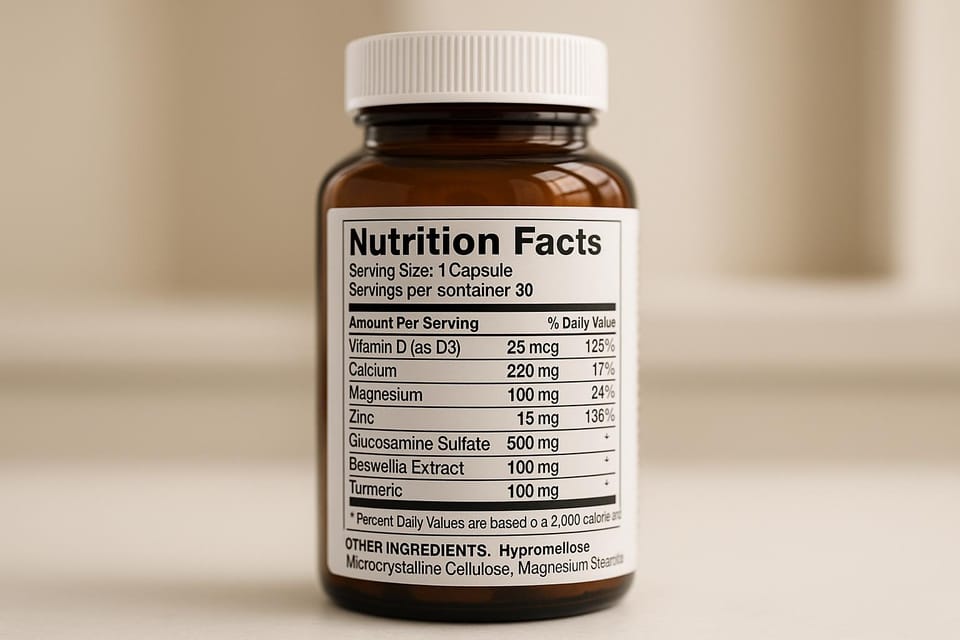
Reading supplement labels is crucial for your health and wallet. Supplements aren’t FDA-approved before hitting shelves, so it’s up to you to understand what you’re taking. Misreading labels can lead to overconsumption, allergic reactions, or wasting money on ineffective products. Here’s what to focus on:
- Serving Size & Servings Per Container: Check how much you need per dose and how long the bottle will last.
- Active Ingredients & Dosages: Ensure the listed nutrients meet your needs and note their forms for better absorption.
- % Daily Value (%DV): Understand how much each nutrient contributes to your daily intake.
- Other Ingredients: Review fillers, preservatives, and allergen warnings.
- Manufacturer Info: Look for clear contact details to verify product legitimacy.
- Quality Certifications: Look for seals like USP or NSF for third-party testing.
- Expiration & Storage: Follow storage instructions and avoid expired products for maximum potency.
Mastering Label Reading: Food, Supplements, and Drugs with Mona Sharma
1. Serving Size and Servings Per Container
Let’s start with the basics: understanding serving size and servings per container. These two details are key to making sense of your supplement label.
The serving size tells you how much of the supplement you need to take to get the nutrient amounts listed on the label. This is critical for interpreting the Supplement Facts panel accurately. The servings per container, on the other hand, indicates how many of those servings are in the bottle. This directly impacts how long the product will last and how much you’re paying per dose.
For example, if a vitamin D supplement costs $20 and offers 30 servings, you’re spending about $0.67 per serving. But if another brand costs $25 and provides 60 servings, the price per serving drops to $0.42. Even though the upfront cost is higher, the second option gives you more value for your money.
Where to Find Serving Size Information
You’ll find the serving size listed at the top of the Supplement Facts panel, usually in bold text. The format varies depending on the type of supplement. For capsules or tablets, it might say something like "Serving Size: 2 capsules" or "Serving Size: 1 tablet." For powders, you’ll see measurements such as "Serving Size: 1 scoop (5g)" or "Serving Size: 1 teaspoon (3g)."
Keep in mind that all nutrient amounts listed on the label are based on one serving. This doesn’t always mean one capsule or one scoop. For instance, if the serving size is 2 capsules but you only take 1, you’ll get half the listed nutrient amounts. Some people prefer spreading their supplement intake across smaller doses throughout the day, while others take it all at once. The serving size helps you decide what works best for your routine.
Pay special attention when the serving size includes more than one unit. Don’t assume each unit contains the full listed nutrient amounts - double-check if multiple units are required to meet the serving size.
How to Calculate Servings Per Container
The servings per container number is located right below the serving size on most labels. This tells you how many full servings you’ll get from the bottle if you follow the recommended serving size. For instance, a bottle with 60 capsules and a serving size of 2 capsules gives you 30 servings. This is crucial for planning how quickly you’ll need a refill.
When comparing products, focus on the amount of active ingredients per serving, not just per pill or scoop. For example, two magnesium supplements might both contain 200mg of magnesium per serving. However, if one requires taking 2 capsules per serving while the other only needs 1, the single-capsule option might be more convenient and cost-effective over time.
2. Active Ingredients and Dosage Amounts
The active ingredients and their dosages are what give a supplement its intended effect. These can include a mix of vitamins, minerals, enzymes, herbs, extracts, probiotics, and amino acids. Knowing how to read and interpret the label is essential for comparing products and ensuring you're choosing the right one for your needs. Let’s break down how the Supplement Facts panel helps you do just that.
How to Read Ingredient Labels
The Supplement Facts panel is your go-to resource for identifying active ingredients and their specific dosages. This standardized format lists each active ingredient alongside its measured amount - whether in milligrams (mg), micrograms (mcg), or international units (IU) - making it easier to compare similar products.
One key detail to note: ingredients are listed in order of predominance. In other words, the ingredient present in the largest quantity appears first, while smaller amounts are listed toward the bottom. If you're looking for a product with a specific primary ingredient, make sure it’s near the top of the list.
It’s also important to differentiate between active ingredients and non-active components like fillers, sweeteners, or preservatives. These additional substances are usually listed separately, often after the active ingredients. To get the most out of your supplement, opt for products where active ingredients dominate the formula and avoid those with a long list of unnecessary additives.
Different Ingredient Forms and Their Effects
After identifying the active ingredients, pay attention to the specific forms of those nutrients, as they can affect how well your body absorbs and uses them. Labels often specify the source or form of a nutrient, which can make a big difference in its effectiveness.
Take magnesium, for example - it might be listed as citrate, oxide, glycinate, or malate. Each form has varying levels of bioavailability. Magnesium citrate tends to be absorbed more efficiently, while magnesium oxide is less readily absorbed.
Similarly, some vitamins appear under alternate names or forms. For instance, vitamin C might be listed as ascorbic acid, and folate could show up as folacin or folic acid. Recognizing these variations can help you identify the nutrients you’re looking for, even when they’re labeled differently.
When deciding between different forms of a nutrient, consider what works best for your unique needs. Some forms may be easier on the stomach, while others offer a higher concentration of the nutrient. The goal is to strike a balance between effectiveness and how well your body tolerates the supplement.
3. Percent Daily Value (%DV) and What It Means
The Percent Daily Value (%DV) tells you how much a serving of a product contributes to your daily nutritional needs. It’s a quick way to gauge whether a nutrient is present in a small or large amount compared to standard recommendations.
DVs are based on a 2,000-calorie diet and serve as a benchmark for daily nutrient intake. While individual calorie needs can differ, this system provides a consistent way to compare nutrient levels across different products. On supplement labels, the %DV follows the same system used on food packaging. If a nutrient is present in any amount greater than zero, the Supplement Facts label must include its %DV.
How to Use %DV Information
Here’s how to make sense of %DV: nutrients at 5% DV or less are considered low, while those at 20% DV or more are considered high. This simple guideline helps you identify whether a supplement provides a significant, minimal, or trace amount of a nutrient. When comparing supplements, ensure the serving sizes are the same, as variations in serving size can impact the %DV displayed.
When %DV Doesn't Apply
Not all ingredients on a supplement label will have a %DV listed. Daily Values are primarily set for measurable vitamins and minerals. If no reference value exists for a particular ingredient, it won’t have an associated %DV.
4. Other Ingredients and Allergen Information
Supplement labels often feature an "Other Ingredients" section, found below the Supplement Facts panel. This part of the label lists non-active components and is especially important for individuals with allergies, sensitivities, or specific dietary restrictions. Let’s break down what these ingredients are and how to spot potential allergen warnings.
What Are Non-Active Ingredients?
Non-active ingredients include things like fillers, binders, excipients, flavorings, preservatives, and coloring agents. These components serve various purposes: they help stabilize the supplement, shape it into tablets or capsules, improve its taste, or enhance its appearance. While these ingredients must either be FDA-approved or classified as generally recognized as safe (GRAS), they might not suit everyone. Some individuals prefer supplements with fewer additives, while others may need to avoid certain substances due to allergies or dietary needs.
Checking for Allergen Warnings
Once you've reviewed the non-active ingredients, it's crucial to check for allergen warnings to ensure the product is safe for you. Allergen information is typically found in two places on the label: within the ingredient list itself and in a separate allergen statement. Look for clear mentions of allergenic substances and any notes about potential cross-contamination, particularly if you have severe allergies. If you follow specific dietary guidelines, double-check that the ingredients and manufacturing processes meet your requirements. When in doubt, reach out to the manufacturer for more details.
5. Manufacturer Information and Contact Details
Just like active ingredients help guide your supplement choices, the details about the manufacturer play a huge role in ensuring product integrity. By law, all supplement labels must include information about the manufacturer, packer, or distributor. This provides accountability and helps confirm the product's legitimacy. These details are a strong indicator of the brand's transparency and quality.
Once you know where to find this information, take a moment to assess the credibility of the company. The name and location of the manufacturer or distributor are required on all dietary supplement labels.
Key Manufacturer Details to Check
Start by identifying the company name and complete address on the label. Look for phrases like "Manufactured by", "Distributed by", or "Packed by", followed by the business name and physical address. Reliable labels often include customer service contact details, such as a phone number or email address, so you can reach out with any questions or concerns.
Having this direct line to the manufacturer gives you the opportunity to verify product claims and builds trust in the supplement's quality.
When evaluating supplements, consider where and how they’re manufactured. Products made domestically often come with stricter quality controls compared to those imported from countries with less clear regulations. Dr. Simon Yeung, a Pharmacist and Herbalist at Memorial Sloan Kettering, explains:
"Compared to products imported from countries where regulations are unclear or relatively lax, domestically manufactured ones are likely safer."
Where you purchase your supplements also plays a role. Dr. Yeung further notes:
"Purchasing dietary supplements from a major health store, pharmacy, or other established source provides some assurance of quality as well."
When reviewing manufacturer information, pay close attention to how it's presented. Trustworthy labels will clearly display the distributor or manufacturer’s name, address, and customer service contacts.
Watch out for red flags: Be wary of labels with incomplete addresses, missing contact details, or vague company names. If the manufacturer’s identity or contact information isn’t clear, it’s better to opt for a product from a more transparent brand. This level of transparency ties into the overall trustworthiness of the product, ensuring you can easily verify its claims.
6. Quality Certifications and Third-Party Testing
When it comes to dietary supplements, quality certifications and third-party testing provide extra reassurance that what's on the label matches what's inside the bottle. Since the FDA doesn’t evaluate dietary supplements for safety or effectiveness before they hit the market, independent organizations step in to fill this gap. These external verifications offer a layer of trust, confirming the claims made by manufacturers.
The main distinction between a manufacturer’s claims and third-party verification lies in the impartiality of the testing process. As OPSS.org explains:
"The only way to know the actual ingredients (or their amounts) in a dietary supplement product is through laboratory testing. Ensure a product has been tested by a well-vetted third-party organization."
To identify these verified products, check for certification seals or verification marks on the label or packaging. These symbols indicate that the product has undergone rigorous testing and meets high-quality standards.
Common Certification Seals to Look For
USP Verified Mark: This seal is one of the most well-known in the supplement industry. It signifies that the U.S. Pharmacopeia has verified the product’s identity, strength, purity, and dissolution. As USP puts it:
"If it's USP Verified, consumers can trust that what's on the label is what's in the bottle."
NSF International: NSF offers several certification programs, each with its own seal. The standard NSF mark confirms that the product meets established purity standards and is accurately labeled. For athletes, the NSF Certified for Sport® seal is particularly important, as it includes additional testing for banned substances. Unlike some other programs, NSF also conducts annual audits and periodic retesting to ensure ongoing compliance.
cGMP (Current Good Manufacturing Practices): This certification focuses on the production process, ensuring manufacturers follow strict standards for identity, strength, and purity during manufacturing. It doesn’t test individual products but ensures the overall process meets high standards.
Other valuable certifications include BSCG Certified Drug Free, Informed Sport, Certified Gluten-Free, USDA Organic, Non-GMO Project Verified, IFOS (specific to omega-3 products), and Certified Vegan. These seals represent adherence to stringent quality benchmarks.
Why Third-Party Testing Matters
Third-party testing provides an impartial check that goes beyond a manufacturer’s internal quality controls. While some companies conduct their own testing, trustworthy brands will often share these results upon request.
Though third-party certifications don’t guarantee the product’s health benefits, they do ensure safety, purity, and accurate labeling. These certifications act as a complement to other label details, giving you more confidence when choosing supplements.
If you don’t see certification seals on a product, take a moment to visit the manufacturer’s website. Many companies outline their testing protocols and quality standards online, even if the packaging doesn’t prominently display them.
Keep in mind that dietary supplements in the U.S. are subject to less stringent oversight compared to pharmaceutical drugs. This makes third-party certifications an important tool for bridging the gap between minimal regulations and the higher quality standards consumers expect.
7. Expiration Date and Storage Instructions
Every supplement comes with a shelf life, and understanding expiration dates and storage instructions is key to keeping them effective. Using expired supplements or storing them improperly can reduce their potency and, in some cases, make them less effective.
Unlike prescription medications, which must follow stricter expiration protocols, dietary supplements operate under different guidelines. Manufacturers determine expiration dates based on stability testing, which assesses how long a product maintains its strength under proper storage conditions.
How to Read Expiration Dates
Supplement expiration dates can appear in several formats, such as:
- "EXP 12/2025"
- "Best By December 2025"
- "Use By 12/31/25"
- Julian format, where a three-digit number (representing the day of the year) is followed by the year.
You’ll usually find this information on the bottle, label, or foil seal. For soft gels and capsules, it might be printed under the cap on the foil seal.
It’s important to note the difference between "Best By" and "Expires" dates. A "Best By" date suggests the period during which the supplement is expected to retain full potency, while an "Expires" date indicates the point after which the manufacturer no longer guarantees its effectiveness.
Most supplements, when stored correctly, stay stable for about two to three years from the manufacturing date. However, this can vary. For example:
- Probiotics: Often last only 12 to 18 months and typically require refrigeration to preserve live bacterial cultures.
- Fish oil supplements: Can degrade faster, especially if exposed to heat or light.
- Liquid supplements: Tend to have shorter shelf lives than tablets or capsules and should often be used within 30 to 60 days of opening, even if the printed expiration date is further out.
By understanding these dates, you can ensure your supplements remain effective and safe to use.
Storage Tips for Best Results
Proper storage plays a huge role in maintaining the potency and shelf life of supplements. The common advice to store them in a "cool, dry place" is based on how environmental factors like temperature, moisture, and light affect their stability.
- Temperature: Room temperature (68°F–77°F) is ideal. A dresser in your bedroom or a kitchen pantry away from heat sources works well.
- Moisture: Humidity can cause tablets to crumble or capsules to stick together. Keep supplements in their original containers, and leave the silica packets inside to absorb excess moisture.
- Light: Certain vitamins, like Vitamin A, Vitamin C, and B vitamins, can degrade when exposed to light. This is why many supplement bottles are made from dark amber or opaque plastic. Store them away from direct sunlight to help preserve their effectiveness.
Some supplements require extra care:
- Probiotics: Often need refrigeration to keep the bacteria active, though some newer formulations are shelf-stable.
- Fish oil and omega-3 supplements: Refrigeration after opening can help prevent spoilage.
- Freezing: Generally not recommended, as the freeze-thaw cycle can damage tablets and capsules.
Be alert for signs that a supplement may no longer be usable. Changes in color, unusual odors, crumbling tablets, or capsules sticking together are all red flags that it’s time to replace the product. For opened containers, consider marking the date you first opened them on the label. Many supplements maintain their full potency only when unopened, as exposure to air and moisture speeds up degradation.
Taking these steps ensures your supplements stay effective for as long as possible.
Conclusion: Making Smart Supplement Choices
Now that you've gone through this guide, you're better equipped to make informed choices when it comes to supplements. Understanding how to read labels is like having a roadmap - it helps you know exactly what you're putting into your body.
Safety should always come first. Unlike prescription drugs, supplements aren’t as tightly regulated by the FDA. This means it’s up to you to double-check dosages and allergen warnings to avoid potential risks. Keeping an eye on dosage levels can help you stay within the Tolerable Upper Intake Level (UL) for nutrients, reducing the chances of side effects or adverse reactions. Don’t skip over the “Other Ingredients” section, as it lists fillers, preservatives, and common allergens like milk, soy, eggs, wheat, or peanuts, which could trigger unwanted reactions.
It’s just as important to ensure that the supplements you choose actually deliver results. The Supplement Facts panel is your go-to for verifying active ingredients and their amounts. This is where you can confirm whether the product matches its promises. Certifications from trusted third-party organizations like USP, NSF International, or ConsumerLab.com provide extra confidence that the product is both effective and free from harmful contaminants.
Be cautious of products that make exaggerated claims, like “miraculous results” or promises to “cure disease.” These are red flags that the product may not be credible.
Ultimately, your supplement choices impact not only your health but also your budget. Taking the time to carefully read labels can save you from wasting money on ineffective or unsafe products. Whether you’re picking up a daily multivitamin or a specific supplement, the key is in the details. The next time you shop, remember: the label holds the truth about what you’re buying.
FAQs
Why should I pay attention to the serving size and servings per container on supplement labels?
Understanding the serving size and servings per container is key when selecting a supplement. These details let you figure out exactly how much of each nutrient you're getting per serving and give you a clear idea of how long the product will last.
By checking and comparing this information across different options, you can make smarter choices about cost, dosage, and whether the supplement aligns with your health goals.
How can I tell if a supplement’s ingredients and forms meet my health needs?
When deciding if a supplement’s ingredients suit your needs, the first step is to examine the Supplement Facts panel. Pay close attention to the active ingredients listed, their amounts per serving, and the specific forms they take (like magnesium citrate compared to magnesium oxide). Different forms can vary in how well your body absorbs or uses them, which might influence their effectiveness for you.
If you're not sure which option is the right fit, it’s a good idea to talk to a healthcare provider. They can guide you in determining whether the supplement matches your health goals, dietary needs, and any conditions or medications you’re managing.
What certifications should I check to ensure my supplements are safe and effective?
To make sure the supplements you choose are both safe and effective, check for third-party certifications from reputable organizations. Certifications from groups such as USP (United States Pharmacopeia), NSF International, or ConsumerLab confirm that the product includes the ingredients listed on the label, meets potency requirements, and is free from harmful contaminants.
These certifications offer peace of mind by showing that the supplement has undergone independent testing and adheres to high-quality standards, helping you make an informed decision.