
Fake Supplements: How to Identify and Avoid
Counterfeit supplements are a growing problem in the $53.5 billion supplement market, risking your health and wasting your money. These fake products often contain harmful ingredients, contaminants, or none of the promised active components. Even trusted platforms like Amazon and Walmart struggle to eliminate fake listings. Here's how you can protect yourself:
- Health Risks: Fake supplements can cause toxic reactions, bacterial infections, and organ damage due to harmful or mislabeled ingredients.
- Financial Losses: Counterfeits often fail to deliver results, leading to wasted money. Low prices and third-party sellers are common red flags.
- Packaging Issues: Look for misspelled words, missing batch numbers, or broken seals on labels.
- Certifications: Check for third-party marks like USP Verified or NSF International to ensure quality and safety.
- Verification Tools: Use apps like SlipsHQ to scan barcodes, compare prices, and access safety information. Pair this with databases like the FDA's Health Fraud Product Database.
To stay safe, buy directly from trusted brands, verify products using tools and certifications, and consult with healthcare professionals before use.
Risks of Using Fake Supplements
Counterfeit supplements pose serious health dangers and can lead to financial losses, affecting your well-being in more ways than you might expect. Recognizing these risks highlights why it’s crucial to identify genuine products in an increasingly crowded market.
Health Risks from Counterfeit Supplements
Fake supplements aren't just ineffective - they can be downright dangerous. Many people don’t realize the harm until it’s too late.
Toxic reactions and organ damage are among the most alarming risks. Counterfeit products often include mislabeled ingredients or harmful fillers, which can lead to bacterial contamination and damage to vital organs like the liver or kidneys.
Another major concern is undeclared harmful ingredients. For instance, over 30 individuals suffered severe health effects from sexual enhancement products that contained undisclosed, dangerous substances. These hidden ingredients can clash with medications you’re already taking or trigger life-threatening allergic reactions.
Bacterial contamination is another hazard. Some fake supplements are tainted with harmful bacteria, which can lead to infections and digestive problems.
These dangers aren’t just hypothetical. In March 2023, the FDA issued warnings to several supplement companies for making illegal claims about their products’ ability to treat or prevent serious conditions like cardiovascular disease. The risks are real and can have devastating consequences.
Financial and Ethical Issues
The impact of counterfeit supplements doesn’t stop at health risks - they also hit your wallet and raise broader ethical concerns.
Direct financial losses are a common problem. Many counterfeit products either lack the active ingredients they claim to have or use harmful substitutes. As KURZ SCRIBOS points out:
"Counterfeit products often lack the active ingredients necessary to provide the desired benefits, jeopardizing consumer health."
When fake supplements fail to deliver results, people often keep buying them, creating an ongoing cycle of wasted money.
The rise of online counterfeits makes avoiding these losses even harder. In 2023, nearly 70% of consumers reported being tricked into buying counterfeit items online. Even major platforms like Amazon and Walmart struggle to control third-party sellers who offer fake products at suspiciously low prices.
There are also serious ethical concerns. Counterfeiters use deceptive marketing and packaging to mimic trusted brands, exploiting consumer confidence. Mark Zito, Deputy Special Agent in Charge for HSI Los Angeles, explains:
"Counterfeit products not only attack the name and value of a known business, but, in many cases, can cause harmful, and sometimes fatal, consequences for the unsuspecting buyer."
Unlike legitimate manufacturers who invest in safety testing and quality assurance, counterfeiters cut corners and provide no accountability. If a fake product causes harm or doesn’t work, there’s no way to seek compensation or report the issue.
These financial and ethical problems don’t just affect individuals - they harm legitimate businesses, erode trust in the entire supplement industry, and put vulnerable populations at greater risk. This is why having reliable ways to verify products is so important for protecting consumers.
How to Spot Fake Supplements: Warning Signs
Knowing how to identify counterfeit supplements is essential for protecting your health. Here are some key warning signs to help you spot fake products.
Label and Packaging Problems
Start by carefully examining the label and packaging. Poor-quality printing, misspelled words, or odd fonts are immediate red flags. For instance, in September 2025, counterfeit versions of Immuno 150 and Neuriva were spotted on Walmart.com. These fake products had errors like misspelled words and strange phrasing on their labels.
Another issue to watch for is missing or incorrect batch details. Genuine supplements always include batch numbers, lot numbers, and expiration dates, which are clearly printed and easy to read. According to ConsumerLab.com:
"Good-quality supplements should have tamper-evident seals, lot numbers, and contact information."
Damaged or inconsistent tamper-evident seals are another warning sign. If the seal is broken or the packaging materials look unusual compared to the brand's standard, it’s best to avoid the product.
Also, pay attention to contact information. Authentic products provide clear manufacturer details, including the company name, address, and phone number. If this information is missing, incomplete, or seems suspicious, it’s a strong indicator that the product might not be genuine.
Once you’ve checked the packaging, it’s time to evaluate the seller’s reliability.
Suspicious Prices and Sellers
If a price seems too good to be true, it probably is. Counterfeit products are often sold at prices far below the manufacturer’s suggested retail price. For example, one consumer purchased fake Florastor from a seller on Walmart.com. The low price was the first clue, and inconsistencies in the packaging confirmed the product wasn’t authentic.
Third-party sellers on major platforms like Amazon and Walmart.com can also pose risks. In November 2023, legal action was taken against several parties accused of selling counterfeit Prevagen on Amazon, leading to consumer protection warnings. Even trusted e-commerce platforms can host unauthorized sellers offering fake products at discounted prices.
Unauthorized retailers are another red flag. Before making a purchase, compare the price with the manufacturer’s official website. If you find a much lower price elsewhere, verify that the seller is an authorized distributor. As Terry Naturally Vitamins cautions:
"Counterfeit products are often sold through unauthorized sellers on platforms like Amazon, eBay, and other lesser-known sites."
Customer reviews can also provide valuable insights. Look for patterns in feedback mentioning issues like unusual packaging, unexpected side effects, or a lack of effectiveness. Consistent complaints about these problems should not be ignored, especially if multiple reviewers report similar concerns.
Checking Certifications and Testing Records
After reviewing the physical packaging and pricing, the next step is to confirm the product’s authenticity through certifications and testing records.
Look for third-party certifications like the USP Verified Mark or NSF International certification. These marks indicate that the product has undergone strict testing for quality and safety. For example, the USP Verified Mark ensures that the product contains the listed ingredients, is free from harmful contaminants, and meets FDA Good Manufacturing Practices. Simon Yeung, a pharmacist at Memorial Sloan Kettering, explains:
"A USP-verified product means it contains the listed ingredients at the strength indicated - and is not contaminated with any other substances, such as heavy metals or microbes."
Certificates of Analysis (COA) are another important tool. These documents provide detailed testing information for specific product batches, including ingredient verification, contamination checks, and testing dates. Reputable manufacturers often make COAs available on their websites or provide them upon request. The COA details should match your product’s batch number.
If a product lacks certifications or testing records, it’s a major red flag. In September 2023, counterfeit versions of Pure Encapsulations L-glutamine were sold on Amazon, underscoring the importance of verifying authenticity through certifications. Products from reputable brands typically include these markers, so their absence should raise concern.
The USP Verified Mark, for example, has appeared on over 700 million supplement packages, making it a widely recognized sign of legitimacy. When authentic products consistently display these certifications, their absence becomes even more noticeable.
If you’re ever uncertain about a product’s authenticity or if the certifications seem questionable, reach out to the manufacturer directly. Legitimate companies are always willing to verify their products and provide additional documentation when needed.
Tools for Checking Supplement Authenticity
Once you've identified potential red flags, it's time to confirm the authenticity of supplements using modern tools and reliable databases.
Using SlipsHQ for Product Verification
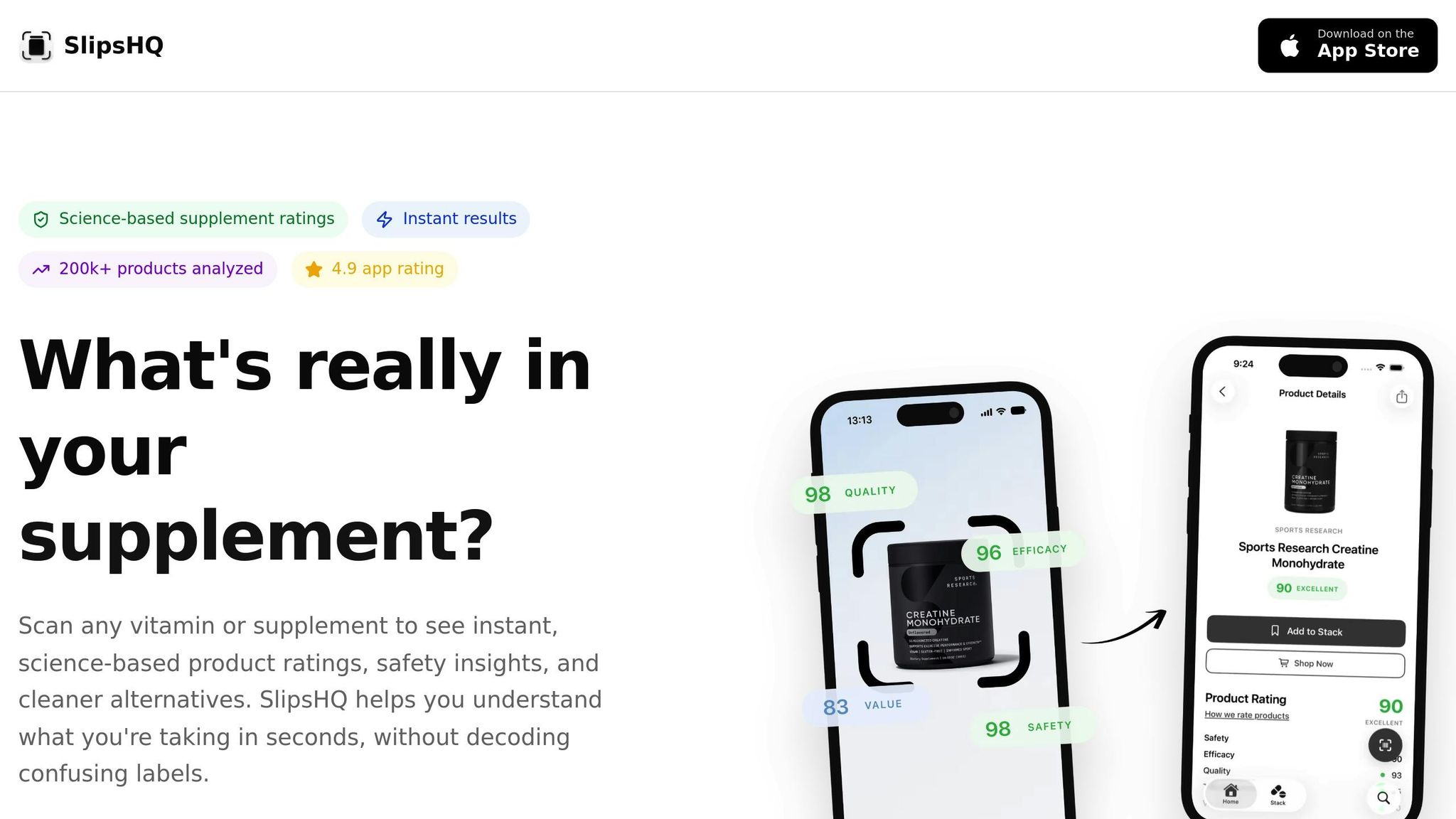
SlipsHQ is a mobile app designed to help consumers verify supplements quickly and effectively. With its barcode scanning feature, the app provides instant access to detailed product information, including a science-based trust score ranging from 0 to 100. This score evaluates supplements based on key factors like safety, efficacy, quality, transparency, and value.
The app's database includes over 200,000 supplements, offering insights into ingredient purity and real-time safety alerts. When you scan a product, SlipsHQ highlights any safety warnings, potential drug interactions, and a breakdown of ingredients. It's important to note that dietary supplements are not pre-approved by the FDA, making tools like this even more valuable.
A standout feature of SlipsHQ is its price comparison tool, which shows pricing across various U.S. retailers. This not only helps you spot unusually low prices - a potential indicator of counterfeit products - but also ensures you're getting a fair deal on authentic items. Additionally, the app provides personalized supplement stacks and evidence-based recommendations tailored to your needs.
Users often praise SlipsHQ for its intuitive interface and comprehensive database. Many appreciate the ability to access detailed reviews and safety information while shopping in-store. The app offers a free plan with basic features like scanning and trust scores, while a premium subscription ($4.99 weekly or $39.99 annually) unlocks advanced ingredient research and personalized suggestions.
While SlipsHQ is a great starting point, supplement verification can be further supported by consulting trusted databases.
Reliable Information Sources
Several established databases offer dependable information to verify supplements:
- The FDA's Health Fraud Product Database is a critical tool for identifying unapproved or fraudulent supplements. It lists products flagged for health fraud violations, including recalls for undeclared ingredients.
- ConsumerLab.com conducts independent testing and reviews of supplement brands to ensure they meet quality standards. Their evaluations check for ingredient accuracy and contamination, providing peace of mind for consumers.
- The U.S. Pharmacopeial Convention (USP) runs a verification program that confirms supplements contain the ingredients listed on their labels at the advertised strengths, free from contaminants. As the USP explains:
"If it's USP Verified, consumers can trust that what's on the label is what's in the bottle."
- Launched in August 2025, the STRIPED Dietary Supplement Label Explorer helps categorize supplement labels, making it easier for consumers to verify product claims and safety. This tool works well alongside apps like SlipsHQ to give a fuller picture of a product's authenticity.
These resources are especially critical given the findings of a 2023 report published in JAMA Network, which revealed that 40% of dietary supplements tested contained none of the ingredients listed on their labels. By combining tools like SlipsHQ with trusted databases, you can ensure the supplements you buy are safe, authentic, and contain what they claim to offer.
Conclusion: Staying Safe When Buying Supplements
The supplement market is thriving, but with that growth comes an increased risk of counterfeit products. That’s why it’s so important to take steps to verify what you’re buying.
Start by sticking to trusted sources - buy directly from the brand’s official website or well-known health stores. These traditional methods of verification can be made even stronger with modern tools.
For instance, SlipsHQ’s barcode scanning feature lets you quickly check science-backed trust scores and compare prices. Pairing this tool with reliable databases like the FDA's Health Fraud Product Database or ConsumerLab.com can create a solid system for ensuring product safety.
Since supplements don’t go through FDA pre-approval, the responsibility to verify their safety falls on you. Watch out for products that make over-the-top promises or claim to deliver instant results - these are often warning signs of poor-quality or counterfeit items.
Lastly, always consult a healthcare professional before adding any supplement to your routine. They can help confirm whether it’s safe and suitable for your needs. If you come across a product you suspect is counterfeit, report it to the FDA to help protect others.
FAQs
How can I make sure a supplement is authentic before buying it?
To make sure you're getting a genuine supplement, look for seals like USP (United States Pharmacopeia) or NSF (National Sanitation Foundation). These certifications show that the product has gone through third-party testing for quality. Pay close attention to the packaging - things like spelling errors, mismatched fonts, or poor printing quality can hint at counterfeit items. It's also a smart move to research the brand and stick to trusted retailers or buy directly from the manufacturer to avoid fake or subpar products.
If you're looking for an easier way to check a supplement's authenticity, apps like SlipsHQ can be a game-changer. They let you scan barcodes and review ingredient details, helping you make confident and informed choices about what you're putting into your body.
What health risks can counterfeit supplements pose?
Counterfeit supplements pose a serious risk to your health because they often contain untested or harmful ingredients. These hidden substances, which aren't listed on the label, can lead to unexpected side effects or even trigger allergic reactions.
Some fake supplements go a step further by including undeclared drugs or hidden chemicals, which can significantly increase the likelihood of severe health complications. To stay safe, it’s crucial to confirm the authenticity of any supplement you buy and stick to trusted retailers. Tools like SlipsHQ can be a helpful resource, giving you a quick way to check a product’s safety and quality for added reassurance.
How can I make sure the supplements I buy are safe and authentic?
To make sure your supplements are safe and genuine, stick to buying from trusted sources like major pharmacies or the brand's official website. Be cautious with third-party sellers on online marketplaces unless the brand has verified them.
Look for certifications from respected organizations such as ConsumerLabs.com, NSF International, or United States Pharmacopeia (USP). These certifications confirm the quality and safety of the supplements. Also, check the packaging carefully for signs of counterfeiting, like spelling mistakes, mismatched fonts, or poor-quality printing.
If you want extra confidence, try tools like SlipsHQ. This wellness app allows you to verify product authenticity, check ingredient purity, and review safety warnings using science-backed trust scores and barcode scanning. It’s a helpful way to navigate the supplement market with ease and confidence.