
Natural vs Synthetic Supplements: Pros and Cons
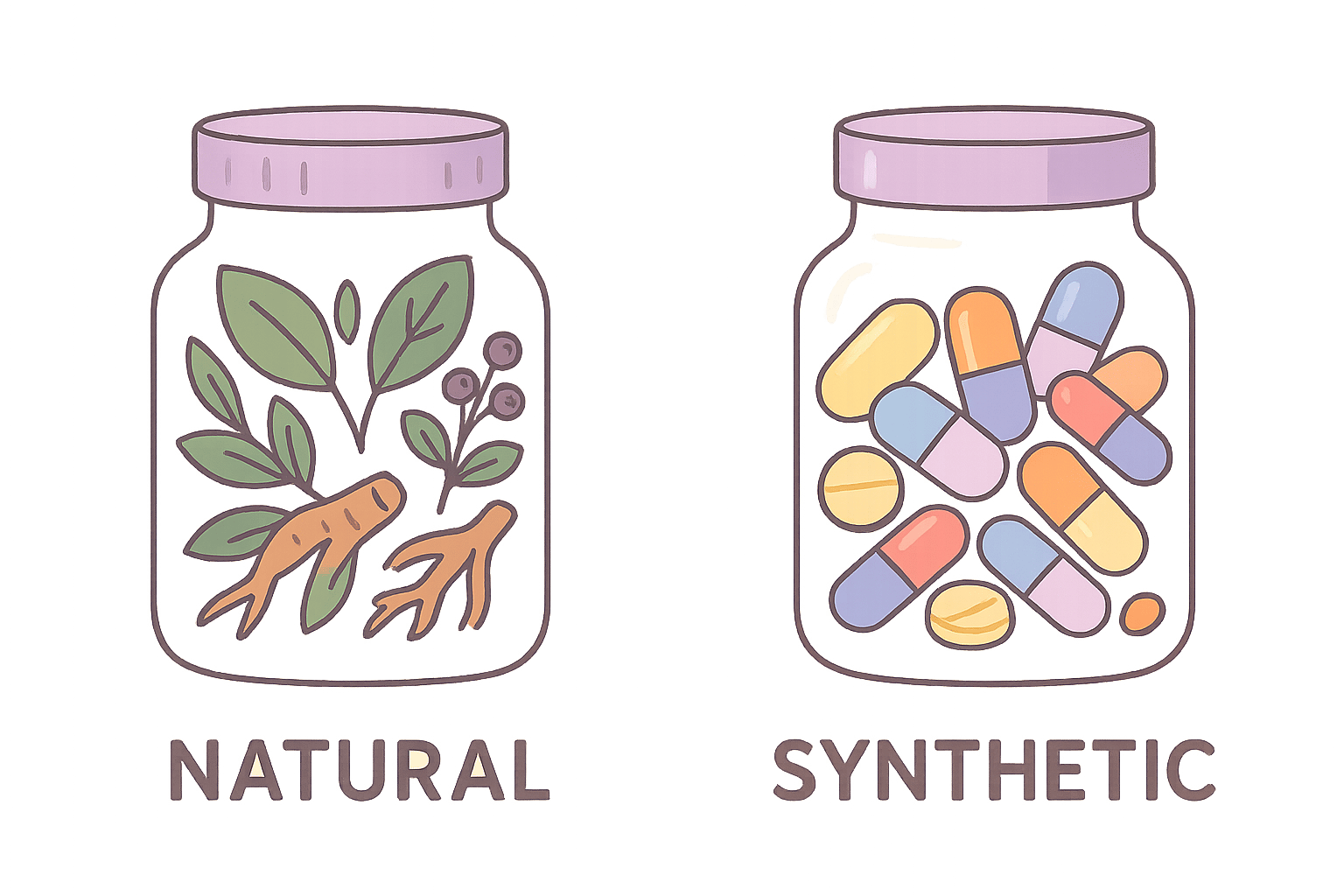
When choosing supplements, the debate between natural and synthetic options often comes down to personal priorities like absorption, cost, and availability. Here's a quick breakdown:
- Natural supplements are sourced from whole foods (e.g., plants, animals) and may include additional compounds that aid absorption. However, they tend to be more expensive, less consistent in potency, and have shorter shelf lives.
- Synthetic supplements are lab-made to replicate natural nutrients. They're affordable, consistent in dosage, and widely available but may lack the co-factors found in natural sources.
Key Takeaways:
- Natural supplements may offer better absorption due to co-factors but are pricier and less standardized.
- Synthetic supplements are cost-effective, reliable, and easier to store but may require additives for better absorption.
Quick Comparison:
| Attribute | Natural | Synthetic |
|---|---|---|
| Absorption | Often better with natural co-factors | May need additives for absorption |
| Cost | More expensive | Affordable |
| Dosage Consistency | Can vary | Highly consistent |
| Shelf Life | Shorter | Longer |
| Availability | Seasonal/limited | Year-round and widely available |
Ultimately, the choice depends on your health goals, budget, and preferences. Always check labels, and consult a healthcare professional for personalized advice.
Synthetic vs Real Food Vitamins - Which is best?
Natural Supplements: Benefits and Drawbacks
Natural supplements offer nutrients in their original form, often accompanied by additional natural compounds. However, as with any health-related choice, they have both upsides and downsides that can impact their cost-effectiveness and overall benefits.
Benefits of Natural Supplements
Improved Absorption and Nutrient Synergy
Natural supplements often come with cofactors and complementary nutrients that aid in better absorption. For instance, vitamin C derived from acerola cherries includes natural plant compounds that enhance how the body absorbs and utilizes it.
Fewer Artificial Additives
These supplements typically contain fewer synthetic fillers and preservatives. Instead, they often rely on whole food binders and natural preservation techniques, making them a cleaner option for those looking to minimize synthetic intake.
Alignment with Traditional Diets
Natural supplements are often perceived as safer for long-term use because they align more closely with traditional dietary practices, offering a sense of familiarity and trust.
Broader Nutrient Range
Unlike isolated synthetic nutrients, natural supplements may include a variety of beneficial compounds. For example, an iron supplement sourced from curry leaves might also provide additional nutrients that help the body absorb and utilize iron more effectively.
Drawbacks of Natural Supplements
Higher Price Tags
Extracting nutrients from whole foods is a labor-intensive process, which makes natural supplements more expensive. Over time, this can become a significant financial investment, especially for those committed to long-term use.
Inconsistent Quality and Potency
The potency and quality of natural supplements can vary widely. Factors like the source of the raw materials, processing techniques, and regulatory standards all play a role.
"However, natural supplements are not always of better quality and can vary depending on the source, processing, and potential contamination if not well regulated." - bionutrica.uk
Production Challenges and Environmental Costs
Producing natural supplements often requires large quantities of raw materials, which can lead to higher production costs and a greater environmental footprint.
Shorter Shelf Life
Natural supplements are more prone to degradation over time due to the presence of oils, enzymes, and other organic compounds. This means they need careful storage and may require more frequent replacements, adding to the overall cost and inconvenience.
Limited Availability and Standardization
Finding natural supplements in consistent, standardized dosages can be tricky. They are often less readily available compared to synthetic options, and consumers may struggle to find the exact potency they need.
Impact of Soil Depletion
Modern farming practices have led to nutrient depletion in soils, which can affect the nutritional value of even organic sources. As a result, natural supplements derived from these sources may not always provide the expected nutrient levels.
These factors highlight the need to weigh the benefits and limitations of natural supplements when comparing them to synthetic alternatives.
Synthetic Supplements: Benefits and Drawbacks
Synthetic supplements are lab-created products designed to imitate natural nutrients. They come with several notable advantages that make them a popular choice for many.
Benefits of Synthetic Supplements
Affordable and Widely Available
One of the biggest perks of synthetic supplements is their affordability. Since they’re mass-produced, the costs are lower, making them more accessible to a broader audience.
Reliable Dosages Every Time
Unlike natural supplements, which can vary in nutrient levels, synthetic options are consistent. Each pill or tablet contains the exact amount of nutrients promised on the label, giving users confidence in their daily intake.
Longer Shelf Life
Thanks to controlled manufacturing processes, synthetic supplements tend to last longer without losing their potency. This means less waste and more value over time.
Available Year-Round
Because they’re made in labs, synthetic supplements aren’t tied to seasonal changes or geographic limitations. You can count on them being in stock no matter the time of year.
Natural vs Synthetic Supplements: Side-by-Side Comparison
When deciding between natural and synthetic supplements, it’s important to weigh factors like health benefits, cost, and convenience. Each type comes with its own set of advantages and drawbacks, so understanding their differences will help you make an informed choice.
Comparison Table
Here’s a breakdown of how natural and synthetic supplements compare across various attributes:
| Attribute | Natural Supplements | Synthetic Supplements |
|---|---|---|
| Absorption | Often better due to naturally occurring co-factors | May require additional ingredients for effective absorption |
| Cost | Typically more expensive due to sourcing and processing | Generally more affordable |
| Purity | Can vary because of natural variability | Consistent and standardized through controlled production |
| Co-factors | Contain complementary compounds that work together | Provide isolated nutrients without extras |
| Dosage Consistency | May vary slightly due to natural differences | Uniform and consistent in every dose |
| Side Effects | Usually gentler on digestion | Some formulations may cause digestive issues |
| Shelf Life | Shorter because of natural degradation | Longer shelf life due to synthetic stability |
| Accessibility | Availability can depend on seasons or regions | Readily available year-round |
| Contaminant Risk | Potential for environmental contaminants | Lower risk thanks to strict quality controls |
| Bioavailability | Supported by natural enzyme systems | May need adjustments to improve absorption |
This comparison highlights the key differences between the two options. Whether you prioritize absorption, cost, or convenience, aligning your supplement choice with your health needs is crucial. For tailored advice, always consult with a healthcare professional.
How to Choose the Right Supplements for You
Selecting the right supplement goes beyond deciding between natural and synthetic options - it’s about aligning your choice with your health goals, budget, and lifestyle. While the comparison table above highlights some key differences, your personal needs should ultimately guide your decision. Start by identifying your goals. Are you looking to fill a nutrient gap, improve performance, or address specific health concerns? Your answer will help narrow down your options.
How to Read Supplement Labels
Understanding supplement labels is crucial for making informed decisions. Natural supplements often specify their food sources - look for phrases like “vitamin C from acerola cherries” or “iron from spinach.” Labels that state “100% plant-based” or “100% animal-based” also point to natural origins. If no source is listed, the supplement is likely synthetic.
Chemical names can also offer clues. For example, ascorbic acid indicates a synthetic form of vitamin C. Watch for word endings like “-ide” or “-ate” (e.g., hydrochloride, nitrate, succinate) or prefixes like “di,” which often signal synthetic ingredients.
Pay close attention to additives and fillers. Natural supplements typically avoid artificial fillers, colorants, and preservatives, though they may include natural stabilizers. Synthetic supplements, on the other hand, often rely on artificial additives to extend shelf life. Be wary of products with excessive amounts of these ingredients.
Price and dosage are additional indicators. Extremely low-priced supplements are more likely synthetic due to cheaper production methods. Similarly, supplements offering very high doses (e.g., 200% or more of the Recommended Dietary Allowance) are often synthetic, as natural sources usually deliver nutrients in more balanced amounts.
Lastly, look for third-party certifications. While the FDA doesn’t regulate the term “natural,” certifications like USDA Organic or GMP Certification can provide extra assurance about a product's quality.
For added convenience, digital tools can simplify the process of comparing and selecting supplements.
Using Science-Based Tools Like SlipsHQ
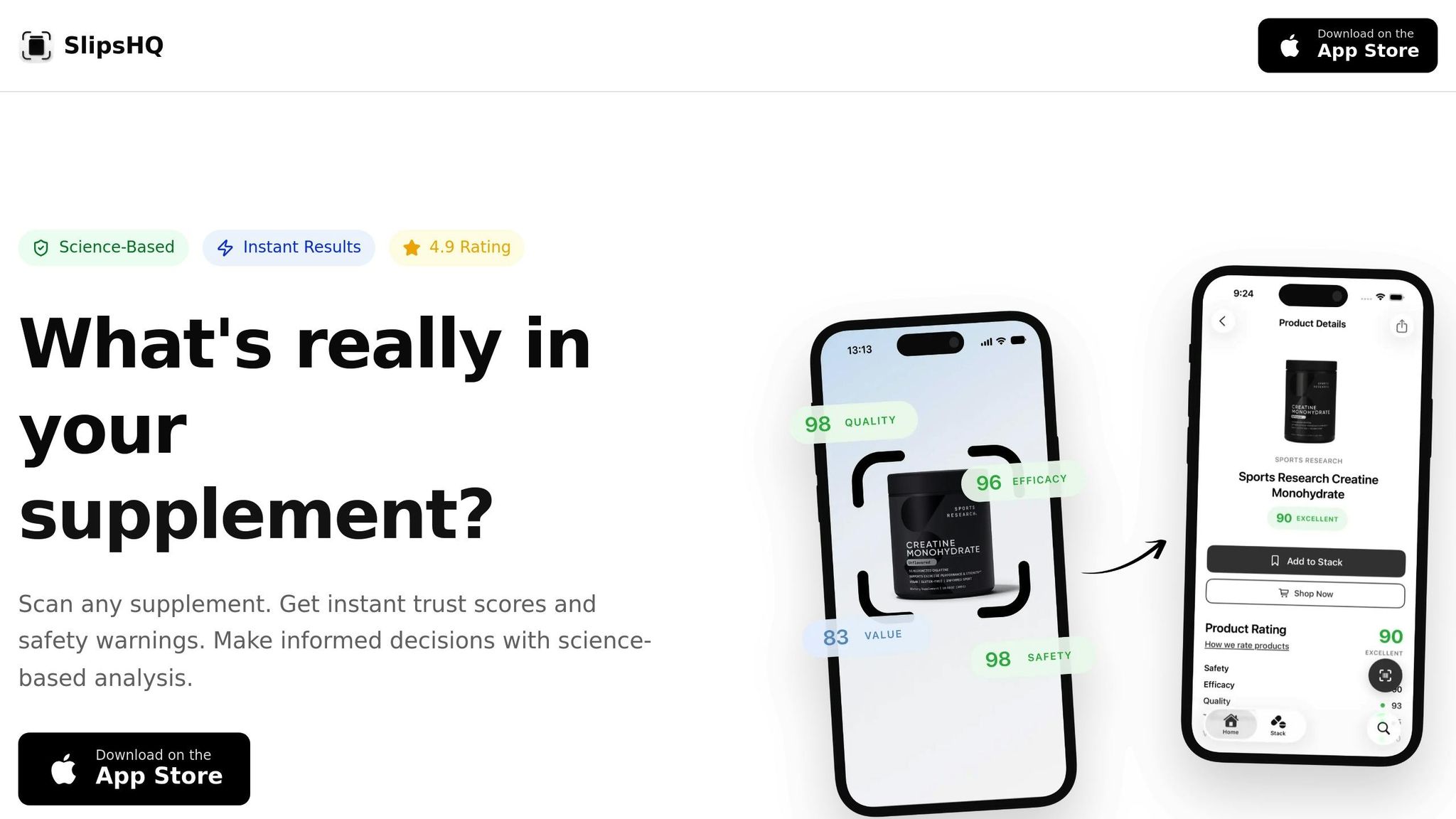
With a market flooded by over 200,000 supplements, choosing the right one can feel daunting. SlipsHQ simplifies this task by providing instant, science-based analyses. Using barcode scanning, it generates trust scores on a 0–100 scale, evaluating safety, efficacy, quality, transparency, and value. It even offers real-time price comparisons to help you weigh your options between natural and synthetic products.
SlipsHQ also provides personalized supplement stacks and alerts about potential drug interactions, making it a valuable tool for tailored recommendations.
The app offers both free and premium plans. The free version includes basic scanning and trust insights, while the premium plan ($4.99 per week with a 3-day free trial, or $39.99 per year) dives deeper, offering detailed ingredient research, safety alerts, and comprehensive personalized suggestions.
While tools like SlipsHQ are helpful, consulting a healthcare professional ensures your choices are both safe and effective.
Consulting Healthcare Professionals
Although label reading and digital tools can provide useful insights, professional advice is indispensable. Your doctor, registered dietitian, or pharmacist can help you understand how different supplements might interact with your medications or health conditions. They can also shed light on issues like absorption and bioavailability. For example, they can help you decide if the benefits of a natural supplement justify its higher cost or if a synthetic option might work just as well for your needs.
If you have chronic conditions, take multiple medications, or plan to use supplements long-term, consulting a healthcare professional is especially important. Combining expert guidance with careful label reading and science-based tools ensures a well-rounded approach to finding the right supplement for you.
Conclusion: Making an Informed Choice
Looking back at the comparisons above, the decision between natural and synthetic supplements largely depends on individual needs and circumstances. Both types come with their own benefits and challenges. Natural supplements are often appreciated for their whole-food origins, potential for better absorption, and fewer artificial additives. On the other hand, synthetic supplements stand out for their precise dosing, consistent potency, and affordability.
Ultimately, the effectiveness of a supplement hinges on its quality, not just its source. As registered dietitian Jen Messer points out:
"It is a common misconception that vitamin supplements are beneficial for everyone. They can provide benefits for certain individuals in particular situations, but are not universally necessary, can be expensive, and may pose risks."
Paying attention to labels and third-party certifications is crucial. A recent analysis revealed that 84% of dietary supplements didn’t contain the claimed amount of ingredients, and 40% didn’t contain any of the listed ingredients at all. Tools like SlipsHQ can help by offering science-backed trust scores for supplements, complementing professional medical advice. As Harvard's Walter Willett advises:
"Generally, I don't suggest the use of vitamin supplements unless there is a specific reason to do so."
When considering supplements, especially synthetic ones, consult healthcare professionals to address potential drug interactions or manage chronic conditions. Your choice should align with your health goals, budget, and personal needs. Whether you lean toward natural or synthetic options, remember that supplements are most effective when paired with a balanced diet and a healthy lifestyle. Focus on quality and seek professional guidance to choose supplements that truly support your well-being.
FAQs
What should I consider when choosing between natural and synthetic supplements for my health?
When choosing between natural and synthetic supplements, it's important to weigh factors like absorption, effectiveness, and cost. Natural supplements come from whole food sources, which often makes them easier for your body to absorb. This is because they contain natural cofactors - compounds that work alongside nutrients to boost their effectiveness. Plus, they may include other helpful compounds that add extra value.
Synthetic supplements, however, are lab-made and typically more budget-friendly and accessible. They can deliver high doses of nutrients but often lack the natural cofactors found in food-based options. Without these, your body might not absorb or use the nutrients as efficiently. Additionally, some synthetic vitamins could pose risks depending on their formulation or how much you take. To figure out what works best for you, it’s always a good idea to check with a healthcare professional.
If you're looking for more guidance on supplement quality and safety, tools like SlipsHQ can help. They analyze things like ingredient purity and product safety, giving you the information you need to make smart choices.
How can I be sure the supplements I choose, whether natural or synthetic, are safe and effective?
When choosing supplements, prioritize safety and effectiveness by looking for third-party certifications like USP or NSF. These certifications indicate that the product has passed independent testing for quality and purity. Also, make sure the label includes a "Supplement Facts" panel detailing active ingredients, dosages, and the manufacturer's information.
To feel even more confident in your choice, use tools like barcode scanners or apps that offer science-based reviews of supplement quality, safety, and ingredient transparency. These tools can help you steer clear of products with misleading claims or hidden risks.
Are there certain health conditions or situations where natural or synthetic supplements are more effective?
The decision between natural and synthetic supplements often hinges on your personal health needs and circumstances. Natural supplements, in some cases, might be easier for the body to absorb, while synthetic options can deliver similar results and are typically more budget-friendly. For instance, if you have allergies or sensitivities, natural supplements with fewer additives might be a better fit. On the other hand, synthetic supplements are often preferred for their precise dosages and tailored formulations.
If you're unsure which option suits you best, it’s a good idea to consult a healthcare professional. You can also leverage tools like SlipsHQ to assess the quality, safety, and effectiveness of different supplements. Ultimately, your choice should align with your specific health conditions and goals.