
Risk vs. Benefit: Ethical Guide for Supplements

Navigating the supplement world can be tricky. With fewer regulations than pharmaceuticals, many products lack rigorous safety checks. This puts the responsibility on you to evaluate risks, quality, and transparency.
Here’s the deal:
- Supplements don’t need FDA approval before hitting shelves.
- Many companies skip disclosing ingredient purity or sourcing details.
- Tools like SlipsHQ and consulting healthcare professionals can help you make safer, informed choices.
Key Takeaways:
- SlipsHQ App: Scan barcodes for instant safety ratings, ingredient details, and price comparisons. Premium plans start at $4.99/week or $39.99/year.
- Healthcare Advice: Doctors offer tailored recommendations but might lack deep supplement expertise. Access can also be costly or time-consuming.
- Best Approach: Combine digital tools like SlipsHQ with professional advice for a balanced, informed decision-making process.
Quick Comparison:
| Criteria | SlipsHQ | Healthcare Providers |
|---|---|---|
| Transparency | Instant safety ratings, but limited to databases. | Peer-reviewed studies; may include sponsor bias. |
| Accessibility | Fast and affordable; needs a smartphone. | Personalized advice but harder to access quickly. |
| Personalization | Alerts for risks, but algorithms have limits. | Tailored to your medical history. |
| Scientific Rigor | Data-driven but may miss new research. | Based on clinical studies and professional judgment. |
Bottom Line: Use SlipsHQ for quick insights and healthcare professionals for personalized advice. Together, they can help you make safer, ethical supplement choices.
1. SlipsHQ
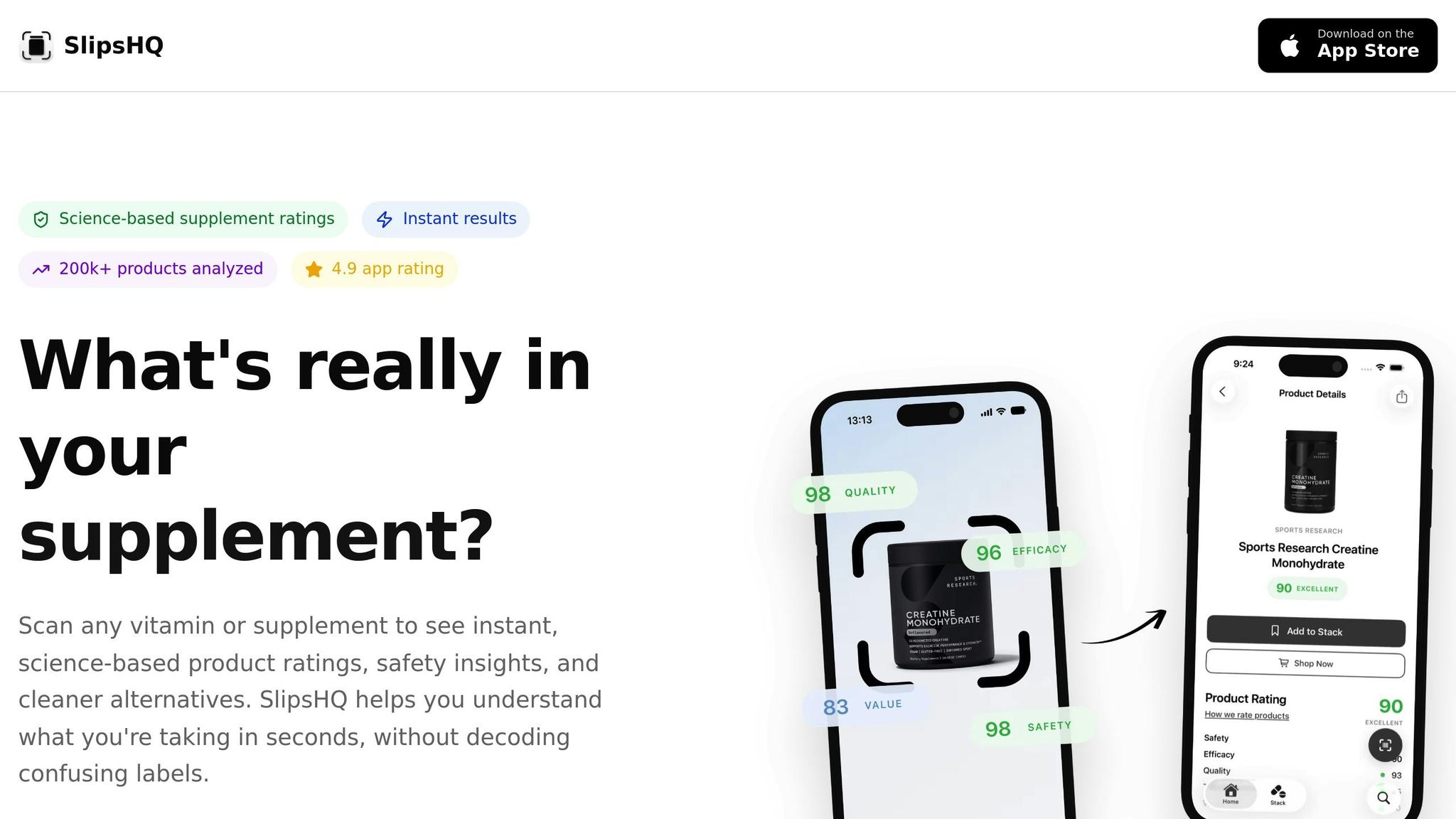
SlipsHQ takes the guesswork out of evaluating supplements by offering instant, science-backed insights through a simple barcode scan. By focusing on clear, unbiased, and tailored information, it addresses key concerns around transparency and safety in choosing supplements.
Transparency
One of the biggest challenges in the supplement industry is the lack of clear, accessible information. SlipsHQ confronts this head-on by analyzing over 200,000 supplements and rating them across five critical categories: safety, efficacy, quality, transparency, and value. Users can access essential details like ingredient purity and safety warnings, helping them go beyond flashy marketing claims. The app also provides unbiased trust scores on a 0–100 scale, along with real-time price comparisons from various retailers. This empowers consumers to make smarter, more informed decisions while enjoying a streamlined, transparent experience.
Accessibility
SlipsHQ stands out for its ease of use, designed to meet the needs of users at all levels of health literacy. Its intuitive interface delivers clear product insights in just seconds, making it a practical tool for everyone - from busy parents to older adults. Whether you're short on time or new to supplement research, the app simplifies the process without compromising on depth.
Personalization
With SlipsHQ, supplement recommendations are tailored to each user, prioritizing safety above all else. The app alerts users to potential risks, such as drug-supplement interactions, ensuring choices are informed and safe. This personalized approach is rooted in solid scientific evaluation, helping users avoid decisions based solely on trends or marketing.
Scientific Rigor
SlipsHQ’s trust scores are built on a foundation of clean, transparent science. Free from marketing bias, these scores offer a reliable assessment of supplement quality and safety. For those looking to dive deeper, the Premium Plan - priced at $4.99 per week or $39.99 per year - provides advanced features like detailed ingredient research and enhanced safety alerts, offering an extra layer of insight for discerning users.
2. Traditional Research Methods (consulting doctors, reviewing studies)
When it comes to evaluating supplements, many people rely on traditional methods like consulting healthcare providers and reviewing scientific studies. While these approaches require more time and expertise compared to digital tools, they remain essential for informed, evidence-based decision-making. They also bring unique strengths and limitations, complementing modern resources with their depth and experience-driven insights.
Transparency
Traditional research methods offer a window into peer-reviewed studies and clinical expertise. Medical journals regularly publish detailed research on supplements, covering methodologies, participant demographics, and statistical findings. Healthcare professionals have access to extensive databases like PubMed, which house a wealth of biomedical citations. This level of transparency enriches the research process and ensures a more thorough understanding.
However, not all studies are created equal. Manufacturer-sponsored research can introduce bias, and publication bias may lead to an incomplete picture of a supplement’s risks and benefits.
Accessibility
While consulting healthcare providers can provide tailored guidance, access to these experts isn’t always straightforward. Long wait times for appointments, limited availability in rural areas, and gaps in insurance coverage can make it difficult for some individuals to seek timely advice.
On the other hand, accessing scientific literature comes with its own hurdles. Many journals require expensive subscriptions, and the technical language and complex statistics can make it challenging for non-experts to extract clear, actionable insights.
Personalization
One of the strengths of traditional methods is the ability of healthcare providers to personalize advice. They can take into account an individual’s medical history, current medications, and specific health needs when assessing whether a supplement is appropriate.
That said, there are limitations. Most primary care physicians receive minimal training in nutrition, which can result in general recommendations rather than the detailed, individualized advice that some patients might need for making informed choices about supplements.
Scientific Rigor
Traditional research methods are the backbone of our understanding of supplement safety and effectiveness. Randomized controlled trials, systematic reviews, and meta-analyses undergo rigorous peer review, helping to ensure the reliability of their findings. This scrutiny is critical for identifying flaws in methodology and unsupported conclusions.
However, translating these findings into everyday decisions isn’t always straightforward. Many studies are conducted in controlled settings or focus on specific populations, which may not align with how supplements are used in real-world scenarios. For instance, research on individuals with a particular deficiency might not apply to someone using supplements for general wellness. Additionally, scientific evidence often takes years to develop, leaving consumers in a waiting game for the latest insights.
Advantages and Disadvantages
When comparing digital tools and traditional methods for supplement research, each approach has its own strengths and weaknesses. This comparison highlights how they cater to different needs, focusing on factors like transparency, accessibility, personalization, and scientific rigor. The table below outlines the key differences between these two approaches:
| Criteria | SlipsHQ | Traditional Research Methods |
|---|---|---|
| Transparency | Advantages: Science-based trust scores provide standardized ratings for safety criteria. Disadvantages: Relies on existing databases, which may miss the latest research or emerging concerns. |
Advantages: Peer-reviewed studies include detailed methodologies and statistical findings. Healthcare providers add professional judgment. Disadvantages: Sponsor-funded studies may introduce bias, and publication bias can result in an incomplete view of risks and benefits. |
| Accessibility | Advantages: Instant barcode scanning offers quick results. Free basic insights are available, with premium plans starting at $4.99 per week (3-day free trial) or $39.99 per year. Disadvantages: Requires a smartphone, internet access, and deeper analysis is limited to premium users. |
Advantages: Personalized, face-to-face consultations consider individual medical histories. Disadvantages: Long wait times, limited access in rural areas, and insurance gaps can be barriers. Accessing scientific journals often involves costly subscriptions and complex language. |
| Personalization | Advantages: Recommends personalized supplement stacks and flags potential drug interactions to prevent harmful combinations. Disadvantages: Algorithms may not fully address complex medical conditions or unique circumstances. |
Advantages: Healthcare providers offer tailored advice based on personal health profiles. Disadvantages: Limited nutrition training might result in more general guidance rather than highly specific recommendations. |
| Scientific Rigor | Advantages: Uses transparent data and standardized criteria to evaluate safety and effectiveness. Disadvantages: May not incorporate the latest research or account for individual differences; algorithms lack the nuance of clinical judgment. |
Advantages: Peer-reviewed studies are the gold standard for evidence-based medicine. Disadvantages: Research often occurs in controlled environments that may not reflect real-world use, and evidence development can be slow, leaving knowledge gaps. |
Digital platforms shine when speed and cost-efficiency are priorities, offering instant updates and accessible insights. On the other hand, traditional methods excel in delivering in-depth, personalized evaluations, though they often require more time and financial investment. Each approach serves a distinct purpose, depending on the user's needs and resources.
Conclusion
Making ethical decisions about supplements involves finding a balance between scientific research and personal health needs. Comparing modern digital tools with traditional research methods shows that neither can fully stand alone - they work best when combined.
Digital tools like SlipsHQ provide quick, accessible insights, making it easier to identify safety concerns or potential interactions. However, since the app relies on existing databases, it may miss the finer details unique to an individual’s health. With its affordable premium features, SlipsHQ offers an accessible way to gather essential safety information without the expense of professional consultations.
On the other hand, traditional methods, such as consulting healthcare professionals, provide deeper, more personalized advice. While this approach offers tailored guidance, it often requires more time and financial resources.
The most effective strategy blends these two approaches. Start with SlipsHQ’s database of over 200,000 supplements to flag safety issues, drug interactions, or quality concerns. Use its personalized supplement stack recommendations as a starting point, and then consult healthcare professionals to ensure these insights align with your medical history and current medications.
FAQs
How does SlipsHQ provide accurate and trustworthy supplement safety ratings?
SlipsHQ delivers precision and dependability by integrating cutting-edge barcode scanning technology with science-backed trust scores. Every supplement is meticulously analyzed using clear, data-focused methods to evaluate its quality, safety, and effectiveness.
Beyond that, the app takes into account factors like ingredient purity, safety advisories, and individual user requirements to craft customized supplement stacks. This tailored approach empowers users to navigate the often-overwhelming supplement market with clarity and confidence.
What challenges do healthcare providers face when giving supplement advice, and how can these be addressed?
Healthcare providers often encounter difficulties when discussing supplements with patients. Limited training in this area and the tight schedules of medical appointments leave little room for thorough conversations about supplement use.
On the other hand, patients often lack a clear understanding of the costs, safety concerns, or regulatory standards tied to supplements. This knowledge gap can make informed decision-making even harder. To address these challenges, tools like science-backed apps or trustworthy resources can play a vital role. These tools empower individuals to evaluate supplement quality, safety, and effectiveness, offering valuable support alongside professional medical advice.
How can I use tools like SlipsHQ alongside traditional research to choose the right supplements?
Combining modern digital tools like SlipsHQ with tried-and-true research methods can make selecting the right supplements a whole lot easier. SlipsHQ streamlines the process by offering features like barcode scanning, trust scores, and tailored recommendations, giving you a clearer picture of a supplement's quality, safety, and effectiveness.
On top of that, seeking guidance from reliable professionals - like nutritionists, dietitians, or healthcare providers - adds another layer of confidence. These experts can provide advice that's specifically tailored to your health needs, helping you navigate potential risks or interactions. By blending these strategies, you can make well-informed choices that support your health and wellness goals.