
Science of Supplement Absorption and Meal Timing
When it comes to supplements, timing and what you eat with them can significantly impact how well your body absorbs and uses nutrients. Here’s what you need to know:
- Absorption vs. Bioavailability: Absorption is how much of a nutrient enters your bloodstream, while bioavailability is how much your body can actually use. For example, a magnesium supplement with 60% bioavailability is far more effective than one with only 20%.
- Meal Timing: Fat-soluble vitamins (A, D, E, K) require dietary fat for proper absorption, while water-soluble vitamins (B-complex, C) can be taken with or without food but benefit from slower gastric emptying.
- Food Pairing: Vitamin C enhances iron absorption, while calcium and coffee can block it. For minerals like calcium and magnesium, spacing them out by at least two hours improves absorption.
- Circadian Rhythms: Your body absorbs nutrients differently depending on the time of day. For example, iron is best absorbed in the morning due to lower levels of the hormone hepcidin.
Key Tips:
- Take fat-soluble vitamins with meals containing healthy fats.
- Pair water-soluble vitamins with meals to reduce stomach upset.
- Avoid coffee, tea, or calcium around iron supplements.
- Space calcium and magnesium supplements by at least two hours.
How Meal Timing Affects Vitamin Absorption
Vitamins are divided into two main types based on how your body processes them: fat-soluble (A, D, E, and K) and water-soluble (B-complex and C). Each type has its own absorption needs, and understanding these can help you time your supplements more effectively.
Fat-Soluble Vitamins: Timing and Food Pairing
Fat-soluble vitamins dissolve in fat, not water, meaning they require dietary fat in your digestive system to be absorbed properly. Without fat, your body absorbs very little of these vitamins, no matter how large the dose.
The amount of fat in your meal plays a big role. Studies show that taking fat-soluble vitamins with a high-fat meal - around 800 calories - can increase their absorption significantly. In fact, peak blood concentrations can rise by 17.4 times, and overall exposure can increase by 9.7 times, compared to taking the same vitamin on an empty stomach. While you don’t need 800 calories of fat every time, even small amounts - like a tablespoon of olive oil, a handful of nuts, or some avocado - can make a noticeable difference.
When you take fat-soluble vitamins with food, it also changes how quickly they’re absorbed. For example, the time it takes for these vitamins to reach their peak blood concentration can stretch from about 5 hours (on an empty stomach) to roughly 10 hours with a high-fat meal. This slower absorption isn’t a bad thing - it can actually provide a more steady release throughout the day. Some people even experience a second absorption peak about 5 hours later, which can sometimes surpass the initial one.
In short, pairing fat-soluble vitamins with meals that include some fat ensures better absorption and more consistent nutrient delivery.
Water-Soluble Vitamins: Absorption and Gastric Emptying
Water-soluble vitamins, like vitamin C and the B-complex group, don’t need fat for absorption. Instead, they dissolve in water and follow a different digestive process. But meal timing still matters.
The speed at which your stomach empties - known as gastric emptying - affects how much of these vitamins your body can absorb. Taking water-soluble vitamins with food slows gastric emptying, extending the absorption window and potentially increasing uptake. On the other hand, taking them on an empty stomach speeds up gastric emptying, shortening the time your body has to absorb the nutrients.
The type of meal also plays a role. Fat- or fiber-rich meals slow gastric emptying more than meals high in simple carbs, which means your meal’s composition can fine-tune the absorption process. This extended absorption window is particularly helpful for vitamins like vitamin C, which your body can only absorb in limited amounts at one time - excess amounts are flushed out through urine.
For most people, taking water-soluble vitamins with breakfast is a practical choice. It balances the benefits of slower gastric emptying without the prolonged delays seen with fat-soluble vitamins. If you take multiple doses throughout the day, you can maintain steadier blood levels since your body absorbs only so much at once.
One thing to keep in mind: while water-soluble vitamins don’t require fat, they can interact with other nutrients in your meal. For example, vitamin C can boost iron absorption, while high levels of zinc can interfere with the absorption of both iron and copper. So, even though these vitamins are more flexible about timing, pairing them thoughtfully with complementary nutrients can improve their effectiveness.
The key takeaway? Fat-soluble vitamins work best with meals containing dietary fat, while water-soluble vitamins benefit from slower gastric emptying and balanced nutrient pairing. Adjusting your meal timing and composition can make a big difference in how well your body absorbs these essential nutrients.
Minerals and the Impact of Meal Composition
The way you combine meals and supplements can significantly influence how well your body absorbs minerals like iron, calcium, and magnesium. Unlike vitamins, which are often easier to absorb, minerals are highly reactive and tend to bind with other compounds in food, forming complexes that your body can't use. However, certain nutrients can help keep these minerals in a form that's easier to absorb. Knowing how these interactions work allows you to plan your meals and supplements for maximum benefit.
Iron Absorption: What Helps and What Hurts
Iron is particularly tricky when it comes to absorption, especially the non-heme type found in plants and most supplements. This type of iron is more prone to interference from common foods and drinks.
Take coffee and tea, for example. Both are rich in polyphenols, which are notorious for blocking iron absorption. A study showed that drinking coffee with a 100 mg iron supplement reduced absorption by 54%. When coffee was paired with breakfast and the same supplement, absorption dropped even further - by 66% - despite the meal containing about 90 mg of vitamin C, a known enhancer of iron uptake. The polyphenols in coffee were strong enough to negate vitamin C's usual benefits.
Tea has a similar effect. Research using stable isotopes revealed that drinking tea with an iron-fortified meal significantly reduced iron absorption. However, waiting just one hour after eating to drink tea cut this inhibitory effect in half. In fact, delaying tea consumption by an hour improved iron uptake by 2.2 percentage points - a measurable difference.
Calcium is another mineral that interferes with iron absorption, whether it's from dairy or supplements. Both minerals compete for the same absorption pathways in your gut, so it's best to separate them by about two hours.
On the flip side, vitamin C is a powerful ally for iron absorption. It helps convert iron into a form that's easier for your body to use. In one study, adding 80 mg of vitamin C to an iron supplement boosted absorption by 30%, while increasing the dose to 500 mg offered no additional advantage. A practical tip? Take your iron supplement with orange juice, which contains roughly 80 mg of vitamin C per cup. This can increase iron absorption by up to four times, translating to about 20 mg more absorbed iron per 100 mg dose compared to pairing it with coffee or a typical breakfast.
Timing also matters. Your body's iron absorption is influenced by hepcidin, a hormone that regulates iron levels in the bloodstream. Hepcidin levels rise throughout the day, so taking iron in the afternoon can result in 37% lower absorption compared to morning doses. To optimize absorption, take your iron supplement in the morning on an empty stomach or with a vitamin C-rich drink, and avoid coffee, tea, or calcium within one to two hours.
Calcium and Magnesium: Timing and Pairing
Calcium and magnesium are essential for functions like bone health and muscle activity, but their absorption depends on factors like supplement form and meal composition.
For calcium, the type of supplement matters. Calcium carbonate requires stomach acid for proper absorption, so taking it with food helps by stimulating acid production. Plus, it minimizes the risk of stomach upset. Calcium citrate, on the other hand, doesn't rely as much on stomach acid and can be taken with or without food. This makes it a better option for people on acid-suppressing medications or those with lower stomach acid levels.
Your body can only absorb 500–600 mg of calcium at a time, so if you're taking more, split it into smaller doses throughout the day.
Magnesium absorption also varies by supplement type. Magnesium oxide, while affordable, is not easily absorbed and can cause digestive issues like diarrhea. Better options include magnesium citrate, glycinate, and bisglycinate, which are gentler on the stomach and more efficiently absorbed. Studies suggest magnesium bisglycinate chelate offers three times better absorption than magnesium oxide or citrate.
Taking magnesium with food can enhance absorption slightly by slowing gastric emptying, which allows more time for absorption. While high-fiber and high-phytate foods (like whole grains and legumes) may reduce magnesium uptake, this effect is minimal in balanced diets. If you're taking higher doses - 300 to 400 mg per day or more - splitting them into two or three smaller doses can help reduce digestive side effects and improve absorption.
Calcium and magnesium also compete for absorption, as they share similar pathways in the small intestine. To avoid this competition, separate calcium and magnesium supplements by at least two hours. A convenient strategy is to take calcium with breakfast and magnesium with dinner, or vice versa.
Vitamin D improves the absorption of both calcium and magnesium by aiding their transport across the intestinal wall. Pairing these minerals with vitamin D - whether from a supplement or foods like fatty fish, fortified dairy, or eggs - can enhance their effectiveness.
Circadian Rhythms and Supplement Timing
Your body's circadian rhythms, the natural 24-hour cycles, influence everything from hormone levels to digestive enzyme secretion and nutrient transport. Understanding these rhythms can help you time your supplements for better absorption and effectiveness.
How Your Body Clock Affects Nutrient Handling
During your active hours, circadian-driven enzyme secretion improves digestion, making it an ideal time to consume fat-soluble vitamins alongside meals that include dietary fat. This timing maximizes absorption efficiency.
Hormonal fluctuations also play a role. For instance, cortisol peaks in the morning, while melatonin rises in the evening, affecting intestinal permeability, nutrient transporters, and how long nutrients remain available for absorption. Additionally, your gut microbiome follows its own daily rhythm. For example, prebiotic supplements taken at the right time can lower intestinal pH, boosting calcium absorption.
Meal timing has a big impact on metabolic health, too. Research on rodents shows that eating a high-fat diet during rest phases leads to greater weight gain compared to eating during active phases. In humans, exposure to light at night can disrupt food timing, leading to weight gain. On the other hand, shifting meals to active hours can help prevent weight gain and even counteract metabolic disruptions caused by shift work.
We’ve already discussed how meal composition affects absorption, but circadian rhythms add another layer. Eating more calories - and possibly taking your supplements - earlier in the day may support better metabolic health. For example, consuming protein and carbohydrates within three hours of exercise or before sleep can enhance muscle synthesis and nighttime recovery.
Restricting your eating window can further fine-tune how your body absorbs nutrients and supplements.
Time-Restricted Eating and Supplement Bioavailability
Time-restricted eating, where you consume all your food within a set window (like eight or ten hours), also influences how your body processes supplements. Extended fasting outside this window changes your digestive state, which can affect supplement absorption. For fat-soluble supplements or those needing dietary fat, taking them during your active, daytime phase - when meals are metabolized more efficiently - can yield better results. Eating during rest phases, in contrast, often disrupts metabolism.
Meal timing and metabolism are interconnected. Factors like sleep quality, meal frequency, and how well your eating schedule aligns with your circadian rhythm all play a role. For instance, eating smaller, more frequent meals can increase total energy intake. If you’re eating fewer, larger meals within a restricted window, planning your supplement schedule becomes even more important to avoid nutrient interactions.
By syncing supplement intake with your active phase - typically during daylight hours - you align with your digestive system’s peak activity. For those following a time-restricted eating pattern, it’s crucial to take supplements within your eating window, especially those that need food for optimal absorption.
Finally, remember that individual differences matter. Your unique circadian patterns, digestive traits, and gut microbiome composition all influence how well you absorb supplements. While general guidelines are useful, fine-tuning supplement timing to match your physiology and routine can make a big difference.
Practical Strategies for Optimizing Supplement Timing
Use these timing tips to get the most out of your supplements.
Empty Stomach vs. With Food: Best Practices for Specific Supplements
Fat-soluble vitamins (A, D, E, and K) work best when taken with a meal that includes healthy fats. For example, research shows that older adults absorb 32% more vitamin D when it’s taken with a fat-containing meal compared to a fat-free one. The same goes for other fat-soluble compounds like CoQ10 and omega-3 fatty acids, which rely on dietary fat to aid absorption.
Water-soluble vitamins like B-complex and vitamin C offer more flexibility. You can take them with or without food, but having them with a meal may help prevent stomach upset, especially for acidic forms like ascorbic acid. If you’re prone to nausea, try pairing these with breakfast or lunch.
For iron, timing is key. It’s best absorbed on an empty stomach - one hour before or two hours after a meal. Pair it with water or a vitamin C drink for better absorption.
Vitamin B12 is most effective when taken on an empty stomach with water, especially for those with deficiencies.
Certain magnesium types, like magnesium bisglycinate, absorb better - up to three times more effectively than magnesium oxide or magnesium citrate.
Multivitamins should be taken with meals to boost fat-soluble vitamin absorption and minimize stomach discomfort. If your multivitamin requires multiple doses, split them between meals.
These tips can help you structure a supplement routine that works with your daily schedule.
Daily Schedules for Common Supplement Combinations
Timing your supplements around meals can help avoid conflicts and improve absorption.
- Morning (7:00 AM – 9:00 AM with breakfast): Start your day with fat-soluble vitamins like D, E, and K alongside healthy fats - think eggs, avocado, or nut butter. This is also a great time to take CoQ10 and your multivitamin.
- Midday (12:00 PM – 1:00 PM with lunch): Water-soluble vitamins such as B-complex and vitamin C pair well with lunch. If you skipped your omega-3 supplement at breakfast, take it now with a fat-containing food.
- Afternoon (3:00 PM – 4:00 PM, on an empty stomach): Take iron with water or a vitamin C-rich drink like orange juice to maximize absorption. Avoid tea during this time, as it can interfere with iron uptake.
- Evening (6:00 PM – 8:00 PM with dinner): Save minerals like calcium and magnesium for dinner. Since calcium can interfere with iron absorption, space these nutrients apart. Taking magnesium in the evening may also help improve sleep quality.
Important spacing tips:
Some supplements don’t play well together. For example, take iron and zinc at least two hours apart, as high zinc levels can block iron absorption. Similarly, avoid pairing calcium and iron in the same meal to minimize interactions.
How SlipsHQ Can Simplify Your Routine
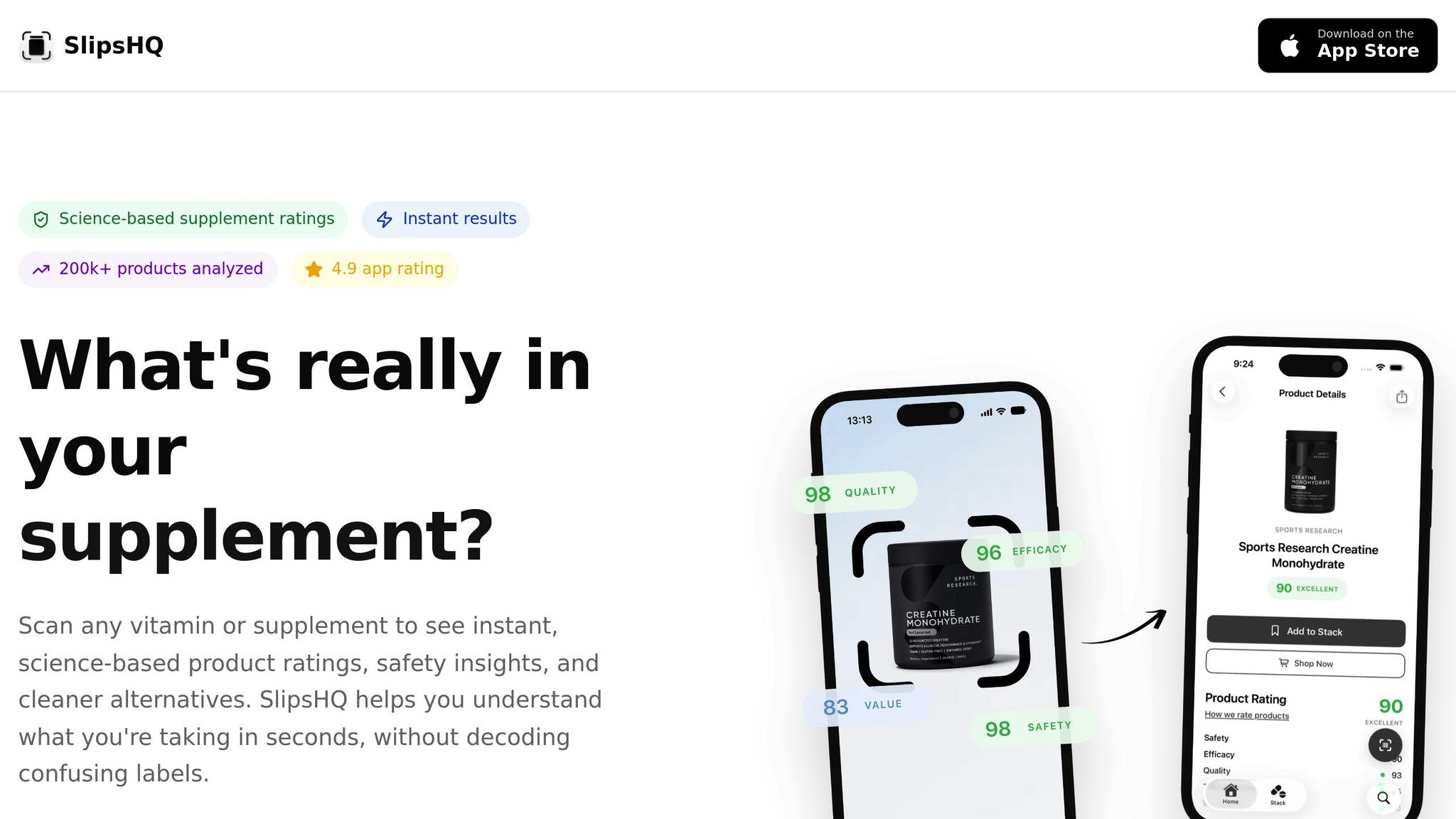
Managing multiple supplements with different timing needs can feel overwhelming, but SlipsHQ makes it easier. This app provides safety and interaction alerts, helping you avoid conflicts between supplements. By scanning a product's barcode, you’ll get access to a database of over 200,000 supplements, complete with science-backed trust scores and personalized recommendations.
SlipsHQ also helps you design a supplement routine tailored to your schedule and dietary habits. Whether you’re wondering if your iron supplement clashes with calcium or need help pairing vitamins with meals, the app offers clear, research-based guidance.
If you follow time-restricted eating or other meal patterns, SlipsHQ ensures your supplements fit seamlessly into your routine without compromising absorption. Plus, with real-time price comparisons, you can decide whether to invest in better-formulated options - like choosing ubiquinol for CoQ10 or magnesium bisglycinate - while balancing both nutritional and financial priorities.
Conclusion
Getting the most out of your supplements isn’t just about what you take - it’s about when and how you take them. Timing and pairing play a big role in how effectively key nutrients work in your body. While water-soluble vitamins are more forgiving, even they can be impacted by timing, influencing how well your body absorbs and uses them.
What you eat alongside your supplements is equally important. Certain foods can either boost or block nutrient absorption. Plus, your body’s natural rhythms - your circadian clock - affect how efficiently nutrients are processed throughout the day. For example, iron tends to work better in the morning, while magnesium is often more effective in the evening.
If all this feels like a lot to manage, there’s a simple way to make it easier. SlipsHQ is an app designed to take the guesswork out of supplement timing. Just scan a product’s barcode, and it provides science-backed advice on the best timing, food pairings, and potential interactions. With a database of more than 200,000 supplements, it creates personalized schedules tailored to your routine - whether you’re following time-restricted eating or a more traditional meal plan.
To optimize your supplement routine, take a moment to evaluate your current habits. Are you pairing the right supplements with food? Are you spacing them correctly? Do some need fat or vitamin C to work better? Tools like SlipsHQ can help simplify this process, giving you clear, actionable steps to integrate into your daily life. A structured, personalized approach can make all the difference in achieving consistent results.
FAQs
Does the timing of when I take supplements impact how well they work?
Yes, when you take your supplements can play a big role in how well your body absorbs them and how effective they are. Some vitamins and minerals are absorbed more efficiently when paired with food. For instance, fat-soluble vitamins - like A, D, E, and K - are better absorbed if you take them with meals that include healthy fats.
On the flip side, certain supplements, such as iron, are often absorbed more effectively on an empty stomach. However, this can sometimes lead to stomach discomfort for some people. Timing can also be critical for supplements aimed at boosting energy or supporting sleep. Taking them at the wrong time of day could interfere with their purpose. By understanding these details, you can adjust your supplement routine to align with your lifestyle and get the most out of them.
How can I pair supplements with meals to improve nutrient absorption?
To get the most out of your supplements, timing and what you eat with them can make a big difference. Fat-soluble vitamins - like A, D, E, and K - are absorbed more effectively when taken with meals that include healthy fats. Think avocado, nuts, or olive oil as great options to pair with these vitamins.
Water-soluble vitamins, such as C and B-complex, are more flexible. They can be taken with or without food, though having them with a meal might help minimize any chance of stomach upset.
For minerals like iron, combining them with foods high in vitamin C - like oranges or bell peppers - can boost absorption. However, it’s best to avoid calcium-rich foods at the same time, as calcium can interfere with how well your body absorbs iron. Always check the directions on supplement labels and consult a healthcare provider to make sure your approach fits your specific health and dietary needs.
How do your body's natural rhythms affect the best time to take supplements?
Your body's internal clock, known as circadian rhythms, plays a big role in processes like sleep, energy levels, and digestion. These rhythms can also affect how well your body absorbs supplements. For instance, water-soluble vitamins like vitamin C and B-complex tend to work best when taken in the morning, as they align with your body's natural energy production. On the other hand, fat-soluble vitamins - such as D, E, and K - are absorbed more effectively when paired with meals that include healthy fats. And if you're taking supplements like magnesium to support relaxation, evening is often the ideal time, as your body starts preparing for rest.
By syncing your supplement schedule with your body's natural rhythms, you can get more out of your wellness routine. Tools like SlipsHQ offer science-backed guidance to help you create a supplement plan tailored to your needs, ensuring you maximize their benefits.