
How SEDDS Improve Bioavailability: A Simple Guide
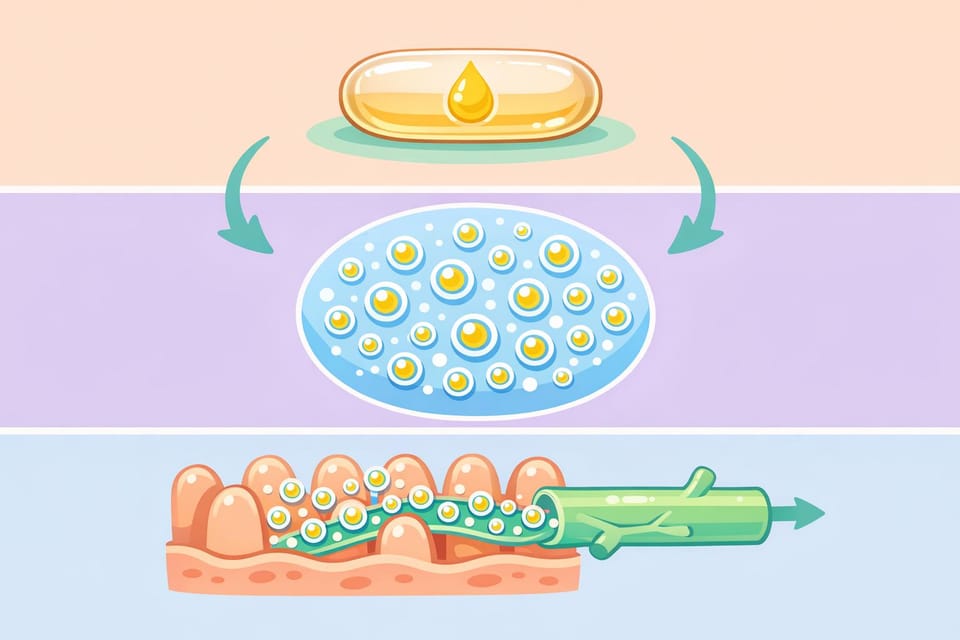
Self-Emulsifying Drug Delivery Systems (SEDDS) are a game-changer for improving bioavailability, especially for fat-soluble drugs and supplements. Poor water solubility limits the absorption of 40–70% of new compounds, but SEDDS tackle this issue by forming tiny oil-in-water droplets in the stomach, ensuring faster and more consistent absorption.
Key Takeaways:
- What are SEDDS? Mixtures of oils, surfactants, and co-surfactants that dissolve fat-soluble ingredients, bypassing the slow dissolution phase.
- How do they work? SEDDS create nanosized droplets (100–300 nm) in the stomach, increasing surface area for absorption and enabling lymphatic transport to avoid first-pass metabolism.
- Benefits: Improved solubility, faster absorption, less variability, and reduced side effects compared to standard formulations.
- Applications: Used in pharmaceuticals (e.g., Neoral®, Norvir®) and supplements (e.g., CoQ10, curcumin) to enhance effectiveness.
SEDDS technology simplifies drug delivery and ensures more of the active ingredient reaches your bloodstream, making it a reliable solution for both medications and supplements.
Main Components of SEDDS Formulations
SEDDS (Self-Emulsifying Drug Delivery Systems) rely on three essential ingredients - lipids, surfactants, and co-surfactants. Together, these components transform fat-soluble compounds into a more absorbable form, ensuring better bioavailability.
Lipids
Lipids are the backbone of SEDDS, acting as carriers for fat-soluble ingredients. Without them, these compounds struggle to dissolve in digestive fluids. The type of lipid used plays a crucial role. Long-chain triglycerides (LCT), such as castor and sesame oils, are particularly effective at preventing drugs from crystallizing in the stomach. On the other hand, medium-chain triglycerides (MCT), like caprylic/capric triglycerides, are digested more quickly and resist oxidation better. Beyond improving solubility, lipids help form chylomicrons, which transport the active ingredient through the intestinal lymphatic system, bypassing the liver's first-pass metabolism.
Surfactants
Surfactants act as emulsifiers, making self-emulsification possible. These molecules, with both water- and oil-friendly properties, reduce the tension between the oil and water phases. When SEDDS reach the stomach, surfactants enable the formation of stable, fine oil-in-water droplets. Non-ionic surfactants with high Hydrophilic-Lipophilic Balance (HLB) values - above 12 - like Tween 80 and Cremophor RH40, are preferred. They are less toxic and remain stable across the varying pH levels in the digestive system. Typically, surfactants make up 30% to 60% of the total formulation.
"Surfactants increase the permeability by partitioning into the cell membrane and disrupting the structural organization of the lipid bilayer leading to permeation enhancement." - Shweta Gupta, Department of Pharmaceutics, Parul Institute of Pharmacy
Co-Surfactants
Co-surfactants fine-tune the emulsification process, ensuring optimal performance. Common examples include ethanol, propylene glycol, and PEG 400. These ingredients enhance the fluidity of the interfacial film between oil and water, enabling the creation of smaller, more stable droplets. By reducing the amount of surfactant needed, they help minimize gastric irritation while maintaining stability. Additionally, co-surfactants prevent crystallization of both the active ingredient and the surfactants, ensuring the formulation stays consistent and effective during absorption.
How SEDDS Work in the Body
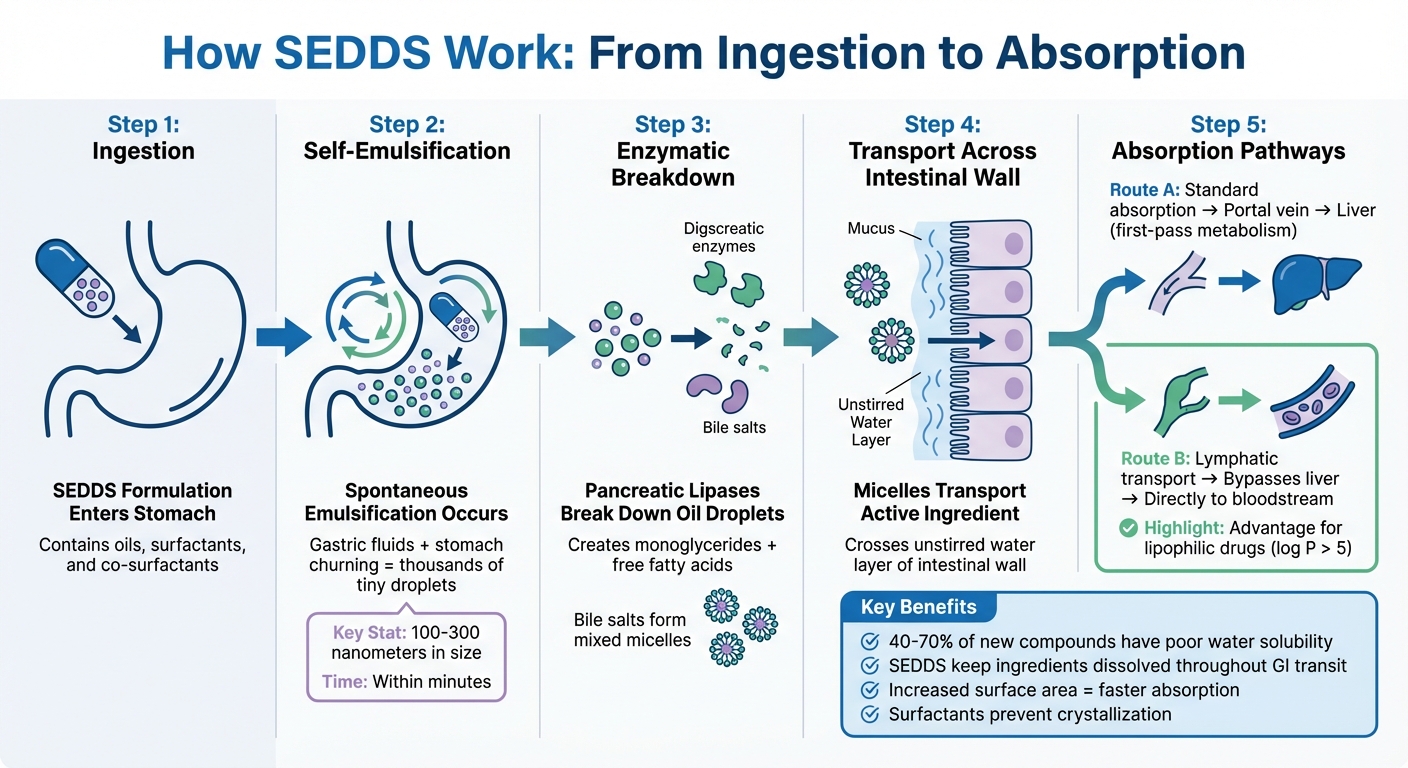
How SEDDS Work: From Ingestion to Absorption in the Body
When you take a dose of SEDDS (self-emulsifying drug delivery systems), they quickly mix with your stomach's gastric fluids, thanks to a blend of oils and surfactants. The natural churning action of your stomach provides just the right amount of movement to spark spontaneous emulsification. Within minutes, this process creates thousands of tiny oil-in-water droplets, typically ranging from 100 to 300 nanometers in size. These droplets set the stage for enzymes in your gut to do their job more effectively.
The Self-Emulsification Process
SEDDS work by expanding the absorption surface for the active ingredient. As the formulation disperses in your digestive fluids, it keeps the ingredient dissolved within microscopic droplets, speeding up absorption.
"Self-emulsifying formulations are readily dispersed in the GI tract, where the motility of the stomach and small intestine provides the agitation necessary for emulsification."
- Shweta Gupta et al., Parul Institute of Pharmacy
Once emulsified, enzymes like pancreatic lipases break down the oil droplets into simpler forms - monoglycerides and free fatty acids. These breakdown products team up with bile salts from the gallbladder to form mixed micelles. These micelles then transport the active ingredient across the intestinal wall’s unstirred water layer.
This process not only improves solubility but also boosts absorption.
Better Solubility and Absorption
By keeping the active ingredient dissolved and stabilizing the droplets, SEDDS tackle the challenge of poor water solubility - a common issue for 40% to 70% of new drug compounds. This approach also enhances passive absorption by temporarily altering the lipid bilayer of intestinal cells. The surfactants in SEDDS prevent the active ingredient from crystallizing in the gut.
For ingredients that are highly fat-soluble (log P > 5), SEDDS go a step further. They help these compounds integrate into chylomicrons within intestinal cells. This allows them to bypass first-pass metabolism through lymphatic transport, leading to a dramatic increase in bioavailability.
Benefits of SEDDS vs. Standard Formulations
Self-emulsifying drug delivery systems (SEDDS) offer clear advantages over standard formulations, particularly in improving drug absorption. By pre-solubilizing drugs, SEDDS eliminate the need for dissolution, a key limitation of traditional formulations. Standard drugs rely on dissolving in gastrointestinal (GI) fluids, which can restrict absorption. In contrast, SEDDS deliver drugs already solubilized in a lipid-based carrier, allowing for immediate uptake.
Another major benefit is consistent absorption profiles. Standard formulations often show variability due to food interactions and differing GI conditions among individuals. SEDDS, however, provide more predictable plasma concentration levels, leading to steadier therapeutic effects.
Here’s a side-by-side comparison of the two approaches:
SEDDS vs. Standard Formulations: Side-by-Side Comparison
| Factor | Standard Solid Formulations | SEDDS Formulations |
|---|---|---|
| Solubility | Depends on the drug's crystalline structure and dissolution in GI fluids | Drug is pre-solubilized in a lipid/surfactant mix, staying in solution throughout GI transit |
| Absorption Consistency | High variability due to food effects and dissolution rates | More consistent plasma levels with reduced variability |
| Metabolism | Extensive first-pass metabolism via the portal vein | Skips the liver by utilizing the intestinal lymphatic pathway |
| Efflux Mechanisms | Prone to removal by P-glycoprotein (P-gp) pumps | Surfactants inhibit P-gp pumps, boosting drug uptake |
These features combine to make SEDDS a reliable option for delivering drugs effectively.
Lymphatic Transport and P-glycoprotein Inhibition
SEDDS go beyond improving solubility - they also enhance bioavailability through specific mechanisms like targeted transport and efflux inhibition. For lipophilic drugs (log P > 5), SEDDS enable lymphatic transport, bypassing the liver and avoiding first-pass metabolism. Additionally, the surfactants in SEDDS inhibit P-glycoprotein (P-gp) pumps, which increases drug retention.
This dual-action approach has led to notable successes. For example, drugs like Norvir (ritonavir) and Sandimmune Neoral (cyclosporine) have seen dramatic improvements in oral bioavailability when reformulated as SEDDS.
SEDDS in Pharmaceuticals and Supplements
Products That Use SEDDS
Thanks to their ability to improve solubility and absorption, SEDDS (Self-Emulsifying Drug Delivery Systems) have become a key technology in both pharmaceuticals and supplements.
A prime example in pharmaceuticals is Sandimmun Neoral (cyclosporine A), an immunosuppressant that switched from an older lipid formulation to a self-microemulsifying system. This change resulted in more consistent absorption and higher bioavailability compared to its original version. Other notable HIV treatments, including Norvir (ritonavir), Fortovase (saquinavir), and Agenerase (amprenavir), also rely on SEDDS to enhance their therapeutic effectiveness.
Here’s a snapshot of pharmaceutical products utilizing SEDDS:
| Product Name | Active Ingredient | Therapeutic Application |
|---|---|---|
| Sandimmun Neoral® | Cyclosporine A | Immunosuppressant |
| Norvir® | Ritonavir | HIV-1 Protease Inhibitor |
| Fortovase® | Saquinavir | HIV-1 Protease Inhibitor |
| Agenerase® | Amprenavir | HIV-1 Protease Inhibitor |
| Convulex® | Valproic Acid | Antiepileptic |
| Lipofen® | Fenofibrate | Antihyperlipidemic |
| Rocaltrol® | Calcitriol | Vitamin D Analog |
In the world of supplements, SEDDS are widely used to enhance the delivery of lipophilic (fat-soluble) compounds that typically struggle with poor absorption. Ingredients like Coenzyme Q10 (CoQ10), curcumin, quercetin, resveratrol, lutein, Vitamin E, and beta-carotene see significant improvements in solubility and bioavailability when formulated with SEDDS.
Using SEDDS in Supplements
SEDDS technology addresses a major challenge in supplement manufacturing: poor water solubility. This issue affects up to 70% of new molecules and many lipophilic nutrients.
By leveraging SEDDS, manufacturers can reduce dosages while ensuring that more of the active ingredient reaches the bloodstream. This is especially critical for high-cost ingredients like CoQ10 and curcumin. The technology also speeds up the onset of action and protects delicate compounds from the harsh conditions of the digestive system.
An exciting development in the field is the shift from liquid SEDDS to solid forms, known as solid SEDDS (S-SEDDS). Techniques such as spray drying and carrier adsorption make it possible to retain the benefits of SEDDS while resolving issues like capsule leakage and chemical instability seen with liquid versions. By improving both absorption and stability, SEDDS continue to play a key role in creating more effective and reliable supplements for consumers.
How SlipsHQ Helps You Choose Better Supplements
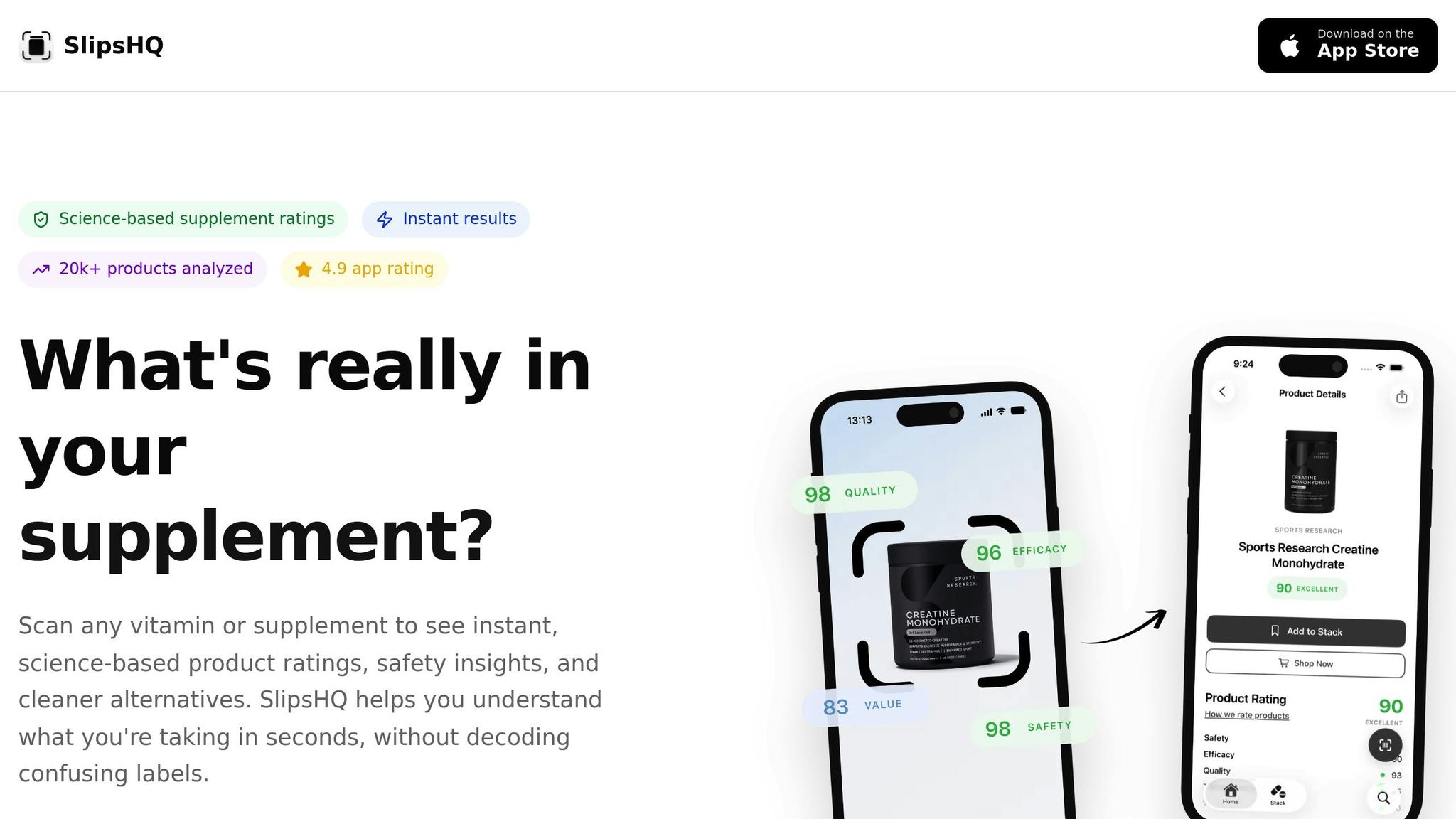
Checking Supplement Quality with SlipsHQ
Supplement labels can often leave you guessing. That’s where SlipsHQ steps in. With its barcode scanner and science-backed trust scores, it quickly verifies whether a supplement uses advanced SEDDS formulations like VESIsorb®. These formulations rely on a precise blend of lipids, surfactants, and co-surfactants to improve absorption.
SlipsHQ goes deeper by analyzing ingredient lists for key SEDDS markers, such as Tween 80, Cremophor RH40, and Labrasol, along with lipid carriers like MCTs and LCTs. This is crucial because many supplements and drugs struggle with poor water solubility, which limits how well your body can absorb them. SEDDS formulations, however, can boost bioavailability by as much as 203.46% for some compounds and up to 460.74% for others.
Take, for example, a study from August 2019 involving 16 healthy participants. This randomized, double-blind trial showed that a CBD hemp extract using VESIsorb® SEDDS technology delivered a 2.85-fold increase in AUC (area under the curve) over 8 hours compared to standard MCT oil. Another study published in Molecules found that 87.5% of participants reached peak levels within just an hour when using SEDDS-based formulations.
With SlipsHQ, you can easily identify these high-performance supplements by scanning for terms like "VESIsorb®" or "Self-Emulsifying" on product labels. This ensures you’re choosing products designed for maximum effectiveness.
Building Your Supplement Routine with SlipsHQ
Once you've verified supplement quality, SlipsHQ takes it a step further by helping you create a tailored supplement routine. The platform focuses on nutrients that are notoriously hard to absorb, like CoQ10, CBD, and curcumin. It also guides you in selecting between Liquid and Solid SEDDS, ensuring surfactant levels are in the optimal 30–60% range for consistent absorption.
SlipsHQ also checks for proper surfactant concentrations to minimize the risk of gastric irritation. By identifying supplements with well-formulated SEDDS, it helps you build a routine that improves absorption, allowing you to get more benefits from every dose.
With SlipsHQ, you're not just taking supplements - you’re maximizing their potential.
Conclusion: SEDDS and the Future of Supplement Absorption
SEDDS technology has transformed the way we approach supplement absorption. With 60%–70% of new molecules struggling with poor water solubility, advanced delivery systems like SEDDS have become essential. By creating nanosized droplets, these formulations dramatically increase the surface area for absorption and allow nutrients to bypass the liver's first-pass metabolism through lymphatic transport.
The future looks even more promising with the development of solid SEDDS (S-SEDDS). Techniques like spray drying and 3D printing are paving the way for these solid forms, which solve common issues such as capsule leakage and chemical instability while maintaining high bioavailability. New innovations, such as supersaturable formulations with precipitation inhibitors and advanced strategies for delivering complex molecules, are further expanding the possibilities of SEDDS.
"The adaptability and potential for personalized medicine solidify their role as a cornerstone in modern pharmaceutical development." - MDPI Pharmaceutics
This progress highlights the importance of precise formulation and rigorous verification. To ensure effectiveness, the right balance of oils and surfactants (usually 30%–60%) is crucial; an incorrect formulation can lead to nutrient precipitation or even gastrointestinal discomfort. Verification tools like SlipsHQ play a critical role here. With its barcode scanner, SlipsHQ identifies trusted SEDDS platforms like VESIsorb® and checks for essential components - MCTs, Tween 80, Labrasol - so you can trust the product to deliver on its promises.
As advancements in computational modeling, mucus-permeable systems, and personalized 3D-printed dosages continue, the need for reliable supplement verification grows. The science is clear: opt for supplements that apply SEDDS technology correctly to maximize their benefits.
FAQs
How do SEDDS avoid first-pass metabolism?
Self-emulsifying drug delivery systems (SEDDS) offer a way to sidestep the first-pass metabolism by taking advantage of the lymphatic transport pathway. Instead of being processed by the liver and gastrointestinal tract during absorption, the drug enters the lymphatic system and is transported directly into the bloodstream.
This method significantly boosts the bioavailability of lipophilic (fat-soluble) drugs, which often struggle with water solubility. By bypassing the liver's metabolic breakdown, a greater portion of the active compound reaches systemic circulation, maximizing the drug's effectiveness.
Why are SEDDS formulations better at improving bioavailability than standard drug formulations?
Self-Emulsifying Drug Delivery Systems (SEDDS) are a game-changer when it comes to improving the bioavailability of drugs that struggle to dissolve in water. These systems work by enhancing the solubility, stability, and absorption of such compounds in the gastrointestinal tract. How? They form fine oil-in-water emulsions when they come into contact with digestive fluids, making it easier for lipophilic (fat-loving) drugs to be absorbed.
This delivery method helps drugs dissolve more efficiently, stay stable during digestion, and get absorbed into the bloodstream far better than traditional formulations. Because of this, SEDDS are widely used in pharmaceuticals and supplements to ensure that hard-to-absorb compounds deliver their full therapeutic potential.
How can I tell if a supplement uses SEDDS technology?
To figure out if a supplement uses SEDDS (Self-Emulsifying Drug Delivery Systems) technology, start by checking the product label and ingredient list. Keep an eye out for phrases like "self-emulsifying", "lipid nanocarriers", or mentions of lipid-based formulations and emulsifiers. These terms often indicate the presence of SEDDS technology. Additionally, manufacturers sometimes include this information in product descriptions or detailed packaging.
If you want an easier way to confirm, consider using tools like SlipsHQ. This wellness app is designed to analyze supplement ingredients and safety. It can help you quickly determine if a product utilizes advanced delivery systems like SEDDS, making it simpler to choose the right supplements for your needs.