
Social Media vs. Science: Choosing Supplements
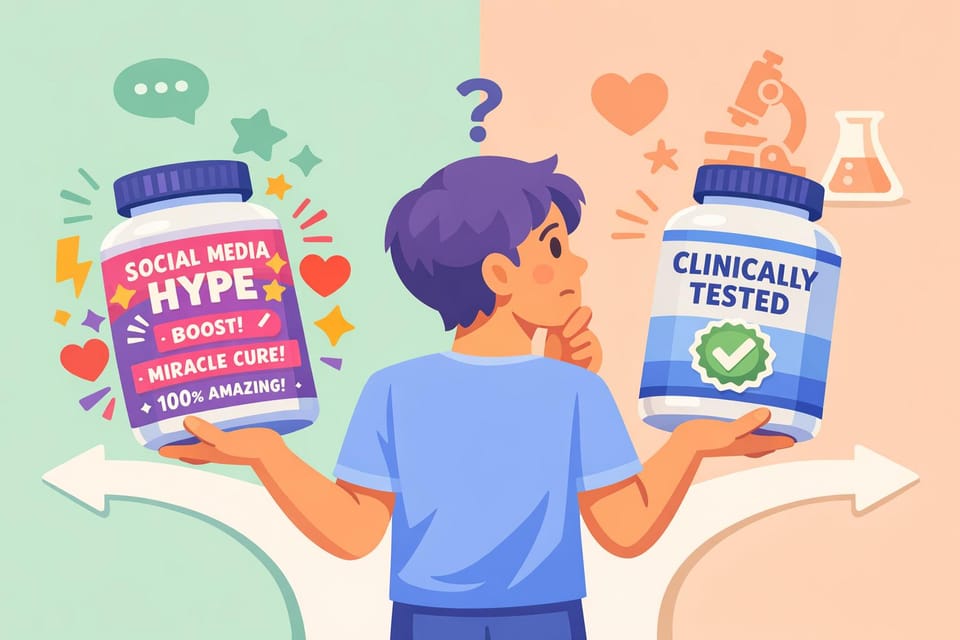
Social media is flooded with supplement advice, but most of it lacks scientific backing. Platforms like TikTok and Instagram prioritize viral trends over factual accuracy, leaving consumers vulnerable to misinformation. Here’s what you need to know:
- Misinformation is rampant: 97% of TikTok supplement videos lack scientific evidence, and 86% of Instagram nutrition posts fail to cite research.
- Health risks are real: Supplements contribute to 23,000 ER visits annually in the U.S., often due to unregulated or unsafe products.
- FDA does not pre-approve supplements: Half of U.S. adults mistakenly believe the FDA rigorously tests supplements before they hit the market.
- Influencer marketing drives sales: Many influencers use personal stories and hidden endorsements to push products, making it harder for consumers to identify credible advice.
To make safer choices, rely on clinical evidence, check for accurate labeling, and consult healthcare providers. Tools like SlipsHQ can help by analyzing supplements for safety and effectiveness instantly. Avoid trusting viral claims - scientific research is your best ally in protecting your health.
How Social Media Influences Supplement Purchases
Social media has become a powerful driver of supplement purchases. In fact, 74% of consumers rely on it to make buying decisions. The rise of influencer marketing underscores this shift, growing from $1.7 billion in 2016 to an incredible $13.8 billion in 2021. Influencers often adopt the look and language of medical professionals - think lab coats and technical jargon - to project a sense of authority. They also lean heavily on emotional storytelling, breaking down complex health topics into bite-sized, relatable narratives. Unfortunately, social media algorithms prioritize what’s viral over what’s accurate, allowing flashy but unverified claims to reach millions of viewers.
Many consumers trust influencers because they seem approachable and relatable, which naturally encourages engagement. However, this relatability can obscure the fact that many influencers are paid to promote products. Some hide disclosures like #ad within a sea of hashtags, while others skip them entirely. This makes it harder for audiences to distinguish genuine advice from paid endorsements. The result? A growing need for consumers to critically evaluate these recommendations against credible scientific evidence.
Why People Trust Social Media Recommendations
Social media recommendations thrive on their promise of quick fixes and personal success stories. Let’s face it - scrolling through Instagram for dramatic health claims feels more engaging than digging into dense research papers. Platforms like TikTok and Instagram cater to short attention spans, delivering content that’s visually captivating, emotionally charged, and easy to digest.
Psychological factors also play a role. Many users feel pressured to achieve the aesthetic ideals they see online, making them more susceptible to promises of rapid results. The growing prominence of alternative health advocates in mainstream media has further blurred the line between professional and non-professional advice. Adding to the confusion, 75% of medical schools don’t require nutrition training, meaning even doctors may lack expertise in supplements. This gap in knowledge can make social media recommendations seem like a more accessible and appealing option.
Dangers of Following Viral Supplement Trends
Jumping on viral supplement trends can have serious consequences, including severe health risks. These risks range from toxic reactions and organ damage to bacterial contamination and life-threatening allergic responses caused by undeclared ingredients.
Counterfeit products are another major concern. For instance, counterfeit versions of Immuno 150 and Neuriva were discovered on Walmart.com in September 2025. Similarly, in November 2023, legal action was taken against sellers of fake Prevagen on Amazon. Earlier that year, counterfeit Pure Encapsulations L-glutamine was found being sold by unauthorized third-party sellers on the platform. The popularity of viral trends often drives consumers toward unregulated sellers, where products may lack active ingredients - or worse, contain harmful fillers.
Misinformation compounds these dangers. According to a survey, 82% of Registered Dietitian Nutritionists view TikTok as the leading platform for spreading nutrition misinformation. Trends like the carnivore diet claim to "reset the gut", even though research links high red meat consumption to heart disease and type 2 diabetes. Similarly, the lectin-free diet warns against plant proteins, despite the fact that cooking neutralizes their potential toxicity. Clinical dietitian Renata Micha sheds light on these exaggerated claims:
As for the many claims such as reducing inflammation, "resetting the gut", or providing unique mental clarity - these are anecdotal and not supported by high-quality evidence.
Perhaps most alarming, half of U.S. adults wrongly believe the FDA rigorously tests supplements for safety and effectiveness before they hit the market. In reality, the FDA only steps in after a product has caused harm. This regulatory gap leaves consumers vulnerable to unproven, and sometimes unsafe, formulas promoted by charismatic strangers online. Up next, we’ll explore how thorough research can help consumers make safer, more informed supplement choices.
Using Science to Choose Supplements
When selecting supplements, focus on clinical evidence, clear labeling, and accurate dosages. Unlike prescription drugs, which must prove their safety before hitting the market, dietary supplements are reviewed by the FDA only after reports of harm emerge. This leaves manufacturers responsible for ensuring their products are safe and effective - though not all take this responsibility seriously. Dr. Pieter Cohen, Associate Professor of Medicine at Harvard Medical School, highlights the issue:
The FDA leaves it up to companies to ensure the purity and safety of their products. But there's not much incentive. It rarely penalizes manufacturers for not having the right amount of ingredients in a product.
For example, a study of 25 melatonin gummy brands revealed that some contained up to 347% more melatonin than listed on the label. Similarly, a 2012 government investigation of 127 supplements marketed for weight loss or immune support found that 20% made illegal health claims. These examples underscore the challenges of ensuring safety and label accuracy in the supplement industry. As a result, it’s critical to carefully evaluate supplement claims before making a purchase.
What to Look for in Research-Backed Supplements
Start by checking for clinical evidence. Look for large, randomized controlled trials on trusted platforms like PubMed or Examine.com. Dr. Pieter Cohen advises consumers to "Ask if there's a study about it. But it needs to be a large randomized controlled trial to be credible". This ensures the supplement has been rigorously tested, rather than relying on anecdotal success stories.
Next, scrutinize the label. A proper supplement should include a "Supplement Facts" panel that lists serving sizes and exact ingredient amounts. Be cautious of proprietary blends, as they often hide ingredient dosages, making it difficult to verify if the amounts match those used in clinical studies. Additionally, ensure the label provides a domestic address or phone number for reporting adverse effects. To further protect yourself, use tools like the FDA's Dietary Supplement Ingredient Directory and Health Fraud Product Database to check for flagged ingredients or violations. By relying on science rather than social media trends, you can make better-informed decisions.
Lastly, consult a healthcare provider. They can help you identify potential risks or interactions and determine whether a supplement aligns with your specific health needs.
Advantages of Science-Backed Supplements
Choosing supplements rooted in scientific evidence ensures both safety and measurable health benefits. Supplements backed by research are more likely to deliver reliable outcomes, such as improvements in LDL cholesterol or blood pressure, as these results are supported by clinical data. Unlike trendy products that promise quick fixes, evidence-based supplements focus on sustainable, long-term health improvements.
Another key benefit is transparency. Research-backed supplements often carry third-party certifications from organizations like USP or NSF, which verify ingredient quality and dosage accuracy. This added layer of scrutiny ensures you're getting exactly what the label promises - without hidden fillers or harmful contaminants. By choosing science-backed supplements, you’re making a confident, informed investment in your health, rather than gambling on unverified claims.
Social Media vs. Science: A Direct Comparison
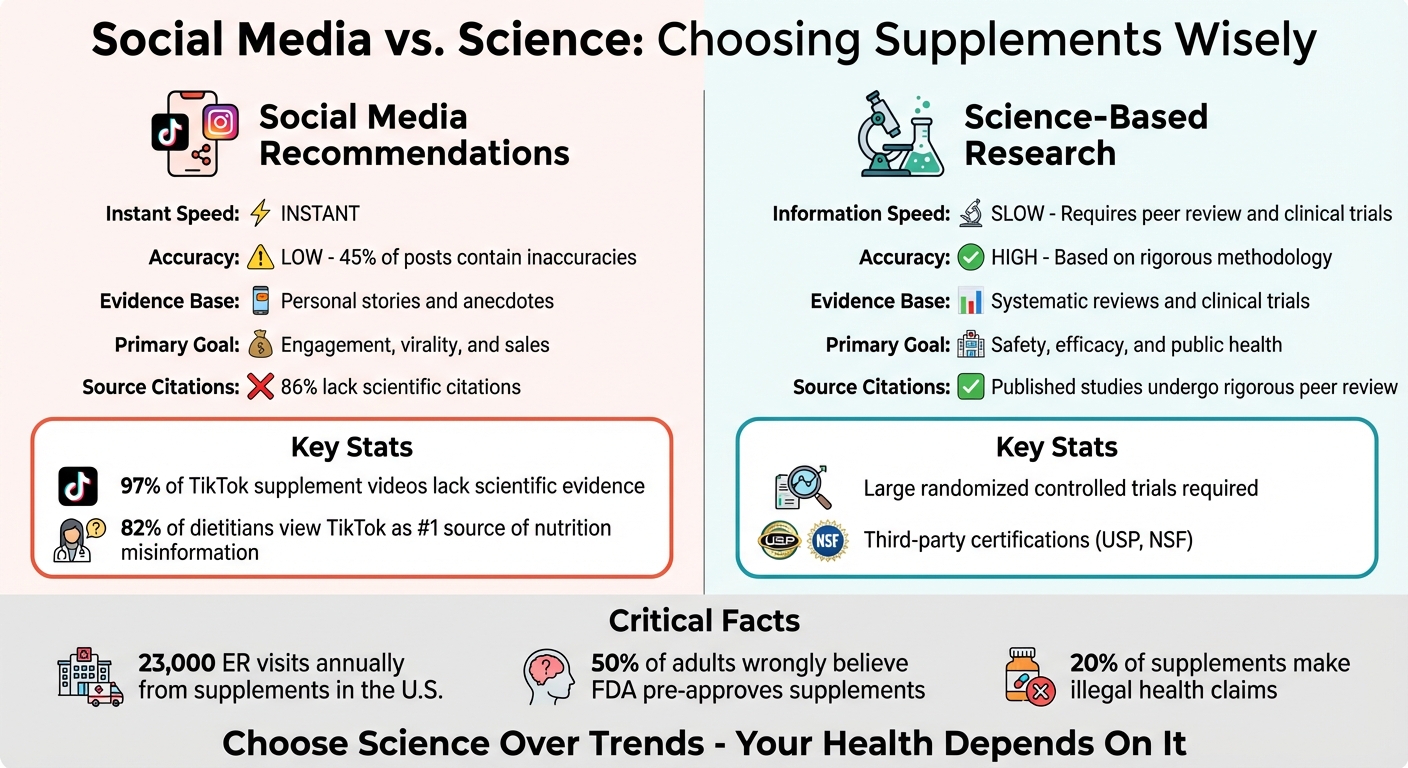
Social Media vs Science-Based Research for Supplement Decisions
Speed, Accuracy, and Personalization Compared
Social media thrives on delivering fast answers, driven by algorithms designed to maximize engagement. But this speed often comes at the cost of accuracy. Unlike social media, science-based research takes its time - relying on peer reviews and clinical trials to ensure findings are reliable and backed by solid evidence.
| Factor | Social Media Recommendations | Science-Based Research |
|---|---|---|
| Information Speed | Instant | Slow; requires peer review and clinical trials |
| Accuracy | Low; ~45% of posts contain inaccuracies | High; based on rigorous methodology |
| Evidence Base | Personal stories and "kernels of truth" | Systematic reviews and clinical trials |
| Primary Goal | Engagement, virality, and sales | Safety, efficacy, and public health |
| Source Citations | 86% lack scientific citations | Published studies undergo rigorous peer review |
Social media’s strength lies in its ability to personalize content - using relatable stories to connect with audiences. However, these anecdotes often fail to address individual health needs, potential risks, or long-term outcomes. On the other hand, science-based research focuses on population-level data, which may lack the personal touch but is built on reproducible and trustworthy evidence. These differences highlight why viral trends and scientific findings often don’t align.
Real Examples: Trends vs. Research
The gap between social media claims and scientific research becomes evident when looking at specific health trends. For instance, some influencers advocate an all-animal diet for "mental clarity", despite well-established research linking excessive consumption of processed red meat to increased risks of heart disease and diabetes. This disconnect can mislead consumers and pose serious health risks.
However, not all trends conflict with science. Take the Fibermaxxing movement, which encourages higher fiber intake. This aligns with research showing that increased fiber consumption supports better heart health and improved glucose control. When influencers base their advice on credible research, social media can amplify messages that genuinely promote healthier choices.
How SlipsHQ Helps You Make Science-Based Decisions
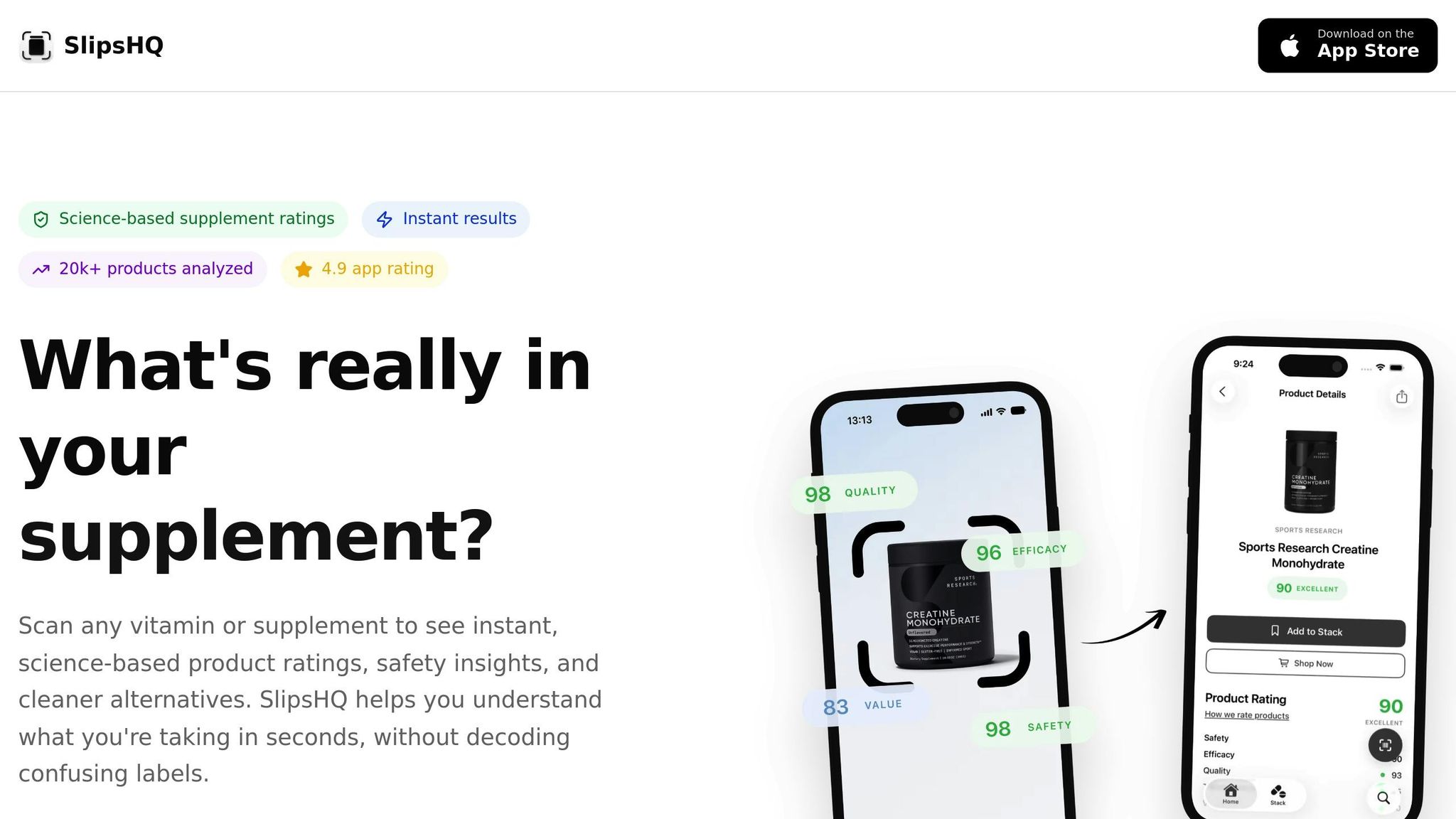
What SlipsHQ Offers
SlipsHQ cuts through the noise of unreliable supplement trends by providing science-backed insights in an instant. The app evaluates over 200,000 supplements using a trust score system (0 to 100), assessing each product across five key areas: safety, efficacy, quality, transparency, and value. With a quick barcode scan - whether you're at home or in a store - you gain immediate access to ingredient purity details, real-time safety alerts, and warnings about potential drug interactions. All of this is grounded in thorough scientific analysis.
The FDA has flagged more than 500 supplements for being tainted with pharmaceuticals like stimulants and steroids. SlipsHQ helps you steer clear of these risks by flagging problematic products instantly. Plus, it offers customized supplement recommendations tailored to your health goals and even compares prices to identify suspiciously cheap options, which are often signs of counterfeit or low-quality products.
Why Modern Consumers Need SlipsHQ
Navigating the supplement market can feel like a minefield. With 20% of supplements marketed for weight loss or immune support making illegal claims, it’s easy to waste money on ineffective products - or worse, risk your health. SlipsHQ simplifies the process by combining the speed of modern tech with the reliability of scientific research, delivering evidence-based advice that doesn’t require you to be a nutrition expert.
Instead of relying on unverified advice from influencers, you can confirm product quality right when you’re ready to buy. The app’s price comparison tool ensures you’re not overpaying, while the drug interaction checker protects you from dangerous combinations between supplements and prescription medications. With SlipsHQ, you can replace guesswork with confidence, making informed decisions supported by clear, science-driven data.
Conclusion
When it comes to choosing supplements, let science guide your decisions - not social media trends. While viral fads might promise quick fixes, they often lack proper testing and can lead to serious consequences. In fact, dietary supplements are linked to approximately 23,000 emergency room visits annually in the United States. Trusting unverified advice from influencers only amplifies the risk.
A surprising one-third of Americans mistakenly believe that the FDA tests supplements for safety before they hit the market. This misconception can create a false sense of security, leaving people vulnerable to health issues such as harmful drug interactions or taking unsafe dosages. Dr. Pieter Cohen, Associate Professor of Medicine at Harvard Medical School, highlights the problem:
The FDA leaves it up to companies to ensure the purity and safety of their products. But there's not much incentive. It rarely penalizes manufacturers for not having the right amount of ingredients in a product.
To bridge the gap between marketing claims and reliable information, tools like SlipsHQ are stepping in. By simply scanning a barcode, SlipsHQ delivers evidence-based insights, including trust scores, safety alerts, and detailed ingredient breakdowns. It’s a straightforward way to cut through the noise and make informed decisions.
With tools like SlipsHQ, science-backed choices are within reach. They simplify complex research into practical advice, giving you the confidence to select supplements that are safe, effective, and tailored to your health needs.
FAQs
How can I make sure a supplement is safe and effective?
When deciding on a supplement, start by using SlipsHQ to evaluate the product's trust score, ingredient purity, and any safety warnings based on scientific data. Look for labels featuring third-party certifications, such as USP Verified or NSF International, which confirm the product has undergone quality testing. It's also a good idea to check the FDA’s Health Fraud Product Database for any warnings or alerts about the supplement. For tailored advice, speak with a healthcare professional who can recommend options that align with your specific health needs.
Why shouldn’t I rely on social media for supplement advice?
Social media tends to thrive on trends, influencers, and engagement over factual accuracy. Posts about supplements often skip over credible research, with studies revealing that most fail to include any scientific backing. This opens the door to misinformation, risky advice, and uncertainty about what actually delivers results.
To take a more research-driven approach, it’s essential to turn to reliable sources that emphasize transparency and evidence. Platforms like SlipsHQ are designed to guide you toward smarter choices by offering detailed insights into supplement quality, safety, and effectiveness - all grounded in trustworthy, accurate data.
How can I tell if a supplement is high quality?
To determine if a supplement meets high-quality standards, start by examining the Supplement Facts label. This should list all active and inactive ingredients, the serving size, and the amount of each ingredient per serving. Another key detail to look for is a third-party certification seal, such as USP-Verified or NSF International. These seals indicate the supplement has undergone independent testing to ensure its quality and purity. Also, check for clear batch or manufacturer information - this helps confirm the product's origin and safety.
For a deeper dive into supplement quality, tools like the SlipsHQ app can be incredibly useful. They provide quick insights into safety, ingredient purity, and overall effectiveness, helping you make more informed decisions.