
How to Spot Hidden Allergens in Supplement Labels
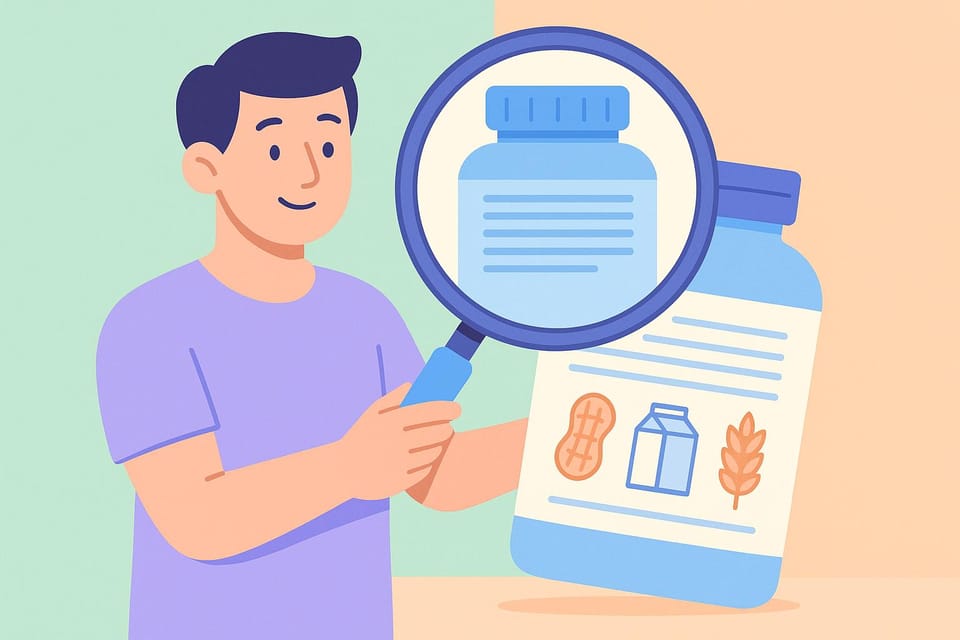
Hidden allergens in supplements can cause serious reactions, but spotting them on labels isn’t always straightforward. Here's how to protect yourself:
- Know the basics: The FDA requires clear labeling for 9 major allergens (milk, eggs, fish, shellfish, tree nuts, peanuts, wheat, soy, sesame), but not for cross-contamination risks.
- Check the "Contains" statement: This section lists major allergens but might not include derivatives or trace allergens.
- Scan ingredient lists: Allergens often hide under technical names (e.g., milk as "casein", peanuts as "arachis oil").
- Understand cross-contamination warnings: Phrases like "May contain" or "Processed on shared equipment" indicate potential allergen exposure.
- Contact manufacturers: For unclear labels, ask about ingredient sources and production practices.
- Use tools: Apps like SlipsHQ can scan barcodes to flag allergens and provide safety details.
FDA Allergen Labeling Requirements
The Food Allergen Labeling and Consumer Protection Act (FALCPA) of 2004 outlines federal rules for how allergens must be disclosed on supplement labels in the United States. These rules apply to dietary supplements just as they do to packaged foods. Under this law, manufacturers must clearly identify any major allergens in their products - even if they appear in trace amounts. While this framework is meant to improve transparency, allergens can still be difficult to spot on labels.
Why? Supplement labels often use vague terms like "natural flavors" or "spices", which can obscure allergen sources. Plus, not all supplements include a dedicated allergen box, making it harder to identify potential risks. Knowing how the FDA requires allergens to be disclosed is a key step in navigating these labels with confidence.
The 8 Major Allergens
The FDA requires clear labeling for eight major food allergens: milk, eggs, fish, crustacean shellfish, tree nuts, peanuts, wheat, and soybeans. These allergens are responsible for the majority of allergic reactions in the U.S. and must be listed by their common names if they are present in a supplement.
These allergens frequently show up in supplements. For example, whey or casein (from milk) is common in protein powders, soy lecithin is often used in capsule shells, and peanut oil can appear in softgels. Even supplements labeled as "plant-based" might include soy or tree nut derivatives. Since these ingredients often function as excipients, binders, or flavoring agents, they’re deeply embedded in the supplement industry. For individuals with allergies, staying vigilant is critical.
Standard Labeling Practices
To comply with FDA rules, manufacturers disclose allergens in three main ways: listing the common name directly in the ingredients, including it in parentheses after a technical term, or using a separate "Contains" statement. The "Contains" statement is often bolded or highlighted for visibility, but it’s optional if allergens are already clearly named in the ingredient list.
Some supplements include an allergen box, which lists common allergens like milk, eggs, or tree nuts found in the product. While convenient, this allergen box is not mandatory. Similarly, voluntary "may contain" statements warn of potential cross-contamination but don’t confirm the presence of allergens. Because labeling practices vary, it’s important to check multiple parts of the label to identify hidden allergens effectively.
How to Identify Hidden Allergens in Supplement Labels
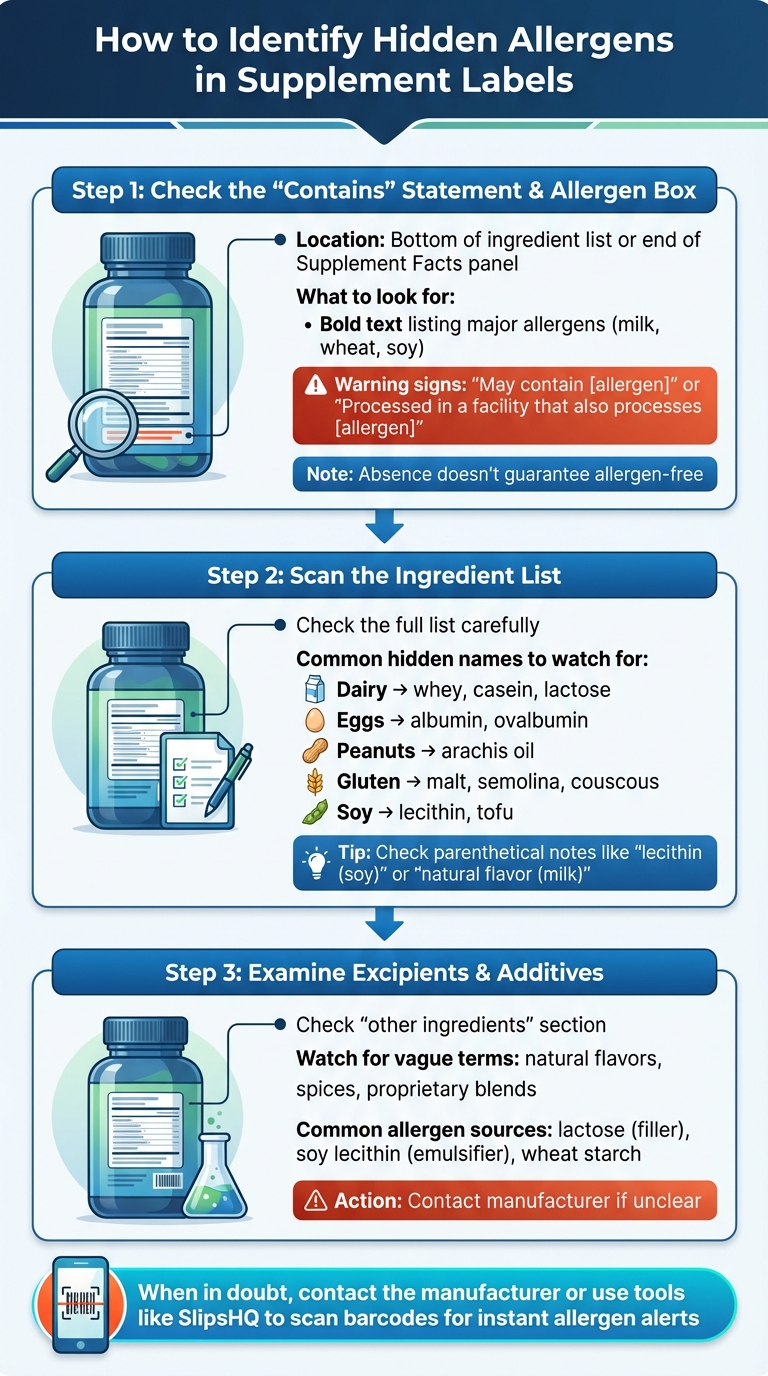
3-Step Process to Identify Hidden Allergens in Supplement Labels
Even with FDA regulations in place, hidden allergens can still sneak into supplements. They often hide behind technical jargon, vague descriptions, or within excipients and additives. Let’s break down how to uncover these allergens by focusing on key label details.
Step 1: Look at the "Contains" Statement and Allergen Box
Start by checking the bottom of the ingredient list or the end of the Supplement Facts panel for a "Contains" statement. This section is designed to disclose major allergens like milk, wheat, or soy, often highlighted in bold or with icons for easy identification.
However, this statement has its limits. It may not include allergen derivatives or less-common allergens. Plus, its absence doesn't guarantee the product is allergen-free. Be mindful of precautionary phrases like "May contain [allergen]" or "Processed in a facility that also processes [allergen]", as these indicate potential cross-contamination. To be thorough, cross-check this section with the full ingredient list.
Step 2: Scan the Ingredient List for Hidden Allergens
Allergens often hide under technical or less-obvious names in the ingredient list. For instance:
- Dairy: Look for terms like whey, casein, or lactose.
- Eggs: Watch for albumin or ovalbumin.
- Peanuts: Arachis oil is a key indicator.
- Gluten: Malt, semolina, or couscous are common culprits.
- Soy: Lecithin or tofu often signal its presence.
Ingredients are listed by weight, so if an allergen appears early, it’s likely present in larger quantities. Pay close attention to parenthetical notes, like "lecithin (soy)" or "natural flavor (milk)", which can reveal hidden allergens. Common supplements such as glucosamine (from shellfish), omega-3 capsules (from fish), or whey protein (from milk) often contain these hidden triggers.
| Allergen | Alternate Names | Common Hiding Places in Supplements |
|---|---|---|
| Dairy | Whey, casein, lactose, ghee | Fillers, flavors, excipients |
| Gluten | Malt, semolina, couscous | Additives, binders |
| Nuts/Peanuts | Arachis oil, marzipan, nougat | Natural flavors, coatings |
| Soy | Lecithin, tofu | Emulsifiers, proprietary blends |
| Shellfish | Glucosamine | Joint supplements |
| Fish | Omega-3 (fish oil) | Heart health capsules |
Once you’ve reviewed the ingredient list, move on to the next layer of scrutiny: inactive ingredients.
Step 3: Examine Excipients, Flavors, and Additives
Excipients - those inactive ingredients like fillers, binders, or coatings - are another place allergens can hide. Common examples include magnesium stearate or cellulose, but allergens like lactose (milk-based filler), soy lecithin (emulsifier), or wheat-derived starch can also appear here. Although manufacturers are required to disclose hidden allergens in flavors or colors, it’s still critical to carefully review the "other ingredients" section.
Be wary of vague terms like "natural flavors", "spices", or "proprietary blends", as these can mask allergenic components. For example, natural flavors might include peanut oil or nougat, while proprietary blends can obscure the exact composition of the formula. When in doubt, consult the manufacturer’s guidelines. Opt for brands that prioritize transparency and carry third-party certifications such as "Gluten-Free" or "Dairy-Free."
Understanding Cross-Contamination Warnings
When examining supplement labels, you'll often come across precautionary allergen labeling (PAL). These voluntary and unregulated warnings, such as "May contain [allergen]" or "Processed in a facility that also processes [allergen]", signal the potential for unintended cross-contact with allergens during production. Essentially, they alert you to the possibility of trace allergens making their way into the product.
Cross-contact happens when shared equipment or storage containers transfer tiny amounts of allergens. For example, a company might produce whey protein powder on the same encapsulation line as a "dairy-free" multivitamin. Even with rigorous cleaning, traces of allergens can linger. Similarly, airborne particles from peanuts processed in the same facility can settle on other products.
The specific wording of these warnings can help you gauge the level of risk. Labels that read "Made in a facility that processes [allergen]" suggest a lower likelihood of cross-contact compared to "Processed on shared equipment with [allergen]", which implies a higher risk. The phrase "May contain [allergen]" is a direct acknowledgment from the manufacturer that trace amounts might be present. These distinctions are essential for making informed and safer choices.
For those with severe allergies, it's wise to treat any PAL as a serious caution and consult an allergist before using the product. Parents of children with food allergies and individuals with celiac disease are often advised to take similar precautions, as even minimal exposure to allergens like gluten can cause significant harm.
It’s also crucial to note that the absence of a PAL statement doesn’t guarantee a product is free from cross-contact risks. Some manufacturers may simply opt not to include these warnings, even if a risk exists. If you're unsure, reach out to the manufacturer for details about their cleaning processes and allergen-control measures. For a faster way to assess allergen safety, tools like SlipsHQ allow you to scan supplement barcodes and review warnings, helping you decide whether to investigate further or avoid the product entirely.
Contacting Manufacturers for Allergen Information
Checking product labels is essential, but reaching out to manufacturers directly takes safety to the next level. If a supplement label contains vague descriptions, lacks clear warnings, or doesn’t specify ingredient sources, it’s smart to contact the company for clarification on potential allergen risks. Keep in mind, the FDA requires labeling for allergens that are intentionally added, but it doesn’t mandate warnings for accidental cross-contact. This means even products without a "may contain" statement could still be risky if processed on shared equipment or in facilities that handle allergens.
Before reaching out, gather the following details: the product name, lot or batch number, expiration date, and a clear photo of the label. Most supplement bottles include contact information - like a toll-free number, email address, or website form - near the Supplement Facts panel. When contacting the company, request a written response from departments such as Quality Assurance, Regulatory Affairs, or Consumer Affairs. Written communication ensures you have documentation to share with your allergist or reference later if the product’s formulation changes. This preparation helps you ask specific questions and get reliable answers.
Here are three important questions to ask:
- Are ingredients like 'natural flavors,' 'lecithin,' or 'starch' derived from common allergens such as milk, soy, wheat, egg, peanuts, tree nuts, fish, shellfish, or sesame?
- Is the product made on shared equipment, and what cleaning protocols are followed between production runs?
- What determines whether a 'may contain' statement is included or omitted on the label?
If the manufacturer can’t provide clear, written assurances about allergens, it’s safer to avoid the product and opt for a brand that offers better transparency or has third-party certifications. This step is especially critical for managing severe allergies, which impact an estimated 32 million people in the United States.
For added convenience, tools like SlipsHQ can help you scan barcodes to quickly access ingredient lists, allergen warnings, and safety details. Pairing this tool with direct communication from manufacturers gives you a more complete understanding of a product’s allergen risks.
Using SlipsHQ to Analyze Supplement Allergen Risks
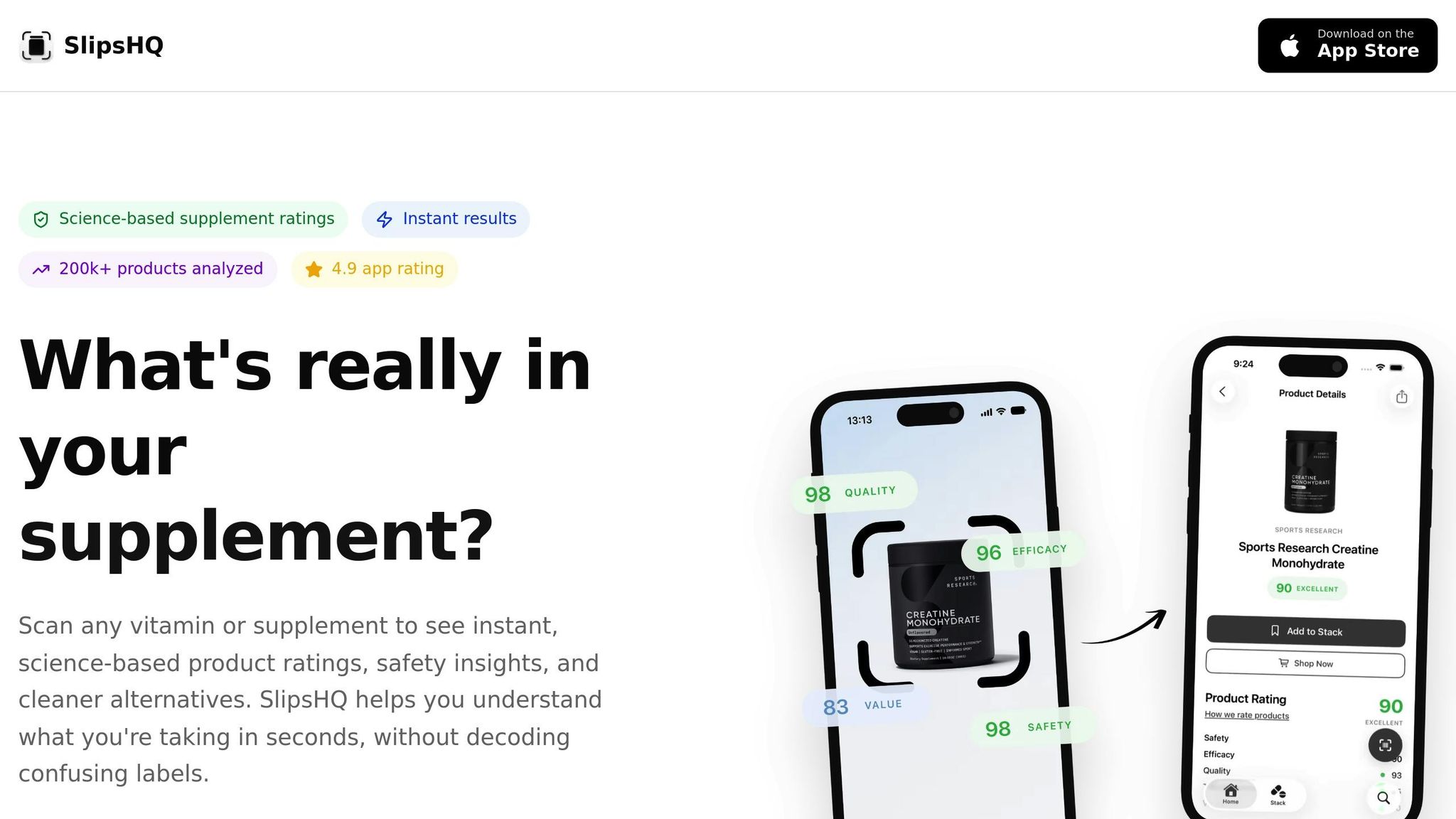
Reading labels in stores can be tricky - tiny fonts and confusing ingredient names make it hard to spot allergens. That’s where SlipsHQ steps in. This wellness app simplifies the process by letting you scan a supplement’s barcode to instantly see a clear list of ingredients and allergen alerts for common triggers like milk, soy, wheat, egg, peanuts, tree nuts, fish, shellfish, and gluten. SlipsHQ takes the guesswork out of label reading by standardizing ingredient names (e.g., translating "sodium caseinate" into "milk") so you can quickly identify potential allergens. It’s a great digital companion to the manual label-checking tips we’ve already discussed.
When you scan a product, SlipsHQ provides an easy-to-read allergen summary, such as "Contains: milk, soy" or "No declared major allergens." It also shows the full ingredient list and manufacturer statements like "May contain" or "Processed in a facility with…" These details are essential for assessing allergy risks. The app goes a step further by cross-referencing ingredients with a database of known allergen sources. It flags hidden risks and even points out vague terms that might require follow-up with the manufacturer if your allergies are severe.
To help you make smarter choices, the app assigns each supplement a trust score from 0 to 100. This score is based on a 35-point evaluation of factors like label transparency, ingredient safety, and how well the manufacturer discloses allergen risks. Products that clearly label allergens, avoid risky fillers, and have strong allergen controls score higher. On the other hand, supplements with vague "proprietary blends" or poor cross-contamination disclosures receive lower scores. This scoring system makes it easier to spot products that prioritize allergen safety and transparency.
SlipsHQ also personalizes the experience by letting you set up a profile with your specific allergies and intolerances - whether it’s milk, eggs, peanuts, gluten, soy, or even less common allergens like sesame. Every scan is automatically checked against your profile, and the app tracks your approved supplements, alerting you to any changes or reformulations. These features make choosing safe supplements simpler and tie back to the allergen identification strategies mentioned earlier in this guide.
Conclusion
Spotting hidden allergens in supplements doesn't have to be complicated if you stick to a clear, consistent routine. Start by checking the "Contains" statement for the eight allergens the FDA requires to be disclosed. Then, scan the ingredient list for less obvious names and review cross-contamination warnings to gauge any potential risks.
If you encounter vague terms like "natural flavors" or "spices", reach out to the manufacturer for clarification. Reputable companies are usually transparent and willing to provide specifics about allergen risks or shared equipment. Keep in mind that formulations can change without notice, so treat every supplement as if you're seeing it for the first time: read the label, verify the details, and ask questions when necessary. Pairing these manual checks with digital tools can also add an extra layer of security.
Apps like SlipsHQ can simplify the process. By scanning barcodes, you can get immediate allergen alerts and trust scores. The app also allows you to create a personalized allergen profile and keeps track of your approved supplements, notifying you of any ingredient changes - perfect for catching updates you might otherwise miss.
With time, reading supplement labels becomes second nature. Always prioritize checking for allergens and cross-contact information, and choose brands that are open about their ingredients and production processes. Supplements can absolutely be safe for those with allergies if approached with care - apply the same diligence as you would with food. For complex or high-risk products, consult your healthcare provider or allergist to stay on the safe side. By combining these habits with reliable tools, you can confidently choose supplements that align with your health and safety needs.
FAQs
How can I recognize allergens hidden under technical or unfamiliar names on supplement labels?
Decoding the technical or unfamiliar names on supplement labels can feel like solving a puzzle, especially when allergens are hidden behind scientific jargon. The first step? Read the entire ingredient list thoroughly and keep an eye out for terms that seem unfamiliar. Allergens like soy, dairy, or nuts can sometimes appear under less obvious names, so staying alert is crucial.
For a little extra help, consider using tools like SlipsHQ. This handy resource gives you instant insights into ingredient details and safety, helping you spot potential allergens and decide if a supplement is a good fit for you. Staying informed isn't just helpful - it’s essential for avoiding hidden allergens and keeping your health on track.
What should I do if a supplement label lists vague ingredients like 'natural flavors'?
When you spot terms like "natural flavors" on a supplement label, it’s easy to assume they’re harmless. But these vague descriptions can sometimes mask allergens or additives you’d rather avoid. To protect yourself, consider using tools like SlipsHQ. They offer detailed, science-based information about supplement ingredients, safety, and quality. This kind of transparency can help you identify hidden allergens or contaminants and make smarter choices about what you put into your body.
What causes cross-contamination in supplements?
Cross-contamination in supplements occurs when allergens or unintended ingredients from one product accidentally mix with another during production. This often happens because of shared equipment, poor cleaning practices, or mishandling in the manufacturing process. Even tiny traces of allergens can find their way into supplements if safety protocols aren't strictly enforced.
To stay safe, always read allergen warnings on labels and look into the manufacturer's safety practices. If you're uncertain about a product's safety, use resources or tools that offer detailed ingredient breakdowns and safety information to help you make well-informed choices.