
Whey Protein Dosage: What Science Says
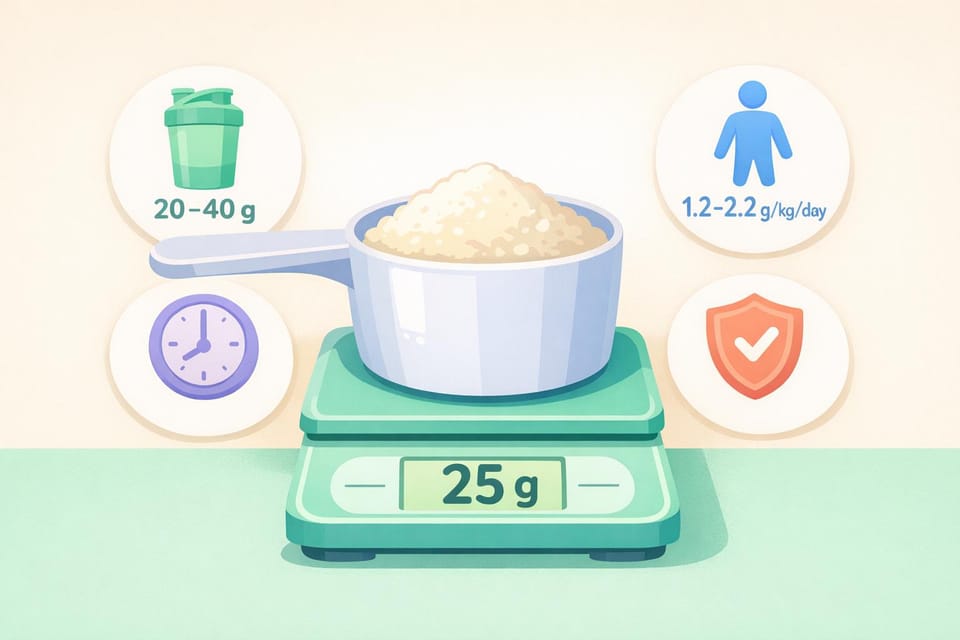
Whey protein is a popular supplement for muscle growth, recovery, and overall health. But how much should you take?
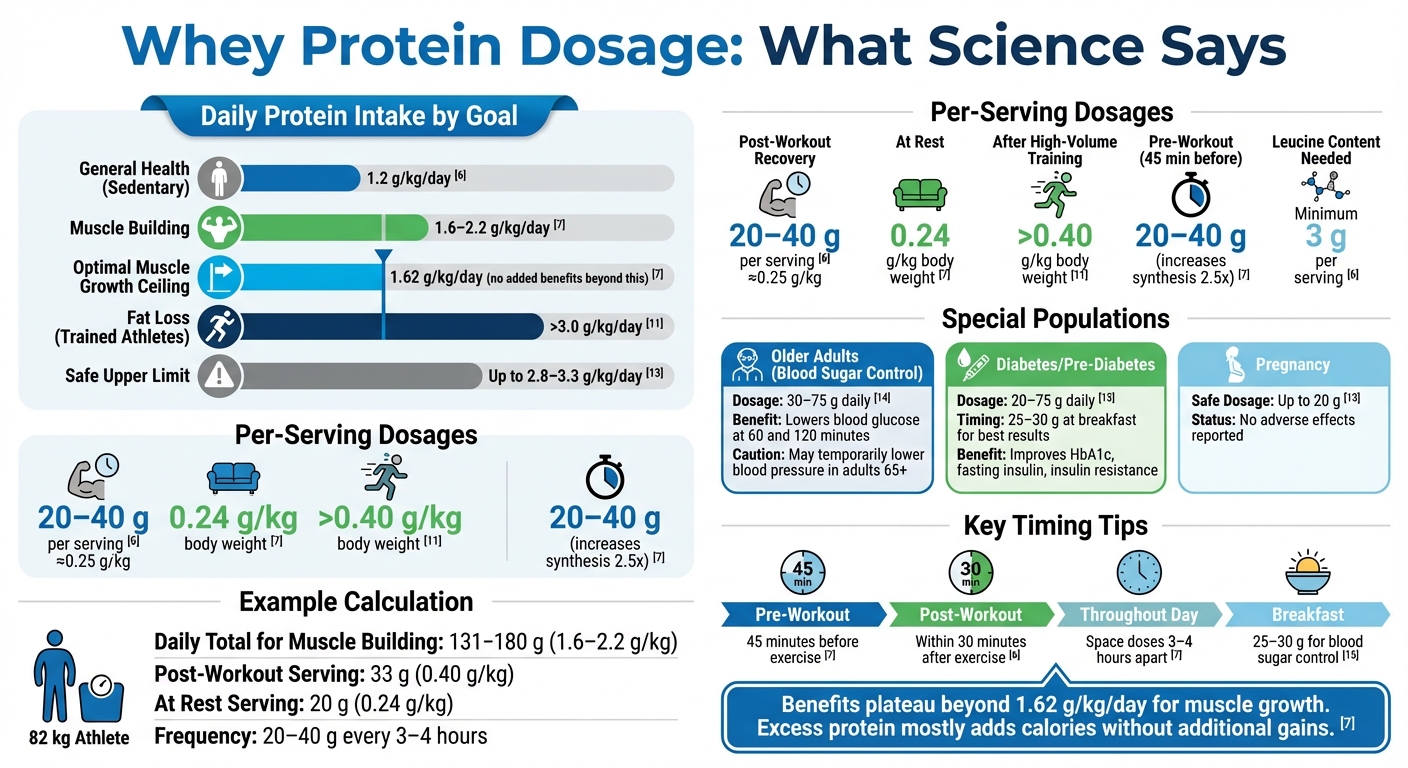
- For general health: 1.2 g/kg/day is ideal.
- For muscle building: 1.6–2.2 g/kg/day works best, with no added benefits above 1.62 g/kg/day.
- Post-workout recovery: 20–40 g of whey protein per serving (≈0.25 g/kg).
- For older adults or those managing blood sugar: 30–75 g daily can help, but higher doses may lower blood pressure temporarily.
Studies show that protein benefits taper off beyond certain thresholds, and excess intake mostly adds calories. Proper timing (e.g., within 30 minutes post-workout) and spacing protein throughout the day enhance results.
Takeaway: Tailor your whey protein intake based on your weight, activity level, and goals. Stick to quality supplements and avoid overconsumption for the best outcomes.
Whey Protein Dosage Guide by Health Goal and Body Weight
Safe Upper Limits for Whey Protein
Maximum Daily Intake
The Recommended Dietary Allowance (RDA) of 0.8 g/kg/day is simply the minimum amount needed to prevent protein deficiency - it’s not what your body needs for peak performance or health. Research using the Indicator Amino Acid Oxidation (IAAO) method suggests that 1.2 g/kg/day is ideal for maintaining optimal health.
Short-term studies have shown that healthy individuals can safely consume up to 2.8 g/kg/day or more. For example, resistance-trained men have sustained protein intakes of 2.5–3.3 g/kg/day for a year without issues, and bodybuilders have consumed between 2.6–5.8 g/kg/day over two years with no negative clinical effects.
"There is a lack of evidence-based research indicating that high-protein diets pose harm to otherwise healthy, exercise-trained individuals." – Jose Antonio et al., Journal of the International Society of Sports Nutrition
Interestingly, while high protein intakes of up to 3.3 g/kg/day are safe, studies show that the benefits of protein for muscle-building and recovery taper off beyond 1.6 g/kg/day. Additional protein at higher levels mostly contributes extra calories without boosting muscle growth.
These guidelines provide a solid foundation for tailoring protein intake to match your activity level and fitness goals.
Dosage During Exercise
Once your daily protein needs are determined, adjusting your intake around exercise can make a big difference. For those focused on muscle growth and recovery, the International Society of Sports Nutrition recommends 1.4–2.0 g/kg/day, which is both safe and effective for most training regimens.
For post-workout recovery, aim for 20–40 g of protein (approximately 0.25 g/kg) to maximize protein synthesis. Endurance athletes may benefit from consuming about 0.25 g/kg of body weight per hour during intense exercise sessions to minimize muscle damage and soreness.
To aid recovery, it’s best to consume whey protein within 30 minutes after your workout. Additionally, spacing out protein intake into doses of 20–40 g every 3–4 hours throughout the day helps optimize absorption and overall muscle recovery.
Dosages for Specific Health Goals
Muscle Growth and Recovery
If you're aiming to build muscle, 20–40 g of whey protein per serving (≈0.25 g/kg) with at least 3 g of leucine is ideal for stimulating muscle protein synthesis. After full-body workouts, increasing this to 40 g (≈0.40 g/kg) can aid recovery more effectively. Consuming whey protein about 45 minutes before exercise has also been shown to enhance synthesis rates by up to 2.5 times.
The impact of protein supplementation is measurable. Pairing whey protein with resistance training can raise your one-rep max strength by an average of 2.49 kg and contribute to fat-free mass gains of about 1.05 kg. However, exceeding a total daily protein intake of 1.62 g/kg doesn't lead to additional muscle growth.
Blood Sugar Control in Older Adults
Whey protein can support blood sugar management, but older adults need to approach dosing with care. Research shows that doses ranging from 30–75 g of whey protein can significantly lower blood glucose levels at 60 and 120 minutes after consumption in adults with type 2 diabetes. This happens because whey slows digestion and encourages insulin release.
That said, high doses might temporarily lower post-meal blood pressure in adults over 65, which could increase the risk of falls - especially for those on beta-blockers or heart medications. If you're in this age group, it's a good idea to work with your healthcare provider to balance blood sugar control with blood pressure safety. Tailored whey protein dosing also shows potential for managing pre-diabetes and diabetes effectively over the long term.
Pre-Diabetes and Diabetes Management
For long-term management of pre-diabetes and diabetes, daily whey protein doses between 20–75 g have proven effective. A review of 109 randomized controlled trials found that whey supplementation improved important markers like HbA1c, fasting insulin, and insulin resistance in people at risk for metabolic syndrome.
Timing matters here too. A 25–30 g dose of whey protein at breakfast can help reduce morning blood sugar spikes and improve overall glycemic control. The high leucine content in whey plays a key role in its ability to stimulate insulin release.
For more consistent improvements in weight and blood sugar management, consider replacing other calorie sources with whey protein.
Dosage Comparison Across Studies
Study Dosage Comparison Table
Research on whey protein dosages ranges from 20 g per serving to over 75 g daily. Moderate amounts seem to provide the most benefit, while higher doses often lead to diminishing returns and can pose risks for specific groups. Understanding these dose-response relationships is essential for optimizing supplementation.
A meta-analysis published in March 2018 by Robert W. Morton reviewed 49 trials involving 1,863 participants. The study found that gains in fat-free mass plateaued at a daily protein intake of 1.62 g per kilogram of body weight. Beyond this level, consuming more protein did not result in further muscle growth.
"Protein supplementation beyond total protein intakes of 1.62 g/kg/day resulted in no further RET-induced gains in FFM." – Robert W. Morton, Department of Kinesiology, McMaster University
Building on these findings, researchers have also explored the impact of individual serving sizes on muscle protein synthesis (MPS). In August 2025, a study from the Shanghai University of Sport analyzed 21 trials and determined that 20 g of whey protein increased muscle synthesis rates by 1.4 times, while doubling the dose to 40 g only increased synthesis rates slightly more, to 1.5 times. Among women, 30 g doubled synthesis rates, but increasing to 60 g resulted in only a 1.5-fold increase. This highlights a clear limit to the additional benefits of higher doses.
The table below summarizes key findings on dosages and their effects.
| Health Goal | Dosage Studied | Key Outcome | Tolerance |
|---|---|---|---|
| Muscle Growth (Daily Total) | 1.4–2.0 g/kg/day | Ideal range for building muscle mass | Well-tolerated in healthy adults |
| Muscle Growth (Ceiling) | 1.62 g/kg/day | Gains plateau at this level | No extra benefit beyond this intake |
| Acute MPS Boost | 20–40 g per dose | 40 g shows minimal improvement over 20 g | Generally well-tolerated |
| Fat Loss (Trained Athletes) | >3.0 g/kg/day | Supports fat loss | May require monitoring for digestive comfort |
| Weight Maintenance (Caloric Deficit) | 1.2–2.4 g/kg/day | Preserves muscle during calorie restriction | Generally well-tolerated |
| Blood Sugar Control (Type 2 Diabetes) | 30–75 g | Lowers glucose levels post-meal | High doses may worsen low blood pressure in older adults |
| Pregnancy Safety | Up to 20 g | No adverse effects reported in trials | Considered safe at this dosage |
These findings reinforce earlier conclusions that once optimal thresholds are reached, consuming more protein yields little to no additional benefit. For older adults, caution is especially important. While doses between 30–75 g can help manage blood sugar for those with type 2 diabetes, higher amounts may temporarily lower post-meal blood pressure in adults over 65, particularly those on beta-blockers or other heart medications. This increased risk of falls underscores the need for personalized dosing rather than simply aiming for maximum intake.
Practical Recommendations
Recommended Dosages by Goal
Based on recent research, here’s how to fine-tune your protein intake to align with specific fitness goals.
For optimal muscle protein synthesis at rest, aim for about 0.24 g of protein per kilogram of body weight. After high-volume resistance training, increase this to more than 0.40 g/kg. To put this into perspective, an athlete weighing 82 kg would need approximately 20 grams of protein at rest and around 33 grams post-workout.
For those focused on muscle building, a daily protein intake of 1.6–2.2 g/kg is recommended. To maximize gains, consume 20–40 grams of protein within 45 minutes before or after resistance training. This timing helps maintain muscle protein synthesis for 3–5 hours after exercise. These guidelines, rooted in current studies, provide a clear framework for both muscle growth and recovery.
For individuals with a more sedentary lifestyle, pairing whey protein with regular exercise can improve muscle synthesis while reducing strain on the liver and kidneys.
How SlipsHQ Can Help
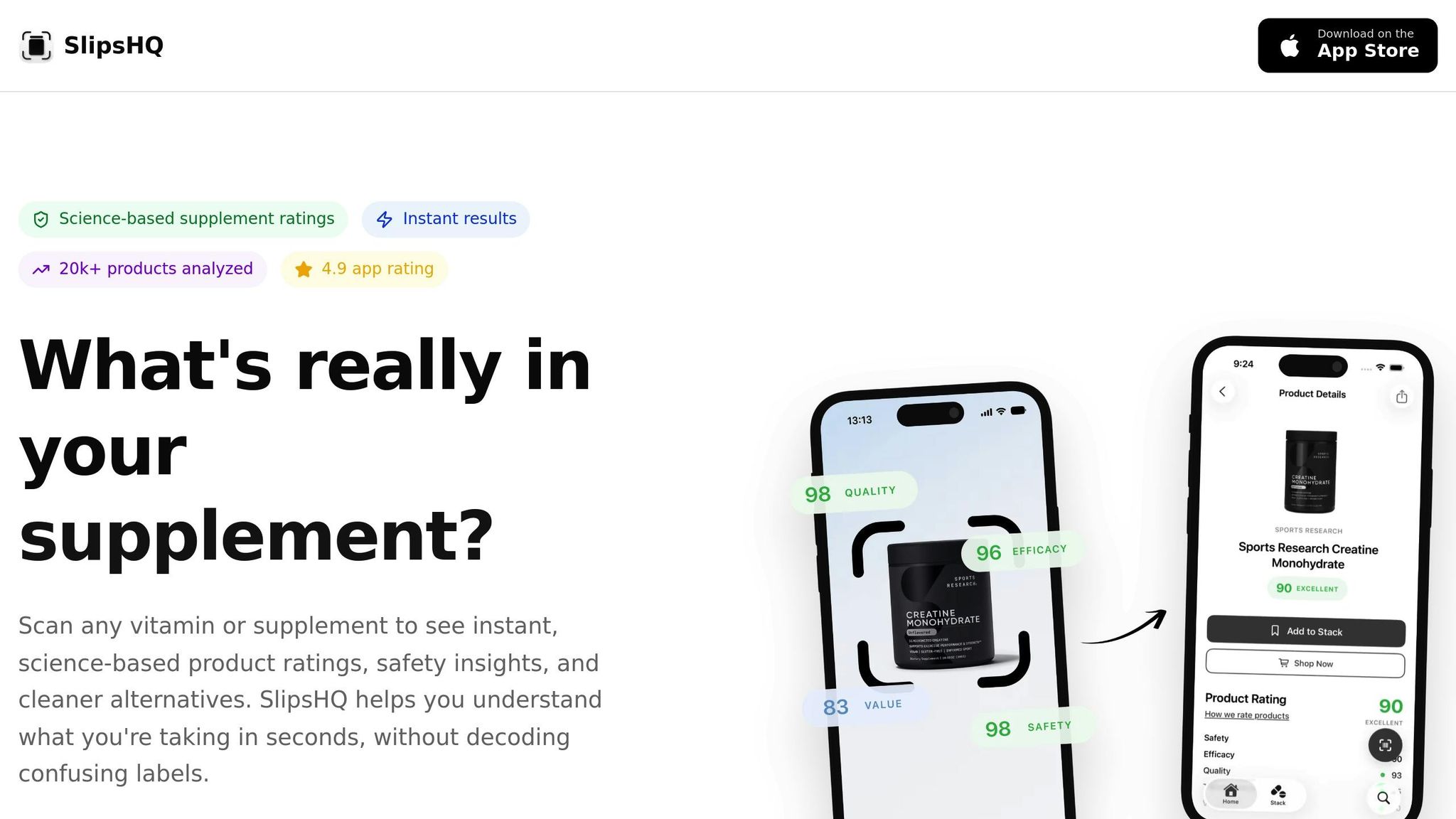
Meeting these precise protein intake recommendations starts with choosing the right whey protein supplement - a task that can be harder than it seems. Many products fall short, either by delivering less protein than advertised or containing harmful contaminants like heavy metals or amino spiking ingredients.
This is where SlipsHQ steps in to simplify the process. By scanning a product’s barcode, the app provides a detailed analysis of its safety, purity, and effectiveness, all backed by third-party lab results and science-based standards. SlipsHQ ensures that supplements meet strict benchmarks, such as California Proposition 65 limits for heavy metals (e.g., 0.5 mcg for lead, 4.1 mcg for cadmium, and 10 mcg for arsenic). It also verifies protein content accuracy, flags undisclosed or adulterated ingredients, and checks for leucine levels essential for muscle protein synthesis.
Beyond ensuring safety, SlipsHQ helps tailor your protein intake to your specific needs. The app calculates your optimal daily protein requirements based on your body weight and fitness goals, offering recommendations ranging from 1.2 g/kg for sedentary adults to as much as 2.7 g/kg for athletes. Plus, it allows you to compare prices across retailers and review trust scores (on a scale of 0–100), making it easier to build a supplement routine that fits your lifestyle. With its transparent, science-backed approach, SlipsHQ empowers you to confidently follow these evidence-based protein strategies.
FAQs
Does the timing of whey protein intake impact muscle recovery?
Consuming whey protein at the right time can make a big difference in muscle recovery. Studies indicate that taking whey protein soon after a workout helps boost muscle protein synthesis - a key process for repairing and rebuilding muscle tissue.
To get the most out of your post-workout nutrition, aim for about 0.31 grams of whey protein per kilogram of body weight. Since whey is a fast-digesting, high-quality protein, it’s an ideal option to support recovery and encourage muscle growth after exercise.
Can consuming too much whey protein be harmful?
Whey protein is considered safe for most healthy people when consumed in reasonable amounts, but taking too much can come with risks. Overloading on whey protein might put extra strain on your kidneys, especially if you already have kidney problems. It can also throw off the balance of nutrients in your diet.
To avoid these issues, stick to the recommended serving sizes and adjust your protein intake based on your diet and how active you are. If you're not sure how much protein is right for you, reaching out to a healthcare provider or nutritionist can help you get tailored advice.
What is the ideal whey protein dosage for older adults to help manage blood sugar levels?
For older adults aiming to keep their blood sugar levels in check, research points to 15 grams of whey protein per meal as an effective amount. Studies show that having this dose before meals can help minimize post-meal blood sugar spikes and support steadier blood sugar levels throughout the day.
This method could be particularly helpful for managing glucose levels when combined with a healthy diet and regular exercise. However, it’s essential to talk to a healthcare provider before adding whey protein to your routine to make sure it’s the right fit for your health needs.