
Why Your Expensive Vitamins Might Be Worthless

Not all expensive vitamins are better. Many high-priced supplements fail to deliver because of poor-quality ingredients, incorrect dosages, or low absorption rates. Flashy marketing and packaging often inflate prices without improving the product itself.
Here’s how to avoid wasting money:
- Check for third-party testing (look for certifications like USP or NSF).
- Read ingredient labels carefully - opt for bioavailable forms like magnesium glycinate or vitamin D3 and avoid vague "proprietary blends."
- Beware of marketing gimmicks like unproven claims or celebrity endorsements.
Low-quality supplements can waste money and even harm your health. Using tools like SlipsHQ to verify safety and effectiveness can help you make informed choices. Always consult a healthcare professional before starting new supplements.
5 Vitamin Brands That Are Just a Scam (And 3 Experts Actually Recommend)
Why Expensive Doesn't Always Mean Effective
High-priced vitamins often come with promises of superior quality, but a bigger price tag doesn’t always translate to better results. There are several reasons why an expensive multivitamin might not deliver any extra benefits compared to a more affordable option. Let’s break it down.
Poor Quality Ingredients
Some pricey supplements use synthetic versions of vitamins and minerals instead of forms that are easier for the body to absorb. Take magnesium, for example - certain types, like magnesium oxide, are less absorbable compared to options like magnesium glycinate or magnesium citrate. Similarly, natural vitamin E tends to be more potent biologically than its synthetic counterpart. If the sourcing of ingredients is inconsistent, it further diminishes the product's quality, regardless of the price.
Wrong Dosages
Getting the right dosage is critical for a supplement to work effectively. But some products include nutrient amounts that fall below recommended levels, leaving users to either take multiple doses or miss out on the intended benefits. On the flip side, excessive amounts of fat-soluble vitamins can build up in the body, potentially leading to health risks. In some cases, manufacturers add just trace amounts of expensive ingredients - enough to list them on the label but not enough to make a real difference.
Poor Absorption
Even if a supplement contains high-quality ingredients, poor formulation can limit its effectiveness. For instance, overly compressed tablets might not break down properly during digestion, reducing nutrient absorption. Additionally, certain nutrient combinations - like calcium and iron - can interfere with each other, making it harder for the body to absorb them. Factors such as the timing of consumption and the use of coatings on pills also play a role in how well the nutrients are absorbed and utilized.
False Marketing Claims
The supplement industry thrives on persuasive marketing. Terms like "pharmaceutical grade" or "clinical strength" may sound impressive but often lack clear definitions or guarantees. Proprietary blends can further muddy the waters by hiding the exact amounts of individual ingredients. And let’s not forget the impact of flashy packaging or celebrity endorsements - they might make the product seem more effective, but they don’t necessarily reflect any real improvements in quality or results.
How to Spot a Good Supplement
Choosing the right supplement doesn’t have to feel like navigating a maze. By understanding what to look for, you can separate the truly beneficial options from those that are all hype and no substance. Here’s how to make smarter decisions that protect both your health and your budget.
Look for Third-Party Testing
Third-party testing is a critical step in ensuring a supplement’s quality. This process involves an independent lab verifying that the product matches its label claims and is free from harmful contaminants. Certifications like USP Verified and NSF International are your go-to indicators of rigorous testing standards.
For example, the USP Verified mark guarantees that the supplement has been tested for purity, potency, and quality. It means the product dissolves properly, contains the correct amounts of active ingredients, and avoids harmful contaminants like heavy metals or bacteria. Similarly, NSF certification is widely trusted, especially for sports nutrition products, and follows comparable standards.
Supplements without third-party testing rely entirely on the manufacturer’s claims. Since the FDA doesn’t pre-approve supplements before they hit the shelves, independent testing is a key safeguard for your safety.
Read Ingredient Labels Carefully
A supplement’s ingredient label is like its resume - it tells you what’s inside and whether it’s worth your time. Start by checking if the active ingredients are listed with exact amounts. Be cautious of vague terms like "proprietary blend", which often hide the actual dosages of ingredients. Transparency is essential - you should know exactly what you’re putting into your body.
Look for clinically backed forms of nutrients. For instance, vitamin D3 (cholecalciferol) is more effective than D2 (ergocalciferol), and magnesium glycinate or citrate is better absorbed than magnesium oxide. Similarly, folate is often a better choice than folic acid for most individuals.
Don’t overlook the "Other Ingredients" section. High-quality supplements keep this list short and avoid unnecessary fillers, artificial colors, or preservatives. If the ingredient list looks like a chemistry experiment or is excessively long, it’s a good idea to explore other options.
Watch Out for Marketing Gimmicks
Be skeptical of flashy marketing claims that sound too good to be true. Phrases promising miracle cures or "doctor’s secrets" are red flags. Legitimate supplements don’t claim to cure diseases or deliver overnight results.
Also, steer clear of products that advertise treating specific medical conditions. Claims like "cures diabetes" or "eliminates arthritis" are not only illegal but also a sign that the product is likely making false promises. The FDA explicitly prohibits such claims for supplements.
Instead of falling for the marketing glitz, focus on products backed by solid scientific evidence. Often, the most effective supplements come in simple packaging with straightforward labels - no frills, just facts.
Use Tools Like SlipsHQ for Quick Analysis
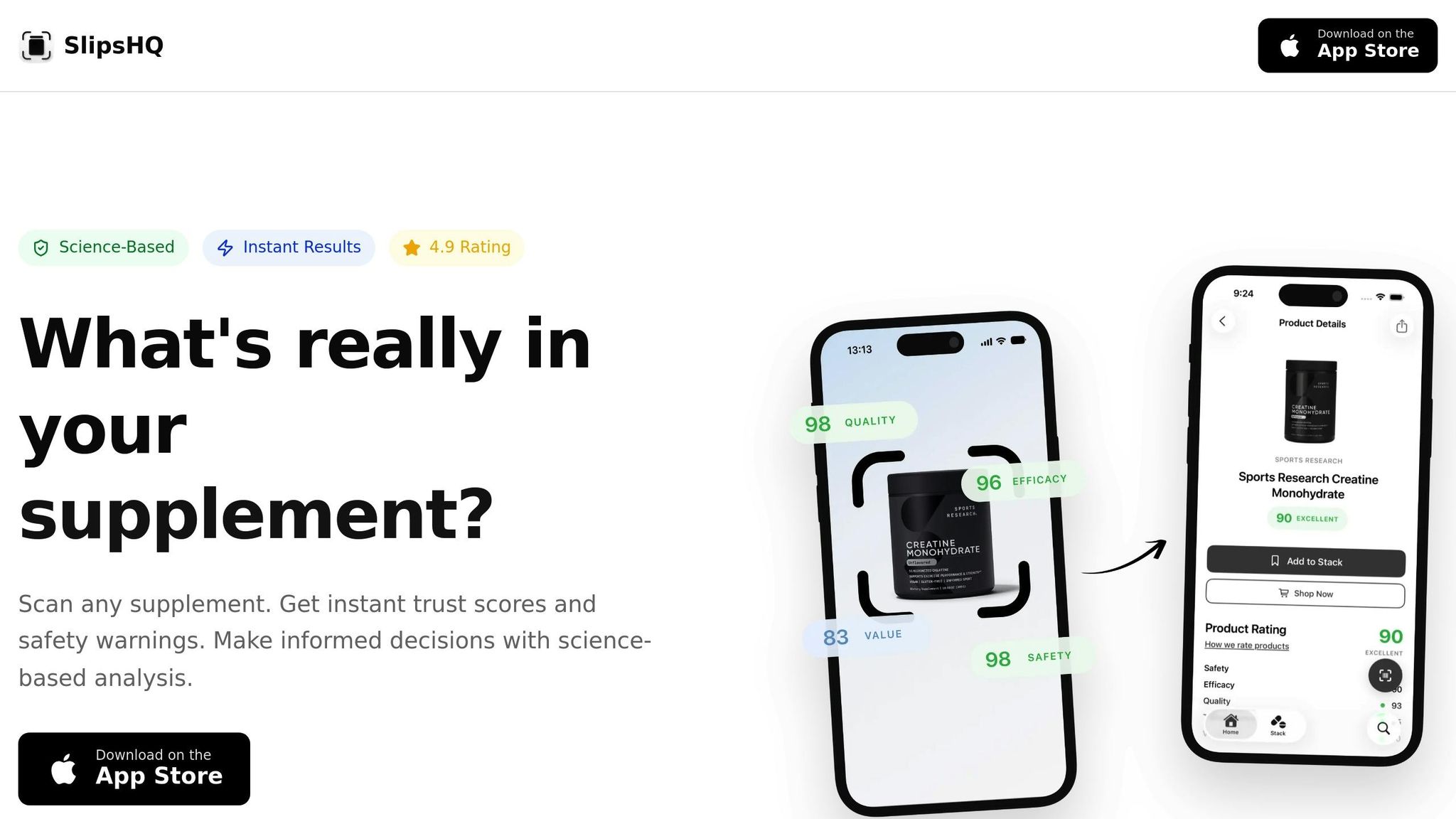
If you’re ever unsure about a supplement, technology can step in to help. SlipsHQ is a handy tool that scans supplement barcodes and provides a trust score (on a scale of 0–100) based on factors like safety, quality, transparency, and value. It even offers real-time price comparisons, helping you save both time and money.
The app also checks for drug interactions, safety warnings, and ingredient purity in seconds. Whether you’re shopping online or in a store, having instant access to this information empowers you to make informed choices on the spot.
The Real Cost of Bad Vitamins
Poor-quality supplements don't just waste your money - they can also harm your health and divert resources from proven wellness strategies. As we've touched on earlier, using supplements with low-grade ingredients or misleading dosages can have consequences that go beyond their lack of effectiveness.
Money Wasted on Products That Don't Work
In 2021, Americans spent nearly $50 billion on vitamins and dietary supplements, with over $5 billion dedicated to multivitamins alone. However, according to ConsumerLab, tests on more than 6,000 dietary supplements revealed issues in over 20% of the products. Even worse, nearly 30% of the multivitamins and multimineral supplements tested in May 2023 had ingredient amounts that were either significantly higher or lower than what was stated on the label.
Spending more doesn’t guarantee better quality. Supplements don’t need FDA approval before hitting the shelves, allowing companies to make bold claims without solid evidence. Some pricey supplements fail basic quality checks, while more affordable options sometimes perform better.
The result? Many people spend hundreds - or even thousands - of dollars each year on products that offer no real health benefits. This money could be better spent on proven health investments, like nutritious food, gym memberships, or preventive healthcare. Beyond the financial hit, choosing the wrong supplements can also compromise your health.
Health Risks from Poor Supplement Choices
Low-quality supplements aren’t just ineffective; they can also be dangerous. Contaminants and improper dosages can lead to serious health risks. For example, excessive vitamin A intake may damage your liver, while too much iron can be harmful, particularly for men and postmenopausal women. On the flip side, supplements with insufficient active ingredients might leave you falsely confident about meeting your nutritional needs.
Drug interactions are another concern. For instance, vitamin K can interfere with blood thinners, and high doses of vitamin E may increase the risk of bleeding in certain individuals.
Relying too heavily on supplements can create a false sense of security, causing you to neglect essential elements of a healthy lifestyle, like eating a balanced diet and staying active. Over time, these poor choices don’t just waste money - they can actively work against your health goals.
Conclusion: Making Better Supplement Choices
Expensive vitamins often fail to live up to their lofty promises. More often than not, a hefty price tag is tied to marketing tactics rather than actual product quality. Even high-end supplements can fall short, offering inaccurate dosages or ineffective ingredients.
The key to smarter supplement shopping is relying on evidence rather than price. Look for products that have been verified through third-party testing. Prioritize supplements with bioavailable ingredients and proper dosages instead of falling for flashy claims. Steer clear of proprietary blends that hide the exact amounts of active ingredients - they only add to the confusion.
Tools like SlipsHQ can make this process easier. With a quick barcode scan, SlipsHQ provides a trust score, flags potential drug interactions, and offers tailored recommendations to help you make informed decisions.
Remember, supplements are meant to enhance a healthy lifestyle, not replace it. Always consult a healthcare professional before starting any new supplement, especially if you're on medication or managing a health condition. They can help pinpoint actual nutritional deficiencies and recommend the most suitable products for your needs.
Your health deserves choices rooted in facts, not marketing spin. By focusing on clear quality standards, proven ingredients, and proper dosages, you can protect both your well-being and your budget. It’s not about spending more - it’s about spending wisely on products that actually deliver results.
FAQs
How can I tell if a vitamin supplement is high quality and worth the money?
When picking a vitamin supplement, it’s important to stick with trusted brands or manufacturers that have a solid reputation. Take a close look at the label - make sure the ingredient list is clear, avoid unnecessary additives, and check that the dosages match the recommended daily values.
Another key factor is choosing supplements that have undergone third-party testing. This step helps confirm that the product actually contains what it promises and is free from harmful contaminants. Certifications from groups like NSF or USP are often reliable indicators of quality. By staying informed and paying attention to these details, you can make better choices and ensure you’re getting the most out of your supplements.
What are the dangers of taking supplements with incorrect dosages or poor absorption?
Taking supplements without paying attention to proper dosages or absorption rates can lead to trouble. Too much of certain vitamins or minerals can trigger side effects like nausea, headaches, or even more severe health problems. At the same time, supplements with poor absorption might not deliver the benefits you’re looking for, leaving you frustrated and out of pocket.
Mixing multiple supplements without knowing how they interact can also create imbalances or even harmful effects. That’s why it’s so important to pick well-made products with accurate dosages and consult a healthcare professional before adding new supplements to your routine.
Why is third-party testing crucial when choosing vitamins, and how can I check if a product has been tested?
Third-party testing plays a crucial role in ensuring that vitamin supplements are not only safe but also effective and properly labeled. It confirms that the product contains the ingredients stated on its label, in the right amounts, and is free from harmful substances like heavy metals or pesticides.
To determine if a supplement has undergone such testing, check the packaging for certification seals from trusted organizations like NSF, USP, or Informed-Choice. These seals signify that the product has been independently tested and meets stringent quality standards.